Let me take you back to a time when my hype train was barreling down the tracks at light speed, only to spectacularly derail into a canyon of broken promises and glitchy NPCs. I'm talking, of course, about the infamous launch of Cyberpunk 2077. It was December 2020, and after years of being promised a futuristic masterpiece, a digital playground of neon-soaked anarchy, what we got was... well, a mess. My own experience involved characters T-posing through emotional cutscenes, cars spawning inside other cars, and a general sense that Night City was held together with digital duct tape and prayers. It was so bad, the game got yanked from storefronts—a modern gaming scandal of epic proportions. That catastrophic debut wasn't just a bad day at the office for CD Projekt Red; it was a trust-shattering event that turned legions of fans, myself included, from believers into skeptics overnight. Now, in 2026, with the sequel, codenamed Project Orion, on the horizon, the Polish studio faces its greatest challenge yet: convincing us to come back to the dark, rainy, neon-lit future.
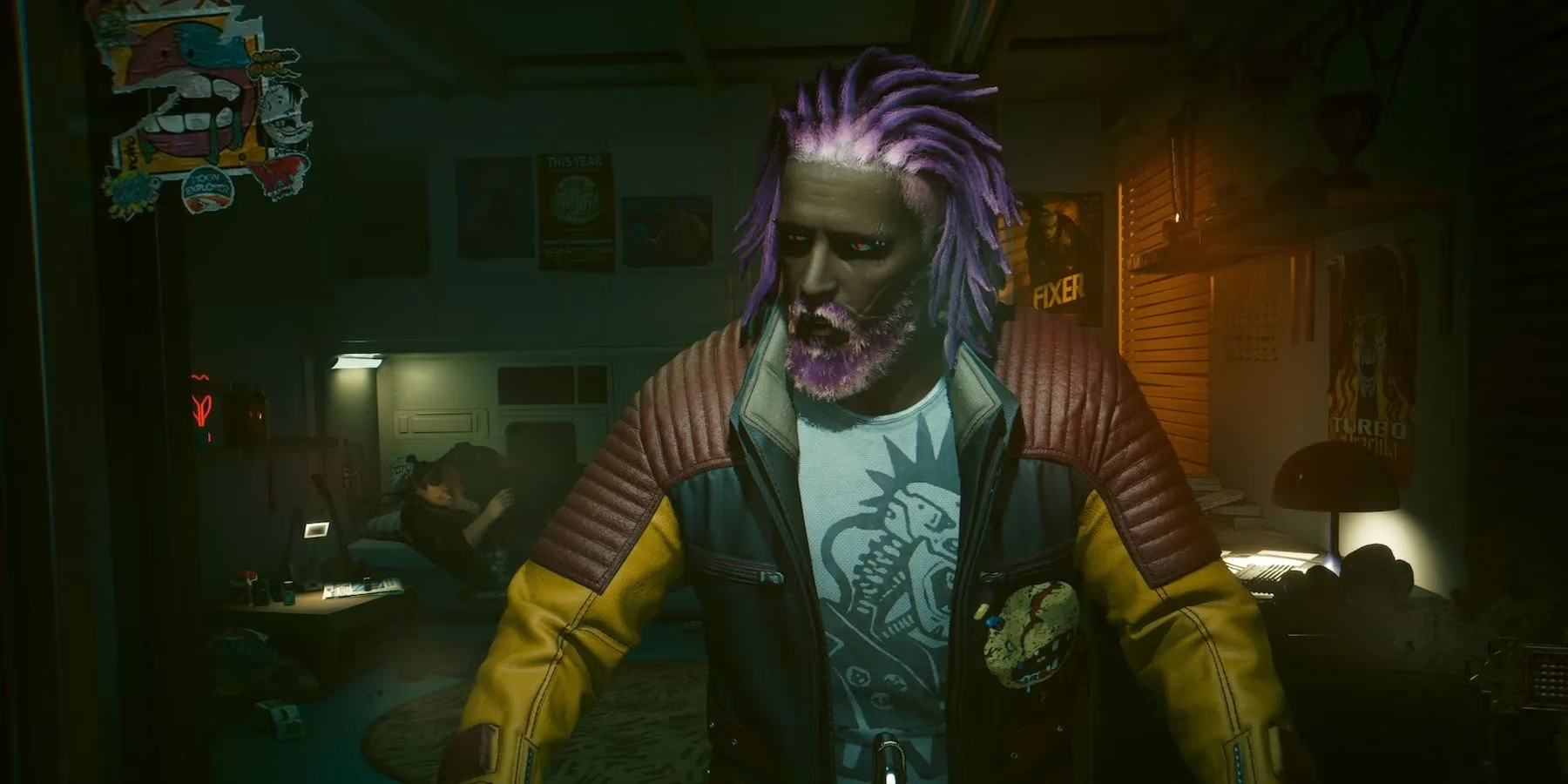
The Ghost of Launches Past: A Cautionary Tale 🚨
Why did it all go so wrong? Let's rewind the tape. The theories are plentiful:
-
The Holiday Rush Hypothesis: Many, myself included, believe the game was shoved out the door to hit the lucrative holiday sales window, consequences be damned.
-
The Last-Gen Console Catastrophe: CDPR themselves admitted they didn't pay nearly enough attention to how the game ran on the aging PS4 and Xbox One hardware. What players got was a slideshow masquerading as an open world.
-
The Overpromise & Underdeliver Cycle: Features showcased in dazzling trailers simply... vanished. The game felt stripped down compared to the sprawling metropolis we were sold.
The aftermath was brutal. The studio's reputation, meticulously built through The Witcher trilogy, took a massive hit. The lesson was painfully clear: a botched release can cripple a game's legacy and a studio's credibility for years. It taught the entire industry that sometimes, the bravest move is to just delay the darn thing.
Project Orion: The Redemption Arc We Need 🕶️
Fast forward to today. CD Projekt Red has announced Project Orion, the next chapter in the Cyberpunk saga, built on the powerful Unreal Engine 5. The slate is technically clean, but the memory is not. We, the players, are scarred. We're wary. How can they prove it's different this time? How can they rebuild that crucial bridge of faith?
I'll tell you the one, brilliant, terrifying solution: Early Access.
Not a tightly controlled, influencer-only preview, but a real, honest-to-goodness early access period for the community. Let us in during the final months of polishing. Let us wander the new districts of Night City (or whatever new locale they've crafted), kick the tires on the new mechanics, and stress-test the servers. This isn't about playing a finished game early; it's about transparency.
| The Problem (2077 Launch) | The Solution (Orion Early Access) |
|---|---|
| Promises felt hollow and marketing-driven | Gameplay proves promises in real-time |
| Performance issues were a nasty surprise | Performance can be tested & improved with player data |
| Broken trust led to refunds and outrage | Shared development fosters community and goodwill |
Why Early Access is the Ultimate Power Move ⚡
Think about it. Early access for a AAA titan like this would be a monumental statement. It would scream: "We have nothing to hide. We are so confident in what we've built that we want you to see the seams before we stitch the final thread."
-
First-Hand Faith: Reviews are great, but nothing rebuilds trust like personal experience. Letting players judge the game's core, stability, and fun factor for themselves is the most powerful review of all.
-
Collaborative Polishing: An army of players will find bugs and quirks faster than any QA team. CDPR can use this feedback to sand off the rough edges, making the official launch smoother for everyone. It turns players from critics into collaborators.
-
Hype Management: It controls the narrative. Instead of another cycle of pre-release hype leading to potential disappointment, early access grounds expectations in reality. The conversation becomes about the actual game, not the marketed fantasy.
Of course, this strategy is not without its perils. It's a double-edged monowire. It only works if the game underneath is fundamentally solid. If Project Orion is a mess in early access, the backlash would be instant and catastrophic—a second, possibly fatal, blow. But that's the point! It forces CDPR to ensure the game is in a demonstrably good state well before its "final" release date. It's the ultimate accountability.
Looking to the Neon-Lit Future 🔮
The shadow of 2020 is long, but it doesn't have to be permanent. CD Projekt Red has a chance here to not just release a sequel, but to redefine its relationship with players. A thoughtful, well-executed early access period for Project Orion could do more for its reputation than a thousand perfect review scores post-launch. It would be a bold declaration that the lessons of the past have been learned, that the studio values its community's trust above all else.
So, here's my plea from one scarred but hopeful fan to the developers: Be brave. Be transparent. Let us in. Show us the vibrant, chaotic, beautiful and broken world you're building, warts and all. Let's build the hype together, on a foundation of real gameplay, not just slick trailers. That's how you truly redeem a legacy. That's how you make us believe in Night City again.