As I reflect on the journey of Cyberpunk 2077, from its turbulent launch to its triumphant redemption, one thing is clear: the game finally became what we all dreamed of back in 2020. The culmination of CD Projekt Red's relentless post-launch support arrived with the game-changing Update 2.0 and the Phantom Liberty expansion in late 2023. These weren't just patches; they were a complete transformation. They delivered the espionage thriller we craved in Dogtown while fundamentally reworking core gameplay systems, giving us unprecedented control over our version of V. Now, with Project Orion on the distant horizon, the studio faces a crucial decision. While some experimental changes from that era can be left in Night City's past, there is one brilliant innovation from Phantom Liberty that is absolutely non-negotiable for the sequel: the Relic Point system.
The value of this system cannot be overstated. Unlike the broad, sweeping changes of Update 2.0, Relic Points were a reward reserved for the brave souls who ventured into the lawless, neon-drenched streets of Dogtown. We earned them not through simple experience gain, but by hacking into the ominous Militech data terminals scattered like digital treasure across the district. Each point felt like a hard-won piece of contraband tech, seamlessly woven into the narrative fabric of the expansion. These points fed directly into a new, specialized skill tree tied to the core relic biochip embedded in V's head—a perfect marriage of story and gameplay progression that made our struggle feel personal and impactful.
The powers unlocked were nothing short of revolutionary for V's arsenal. Imagine this: you could jailbreak your Mantis Blades or Gorilla Arms, turning already deadly cyberware into instruments of pure, unadulterated carnage. You could activate a weakspot visualization system, seeing enemies' critical vulnerabilities glow through walls, making every shot count with brutal precision. Or, you could deploy optical camo mid-combat, vanishing from sight to reposition for a devastating takedown. These weren't marginal stat boosts; they were transformative abilities that fundamentally altered how we approached every firefight and stealth sequence. The system elegantly complemented the existing perk trees and cyberware, creating a deeper, more satisfying layer of character customization that truly made V feel like a legend in the making.
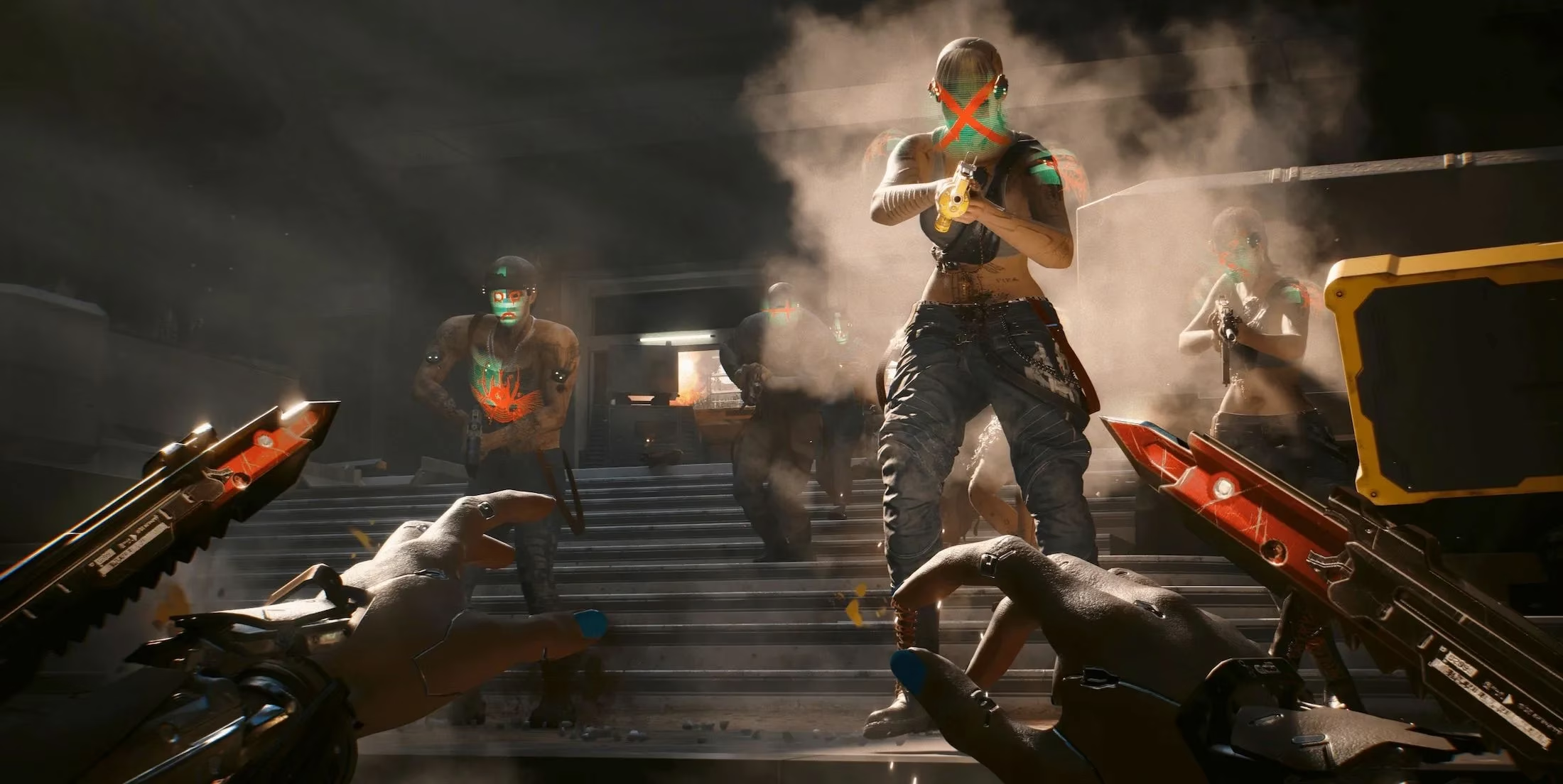
This leads to the most critical argument for their inclusion in Project Orion. A tired, frustrating trend in video game sequels is the complete reset—stripping a beloved protagonist of all their hard-earned power to force them back to square one. We've seen it countless times. While developers argue it's necessary for a balanced power curve, for us players, it feels like a betrayal of our time and investment. Why spend dozens of hours becoming a near-god in Night City, only to start the next chapter as a vulnerable novice all over again?
Project Orion must break this cycle. If V returns as the protagonist—and let's be honest, ignoring the Tower ending leaves the door wide open for that possibility—then the Relic Point system, and the power it represents, should be the foundation, not a forgotten relic. V's capabilities from the end of Phantom Liberty should be the new baseline. This creates an exciting design challenge: how do you balance a game where the player starts incredibly powerful? The answer might already exist in the Cyberpunk universe: Cyberpsychosis.
By integrating a meaningful, dangerous Cyberpsychosis mechanic (inspired powerfully by Cyberpunk: Edgerunners), CD Projekt Red can allow for these overpowered builds while introducing a critical risk-reward element. Pushing your body too far with excessive cyberware and relic upgrades could lead to debilitating debuffs, narrative consequences, or even game-over states, forcing players to consider moderation and strategic build choices. This would elevate the gameplay from simple power fantasy to a compelling narrative about the physical and mental cost of transhumanism.
-
Key Benefits of Keeping Relic Points:
-
Narrative Continuity: It respects the player's journey and the established lore of the biochip.
-
Enhanced Power Fantasy: It allows the sequel to immediately deliver on the power trip that the first game built towards.
-
Deeper Customization: It provides a proven, popular framework for advanced character building.
-
Exploration Incentive: It gives players a brilliant, immersive reason to scour every corner of the game world for data terminals and secrets.
-
Even if Project Orion features a brand new protagonist, the core concept of Relic Points is too valuable to discard. The system could be brilliantly reskinned—reborn as "Blackwall Fragments," "AI Shards," or something entirely new that fits the next chapter's story. The principle remains: a dedicated, high-impact progression system tied to exploration and major narrative devices, granting abilities that redefine combat and movement. The fluid, chaotic, and utterly empowering gameplay of Phantom Liberty was, in large part, powered by this system. It made us feel unstoppable in a world designed to break us, and that feeling is exactly what a sequel needs to capture and amplify.
As we look ahead to 2026 and beyond, the legacy of Cyberpunk 2077's revival will be judged by what lessons CD Projekt Red carries forward. Abandoning the Relic Point system would be a step backward, a dismissal of one of their most successful player-centric innovations. For Project Orion to truly soar past its predecessor and deliver the next evolution of the Cyberpunk experience, it must keep this heart of chrome and code beating strong. Our power fantasy depends on it.