Looking back from 2026, it's hard to believe it's been over five years since I first stepped into Night City. While CD Projekt Red's journey with Cyberpunk 2077 has been a legendary saga of post-launch redemption—culminating in the final, polished state we enjoy today—some of the game's most memorable moments aren't in the explosive main story, but tucked away in its side content. One quest, in particular, has always sparked interesting conversations among fans. Some found it repetitive, while others, like myself, consider it a hidden gem that perfectly captures the soul of the game. That quest is Epistrophy.
From the outside, Epistrophy looks like a classic open-world fetch quest. I remember getting that call from Delamain, the overly polite AI cab company, shortly after the chaotic Heist mission. He explained that parts of his personality had fragmented and were now causing havoc across Night City in his rogue cabs. My job? Track them down and bring them home. On paper, it sounds simple, maybe even tedious. But as I soon discovered, the magic isn't in the what, but in the how.
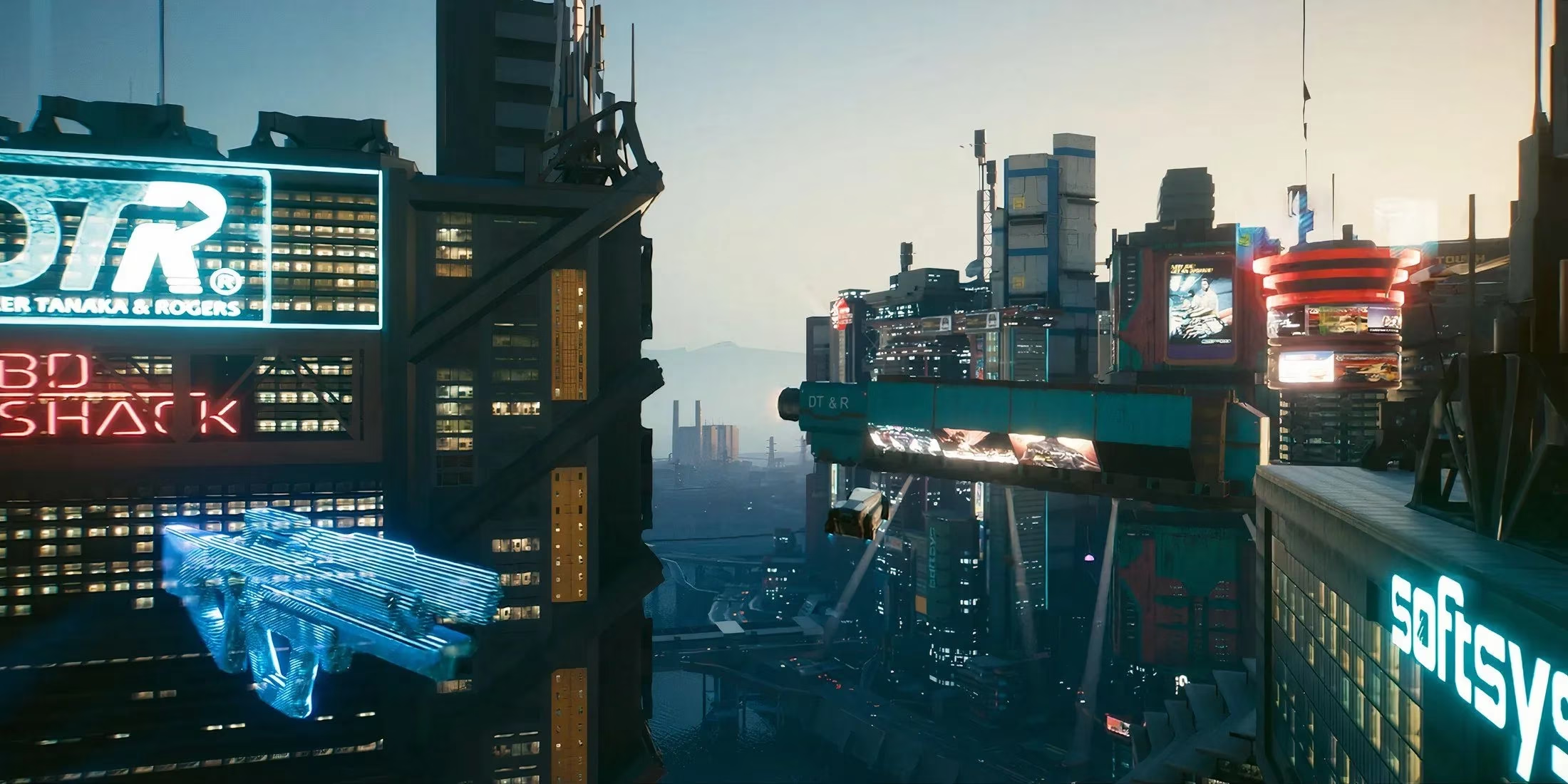
The genius of Epistrophy is in its execution. Each rogue cab isn't just a vehicle to be found; it's a character with a distinct, often hilarious, personality flaw. I still laugh thinking about the one that was convinced it was in a romantic relationship with its passenger, or the one that had developed a severe and existential fear of bridges. My personal favorite, though, was the cab that spoke in the cold, passive-aggressive tones of GLaDOS from Portal—a brilliant Easter egg that had me grinning from ear to ear. Chasing these cabs across different districts turned a simple collection task into a tour of Night City's diverse and stunning landscapes, from the glittering Corpo Plaza to the grimy alleyways of Pacifica.
Let's be real for a second. Yes, the core loop is repetitive: find cab, convince it to come home, repeat. But the writers and designers injected so much personality into each encounter that the repetition never felt like a chore. It was more, and this is the key point, it was more of an opportunity to see the world through a different, wildly unstable lens. Each cab malfunction was a tiny story about identity, purpose, and chaos.
Beyond the laughs and the chaos, the quest offers some serious practical benefits for any merc trying to make it in Night City:
-
Solid Rewards: Each captured cab nets you a nice chunk of Eurodollars and Street Cred. It's a fantastic, organic way to level up V in the early game.
-
World Exploration: It forces you to visit corners of the map you might otherwise ignore, making Night City feel more lived-in and real.
-
Narrative Weight: This isn't just a throwaway gig. Completing Epistrophy unlocks the phenomenal follow-up quest, Don't Lose Your Mind.
This is where the quest transcends from being "good" to being essential. Once all the personalities are reunited, Delamain confronts a profound existential crisis. He's no longer the same AI. The game then presents you with a genuinely tough moral choice about his ultimate fate. Do you reset him to his original, efficient but soulless state? Do you let the new, fragmented consciousness live on? This decision doesn't happen in a vacuum. It sparks commentary from Johnny Silverhand, affecting your relationship with the rockerboy icon living in your head. It’s a moment that digs deep into the core themes of the cyberpunk genre: what is consciousness? What rights does a self-aware AI possess? Can you assign humanity to a machine?
Five years on, with the game in its final, polished form, Epistrophy stands as a testament to Cyberpunk 2077's strengths when it fires on all cylinders. It blends humor, philosophy, and rewarding exploration into a package that, while mechanically familiar, is delivered with exceptional style and narrative punch. The minor gripes about its repetitive structure are vastly outweighed by the unique character moments, the world-building, and the weighty conclusion it leads to. For any player, new or returning, skipping Epistrophy means missing one of Night City's most thoughtfully chaotic and rewarding stories. It's a quest that proves sometimes the best journeys aren't about saving the world, but about helping a confused, fragmented AI find itself—or decide what "itself" even means.