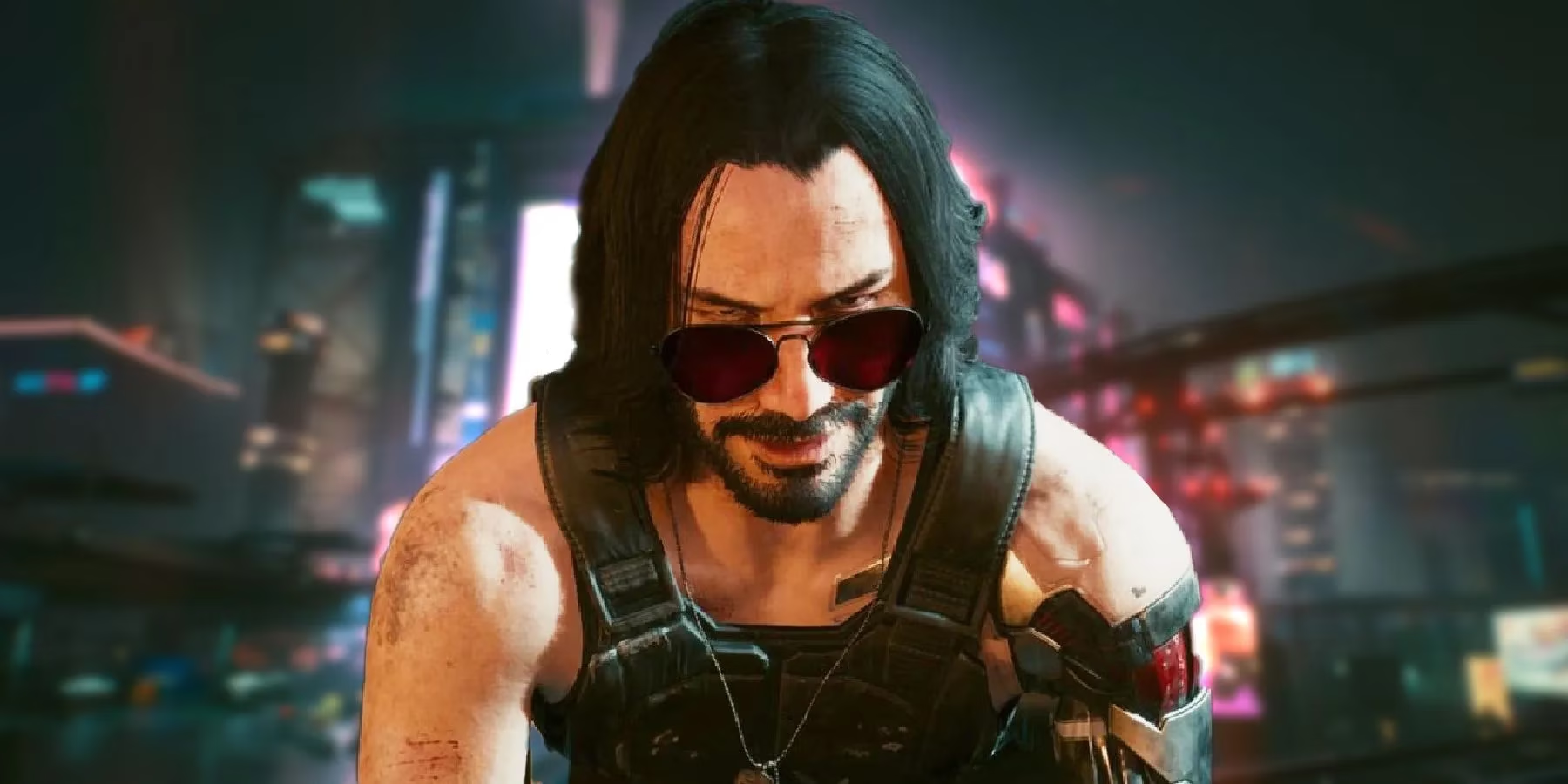
Let's face it, when Cyberpunk 2077 first hit the streets of Night City, it was, well, a bit of a hot mess performance-wise. But fast forward to 2026, and what everyone remembers isn't the glitches—it's the jaw-dropping, hyperrealistic world that sucked players in and never let go. CD Projekt Red went all-in on making Night City feel alive, and a huge part of that magic comes from the incredibly detailed character models. I mean, you could practically see the pores on Johnny Silverhand's face (though he'd probably tell you they're from a life well-lived). This commitment to realism isn't just for show; it's become the series' signature style, and ditching it for the sequel, codenamed Project Orion, would be like removing the chrome from a Street Samurai—it just wouldn't be the same.
The Star-Studded Soul of Night City 🎬
One of the biggest 'wow' factors in Cyberpunk 2077 was its celebrity power. Keanu Reeves as the rockerboy terrorist in your head? Idris Elba as the mysterious sleeper agent? That's not just casting; that's a major league power move. These weren't mere voice roles; their digital likenesses were painstakingly recreated, making their performances visceral and immersive. The marketing for the game leaned hard into this star power, and let's be real—it worked like a charm.
Project Orion is almost certainly going to follow this blueprint for success. Why fix what ain't broke? The financial and promotional logic is bulletproof:
-
Established Appeal: Big names sell games. It's that simple.
-
Narrative Weight: Having a recognizable actor's face adds a layer of gravity and connection to a character that a generic model just can't match.
-
Cultural Cachet: It keeps the franchise in the mainstream conversation.
And it's not just the A-listers. The game was packed with fun cameos from folks like streamer Jesse Cox, musician Grimes, and even the legendary game director Hideo Kojima. These Easter eggs were a blast precisely because you could instantly recognize them. A stylized art style would turn these recognizable faces into vague abstractions, losing all the fun. A hyperrealistic style ensures that when you see a familiar face in a dark alley or a crowded bar, you get that immediate 'oh snap!' moment.
Stylized Spin-Offs vs. Mainline Realism 🎨
Now, don't get it twisted. The Cyberpunk universe has already proven it can rock a different look. The anime series Cyberpunk: Edgerunners was a massive hit with its flashy, over-the-top 2D animation style. Some fans loved it so much they started wondering, "Hey, what if the next game looked like this?"
Here's the deal: that's a hard pass for the main sequel. While a stylized approach works brilliantly for an animated series, it would create a jarring disconnect for players jumping from the hyper-detailed Night City of 2077 to Project Orion. Consistency is key in building a believable world. Imagine driving from a photorealistic city into a cartoon—it would break immersion faster than a corrupted save file.
However, this opens the door for a brilliant strategy from CDPR:
| Project Type | Likely Art Style | Reasoning |
|---|---|---|
| Mainline Sequel (Project Orion) | Hyperrealistic | Showcases tech, supports celebrity casting, maintains franchise identity. |
| Animated Series/Film | Stylized (2D/3D Animation) | Allows for exaggerated action and unique storytelling. |
| Smaller Spin-Off Games | Potentially Stylized | Lower budget, can experiment without needing A-list actor models. |
This is the best of both worlds. While we wait the long, painful years for Project Orion, CDPR can keep fans engaged with smaller projects, comics, or more anime that explore different corners of the universe in different visual styles. But the flagship title? That stays real.
A Tech Showcase for the Future 🔮
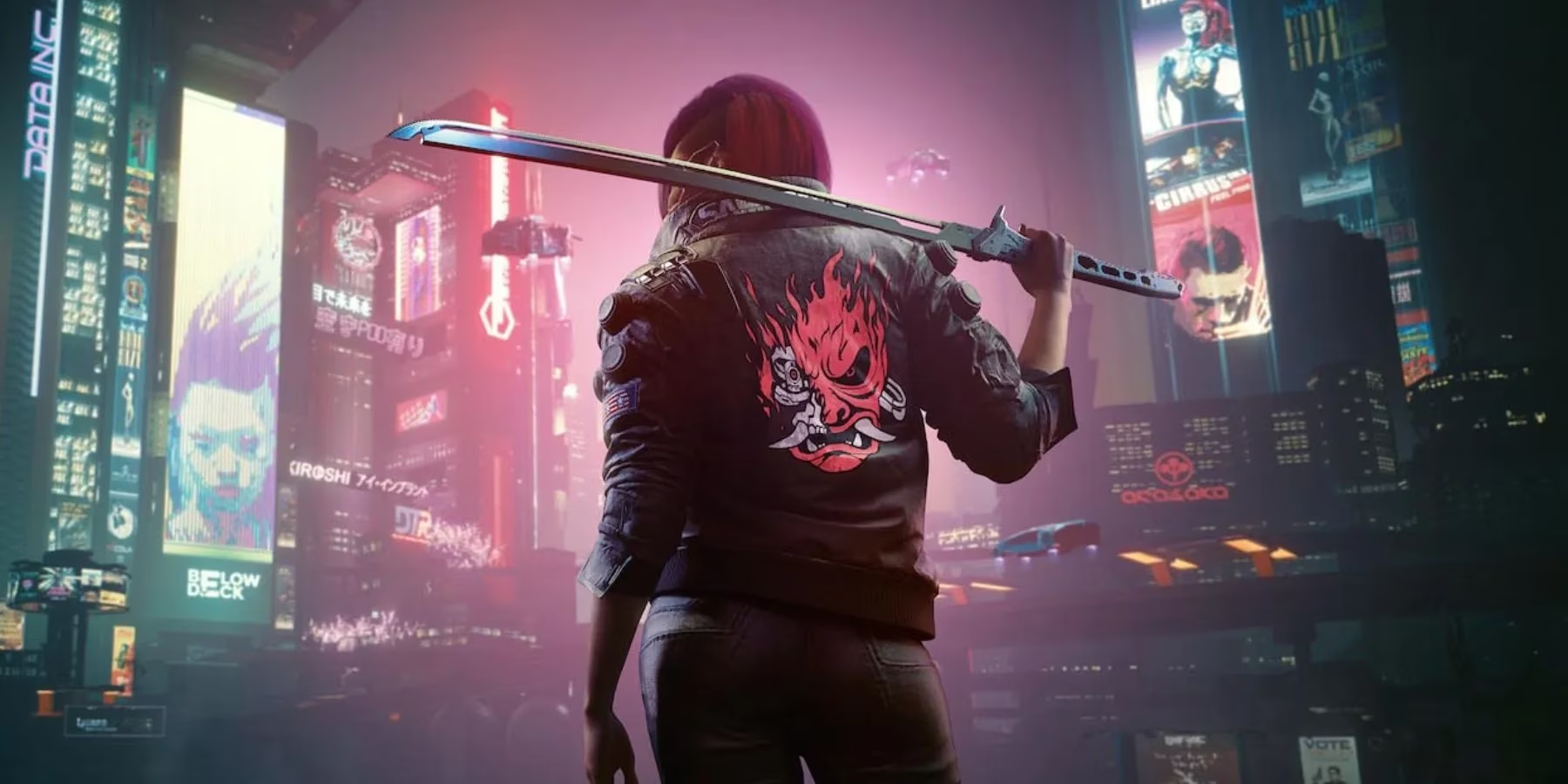
Let's talk tech. As of 2026, we're standing on the brink of new console generations and ever-more-powerful PC hardware. For a studio like CD Projekt Red, a mainline Cyberpunk game isn't just a game; it's a statement piece. It's a chance to flex their technical muscles and show players and competitors alike what their REDengine (or its successor) can really do.
Sticking with a hyperrealistic art style for Project Orion serves a critical technological purpose:
-
Hardware Benchmark: It pushes future GPUs and CPUs to their limits, creating a visual benchmark for the industry.
-
Future-Proofing: The assets created for a realistic game have a longer shelf-life and can be leveraged in marketing for years.
-
Immersive Evolution: Advancements in ray tracing, AI-driven animation, and physics can be fully appreciated in a realistic setting. You want to see how good real-time global illumination can get? A stylized world won't show it off the same way.
Abandoning realism would be leaving potential on the table. CDPR will want Project Orion to be the game that makes people say, "I need to upgrade my rig for THIS."
Conclusion: The Path Forward is Clear
So, what's the final word on Project Orion's look? All signs point to more chrome, more detail, more realism. The combination of celebrity investments, fan expectations for continuity, and the desire to create a definitive technical showcase makes it a no-brainer. The hyperrealistic art style is now synonymous with the core Cyberpunk video game experience.
That doesn't mean the wider universe can't play with different paints. We'll likely see more projects like Edgerunners that take wild, stylistic swings. But when you finally get that launch trailer for Project Orion, expect to see rain-slicked neon reflecting off pores-perfect skin, the grimace of a famous face caught in a firefight, and a city so real you'll feel the humidity. Because in the end, for Night City's next big chapter, keeping it real isn't just an option—it's the only way to fly. Preem choice, choomba.