Tinker for hours in the character creator, selecting the perfect jawline, hairstyle, and even intimate details, only to spend the next 80+ hours staring at the backs of your own gloved hands. This was the ironic reality for many a Night City mercenary. The illusion of choice—in both V's appearance and lifepath origin—often felt like a beautifully rendered but ultimately hollow promise, a neon hologram in the rain that dissolves upon touch. As Project Orion, the highly anticipated sequel, stirs in its early development at CD Projekt Red, a radical thought emerges: what if the studio ditched character creation altogether? It’s a move that, at first glance, feels like a step backward for a futuristic RPG, but could be the key to delivering a more focused, potent, and polished experience.
When Cyberpunk 2077 first let players loose in its megacity, it boasted an impressively granular suite of customization tools. Players could sculpt V into a near-perfect digital avatar, choosing every detail from skin tone to a unique cyberware aesthetic. Yet, the game’s unwavering commitment to a first-person perspective meant this labor of love was rarely seen. Sure, there were the occasional reflective surfaces, the inventory screen, and the final, poignant moments, but for the vast majority of the journey, V was a disembodied voice and a pair of fists. The lifepath system—Nomad, Streetkid, or Corpo—initially offered enticing narrative branches, but they swiftly merged into the same arterial highway of main story quests, their impact reduced to a handful of unique dialogue lines. Like meticulously painting the interior of a closed vault, the effort was undeniable, but the tangible reward was minimal.
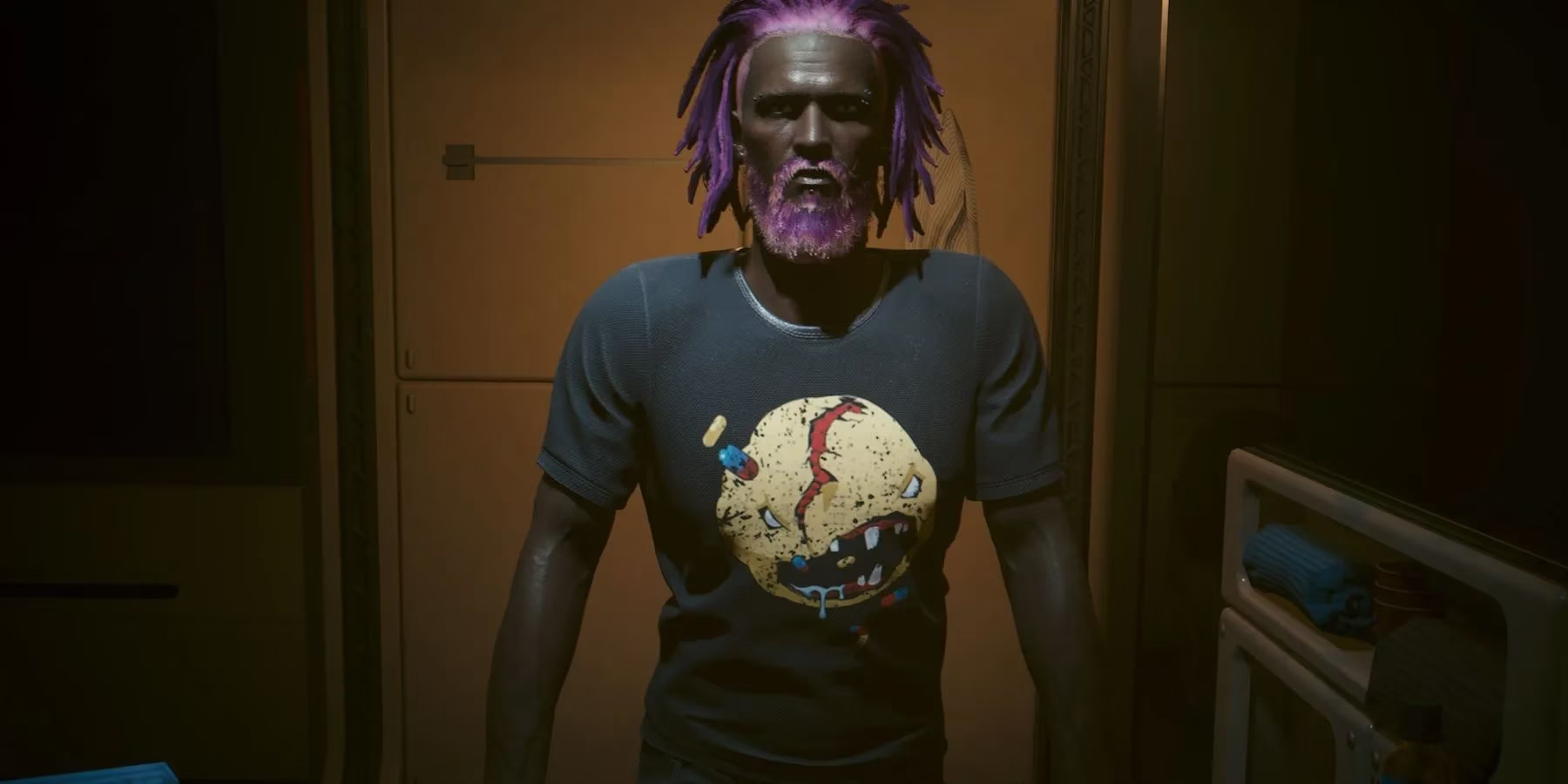
The resources poured into building and maintaining such a complex creation system are vast. Every hairstyle, tattoo, and facial structure requires modeling, rigging, and testing across countless animations and cutscenes. In a project as notoriously ambitious and challenging as Cyberpunk 2077's development proved to be, those resources are finite. Project Orion has a chance to learn from this. By defining V as a single, iconic character, the developers can channel that energy into areas with a far greater return on investment. A fixed protagonist allows for a tighter, more authored narrative, where every story beat and cinematic can be crafted with a specific character in mind, potentially reaching the emotional heights of Johnny Silverhand's integration into V's psyche. The story can become less of a generic hero's journey and more of a specific, unforgettable portrait, a monofilament wire of narrative tension stretched taut from start to finish.
Let’s be clear: this isn’t about removing player agency. True role-playing depth comes from choices in conversation, combat, and consequence, not from selecting a preset nose shape. Imagine the development hours saved from character creation being reallocated to:
-
🤯 Richer, branching dialog trees with more impactful outcomes.
-
⚙️ Deeper and more varied cyberware augmentation mechanics that truly alter gameplay styles.
-
🌆 More dynamic and interactive districts within Night City (or a new locale).
-
🎬 Highly polished, mocap-driven cinematic sequences that feature a protagonist who always looks and acts as the director intended.
The benefits extend beyond just story and world-building. From a technical standpoint, having a single character model to optimize for can streamline development and improve overall stability—a crucial consideration given the rocky launch of the first game. Phantom Liberty proved CDPR can tell a phenomenal, focused story within this universe. Project Orion should build on that confidence.
Some might argue that losing customization is a blow to player identity and immersion. But consider the most memorable characters in gaming: they are defined, not blank slates. A predefined V could be given a stronger voice, a more consistent personality, and a visual design that is instantly iconic—think of it as trading a customizable mannequin for a living, breathing statue, weathered by the city's storms and etched with the scars of its stories. This approach allows environmental storytelling to resonate more powerfully; the way NPCs react to you, the lore you uncover, all feels tailored to the V, not just a V.
As of 2026, with Project Orion still in the oven, the gaming landscape is more competitive than ever. To stand out, the sequel needs to double down on its unique strengths: unparalleled atmosphere, mature storytelling, and visceral action. The resources required to support a deep customization suite are, in the grand calculus of game development, often a net of diminishing returns. By embracing a singular vision for its protagonist, CD Projekt Red could ensure that every other aspect of Project Orion—its narrative heart, its polished gameplay, its breathtaking world—shines with the intense, unforgiving light of a Night City neon sign. In the end, players might not remember the eyebrows they chose, but they will never forget the story they lived.