Let me tell you something. I was right there with everyone else back in 2020, staring at a bug-riddled mess and feeling that profound sense of disappointment. Writing off Cyberpunk 2077 felt like the only logical thing to do. But fast forward to 2026, and I'm here to confess: I was wrong. What CD Projekt Red has achieved isn't just a redemption arc; it's a complete phoenix-like resurrection from the ashes of its own launch. Jumping back into Night City for a second playthrough wasn't just a revisit—it felt like discovering an entirely new, polished gem hidden beneath the old, rough exterior. The game has evolved from a cautionary tale into one of the most compelling and richly detailed RPGs I've ever experienced. If you, like me, walked away years ago, let me guide you through the reasons why returning now is one of the best gaming decisions you can make.
The Voices of a New V
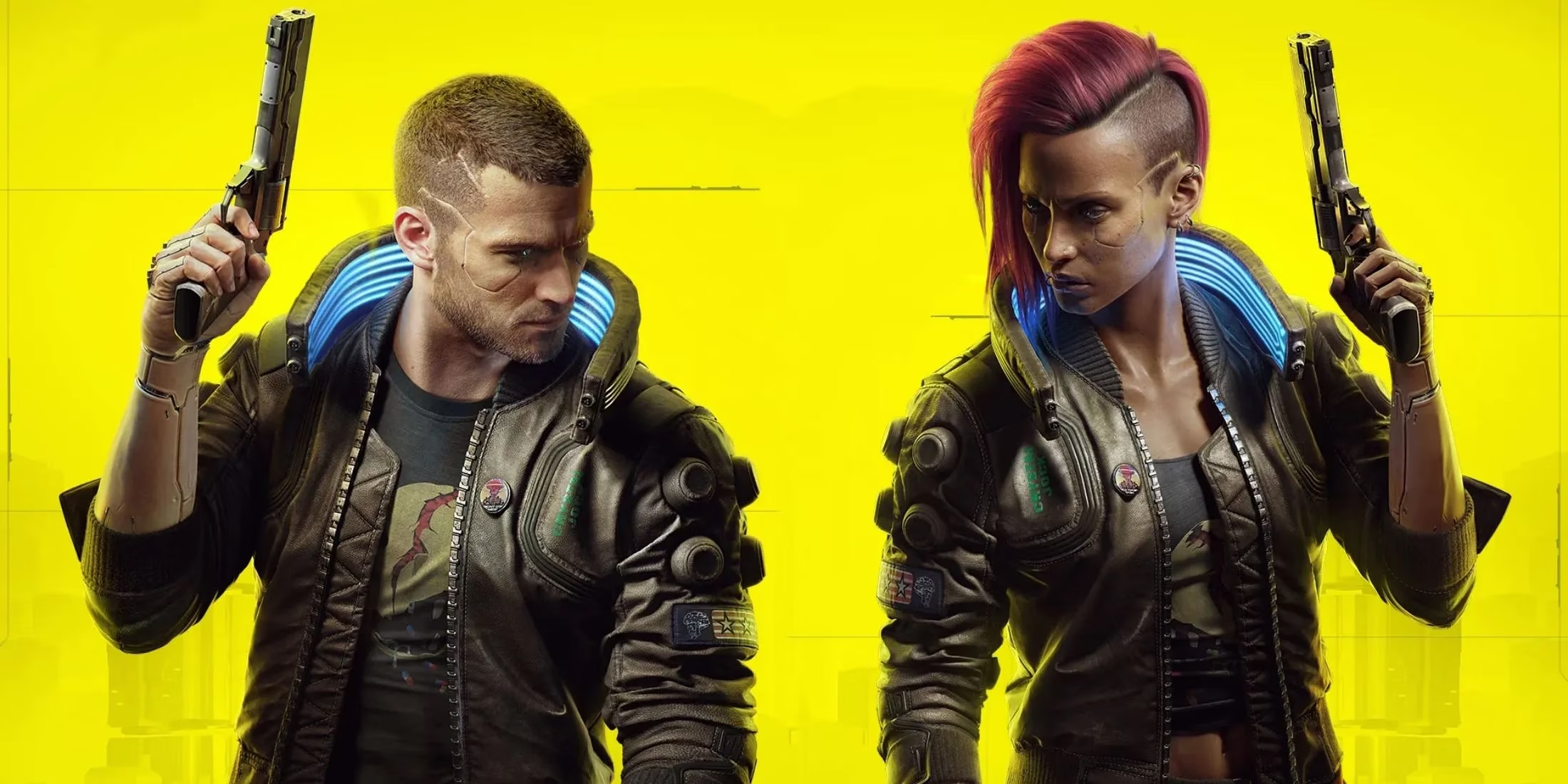
One of the most transformative changes in a second run is something as fundamental as the voice in your head. Gavin Drea and Cherami Leigh deliver performances for male and female V that are so distinct, they feel like two completely different characters inhabiting the same iconic jacket. Sticking to one gender on your first run means you're missing out on half of this incredible vocal tapestry. Switching V's gender isn't just a cosmetic change; it's like listening to a beloved symphony rearranged for a different, equally stunning orchestra. The cadence, the emotional delivery, the sheer attitude shifts. Plus, this unlocks exclusive romance options, adding layers of narrative you simply couldn't access before. It’s a masterclass in how voice acting can redefine a character.
A New Past, A New Future: The Lifepaths
I'll admit it, on my first playthrough, the Lifepaths felt a bit like choosing a different colored wallpaper—nice on the surface, but not structural. Coming back with a more critical eye (and after the 2.0 update), I realized I'd been too harsh. While they don't overhaul the entire story, switching from a Street Kid to a Nomad or a Corpo feels like peeling back a different layer of Night City's rotten core. The alternate dialogue options and Lifepath-exclusive quests, combined with the new reactions from characters, make V's origin feel more woven into the fabric of the world. Choosing a different Lifepath is the narrative equivalent of rewiring your own neural pathways—the destination might be the same, but the journey, the perspective, and the connections you make along the way feel refreshingly unique.
The Game-Changing 2.0 Update & Phantom Liberty
Okay, if you haven't experienced Update 2.0, you haven't truly played Cyberpunk 2077. This isn't a patch; it's a ground-up reimagining of how the game feels to play. The old skill tree and progression system, which felt like trying to navigate a spreadsheet, has been replaced with something intuitive and exciting. The new perk system lets you craft a V that truly feels like your own creation. And then there's Phantom Liberty.
Going from the base game's neon-soaked streets to the decaying, lawless dystopia of Dogtown is a shock to the system—in the best way possible. The expansion is a tightly wound spy thriller that makes the most of the new mechanics. Vehicular combat turns car chases into chaotic ballets of destruction, and the reworked cyberware system makes you feel like a walking arsenal. Returning to the base game after experiencing Dogtown made the entire world feel deeper and more dangerous.
Crafting Your Own Ending (And Another One)
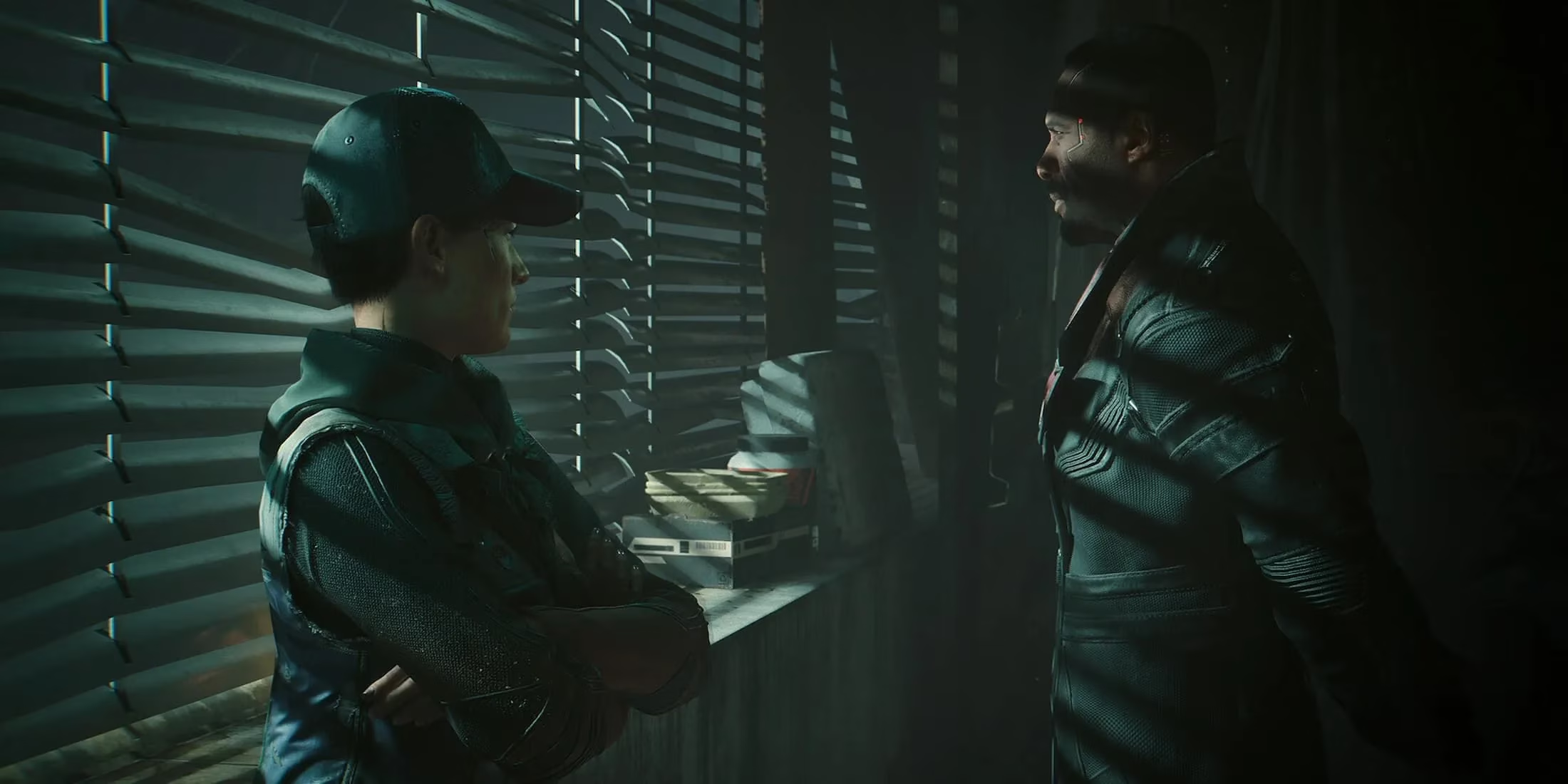
The sheer weight of the endings in Cyberpunk 2077 is staggering. My first conclusion left me emotionally gutted, staring at the credits in silence. That alone was a powerful motivator to return. But knowing there were other paths—some bleaker, some more hopeful—was a powerful lure. And with Phantom Liberty, there's a whole new ending path that recontextualizes everything. Pursuing a different finale in a second playthrough isn't just about seeing new cutscenes; it's about making different moral choices, forging different alliances, and ultimately deciding what V's legacy will be. It turns the game from a linear story into a mosaic of possible futures.
Love in the Time of Cyberware
Romance in Night City is messy, complicated, and deeply human—a stark contrast to the chrome and code everywhere else. What I didn't appreciate on my first run was how gender-specific some of these relationships are. Switching V's gender doesn't just change the voice; it unlocks an entirely new set of romantic possibilities. Pursuing Judy Alvarez as female V feels like a different story arc than romancing Panam Palmer as male V. It's a brilliant way to add narrative novelty, encouraging you to engage with characters you might have sidelined before. These stories are some of the most well-written in the game, and they deserve to be experienced.
Reinventing Combat: From Brute Force to Digital Ghost
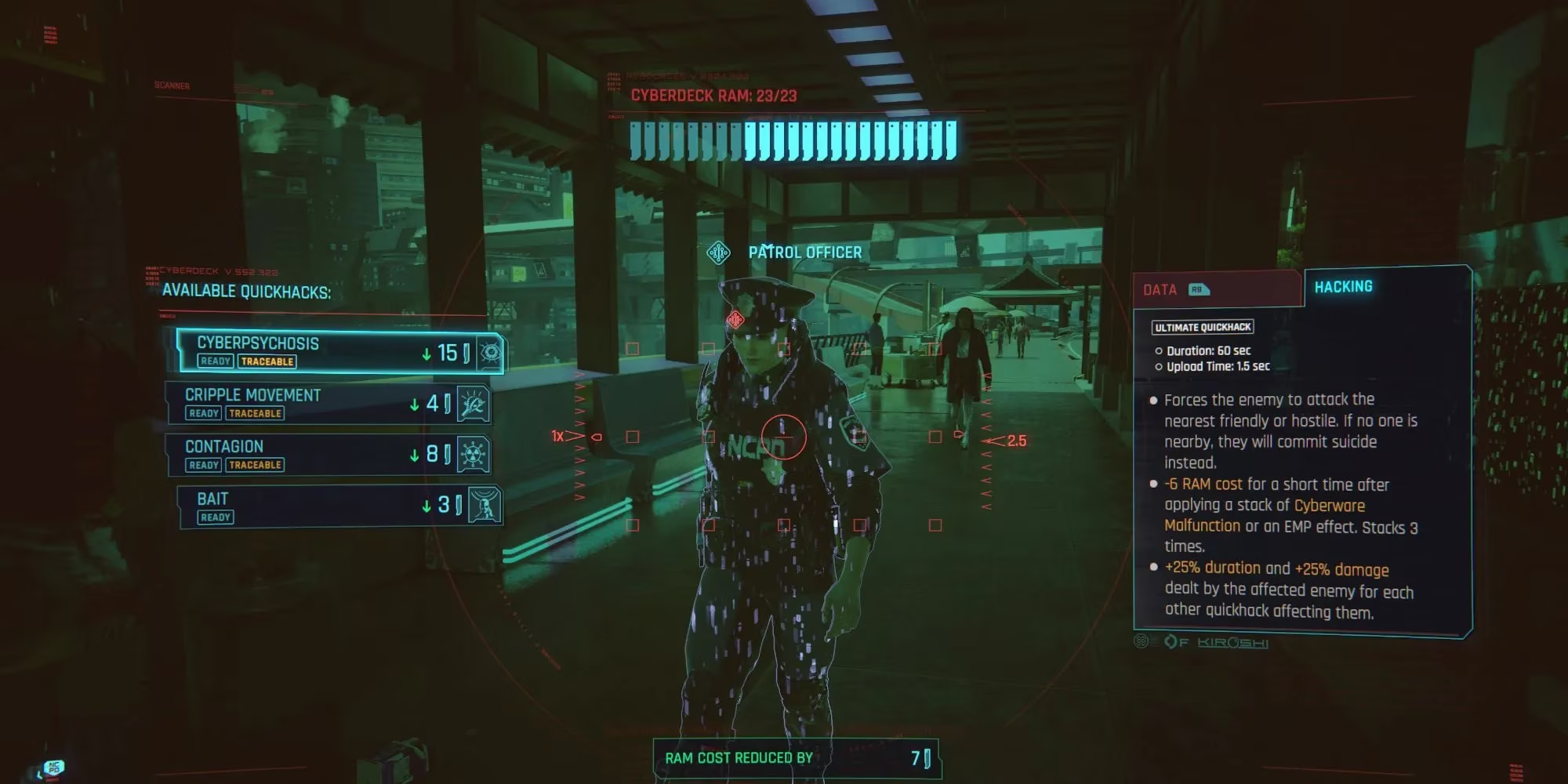
My first V was a shotgun-wielding maniac who solved every problem with overwhelming firepower. It was fun, but it was one-note. For my second playthrough, I decided to become a ghost in the machine—a Netrunner. Relying on Quickhacks completely transformed the game. Suddenly, combat was a puzzle. I could overheat an enemy's weapon, blind a whole squad, or make them turn on each other, all from the safety of a nearby rooftop. The stealth gameplay, especially when combined with optical camo and silent takedowns, made me feel like a predatory phantom. Swapping your entire combat approach makes Night City feel like a new playground. It's like going from using a sledgehammer to solve every problem to employing a surgeon's scalpel—the environment is the same, but your interaction with it is fundamentally different.
An Arsenal of Possibilities
I probably used 20% of the game's weapons on my first run. The second time, I vowed to use everything I'd ignored. I discovered the joy of monowire, the brutal efficiency of a throwing knife build, and the sheer comedy of a weapon like Skippy. The weapon variety is astonishing, and each type encourages a different playstyle. Committing to a specific arsenal—be it smart weapons that curve bullets, power weapons that blast through walls, or a suite of iconic blades—gives each combat encounter a fresh rhythm. Your second V doesn't have to be a better version of your first; they can be a completely different instrument playing a different song in the symphony of violence.
So, here's my final take in 2026. Cyberpunk 2077 is no longer the game that launched. It is a testament to developer perseverance and a love letter to the cyberpunk genre. A second playthrough isn't a simple replay; it's a rediscovery. With a new voice, a new past, a revolutionized gameplay system, a sprawling expansion, and the freedom to craft a wholly unique combatant, returning to Night City feels like opening a time capsule you forgot you buried, only to find it now contains treasure. 🎮✨
If you've been on the fence, let this be your sign. Jack back in. Your new life in Night City awaits, and it's even better the second time around.