I remember my first steps into Night City, a place of chrome and shadow, of neon dreams and whispered sins. In 2026, the city still pulses with the same chaotic energy, a digital ghost I've walked through not once, but three times. I have loved it, truly. I have lost myself in its alleys, completed every Gig, unearthed every secret from the NCPD's cold scanners, and felt the weight of every choice in quests like 'Heroes' and 'Sinnerman.' This city, in its sprawling, impossible ambition, became a home. Yet, with each journey, a quiet dissonance grew, a soft static noise beneath the roaring soundtrack of my adventures. My love for this world is profound, yet it is tangled with a poet's melancholy for what could have been—a story where every thread, main or side, sang in perfect, heartbreaking harmony.
The Fractured Soul of a Mercenary
Why is V here, in this rain-slicked alley, dealing with a gang dispute for a Fixer they barely know? In my hands, the controller feels heavy with this question. The main tale is a siren song of mortality, a race against a ticking clock embedded in my own mind. V is dying, and Johnny Silverhand is the ghost in the machine, a constant, grating reminder. The bonds forged with Judy, with Panam, with River—they felt like lifelines thrown into a storm. The writing, sharp as a monowire, cut deep. But this brilliance casts a long, inconvenient shadow. It completely unravels the logical fabric of the side content. To engage with Night City's endless offerings feels, in the cold logic of the narrative, like a bizarre act of resignation. The money earned means nothing against the specter of imminent death. Driving across the city, watching days blur into nights as I complete task after task, creates a jarring rift between the story being told and the story I am living. I tried to roleplay, to pretend these were memories from before the heist, but Johnny's voice, intruding on even the most minor gig, shattered that illusion. The solution seemed so simple: let the Fixers' promises glint with more than just eddies. Let them whisper of a cure, of Arasaka's secrets, of Johnny's past—anything to tether these errands to V's desperate, driving purpose. A single thread of connection would have woven this tapestry into something seamless, something truly immersive. Alas, it was not to be.

A Hope Forged in Neon: Lessons for the Future
The choice should never be between a coherent roleplaying experience and missing a city's soul. I do not want a sequel stripped of its side content—the Gigs and hustles are the lifeblood that gives Night City its texture! They allow us to:
-
Unearth the lore of fascinating factions like the Maelstrom or the Voodoo Boys.
-
Craft our legend, from a stealthy netrunner to that overpowered "David Martinez" build of pure, glorious chaos.
-
Buy into the cyberware fantasy, replacing flesh with steel and light.
But this content must no longer feel secondary. It must be woven into the main narrative's garment, not sewn on as a patch. CD Projekt Red's phenomenal writing in the side quests proves they have the skill; they merely need the structural will. For Cyberpunk 2, the core narrative must breathe with the open world, not gasp for air against it. Perhaps the answer is to step away from another life-or-death countdown. Let the stakes be different—a struggle for power, for influence, for the soul of a district—something that naturally expands with exploration, not contradicts it.
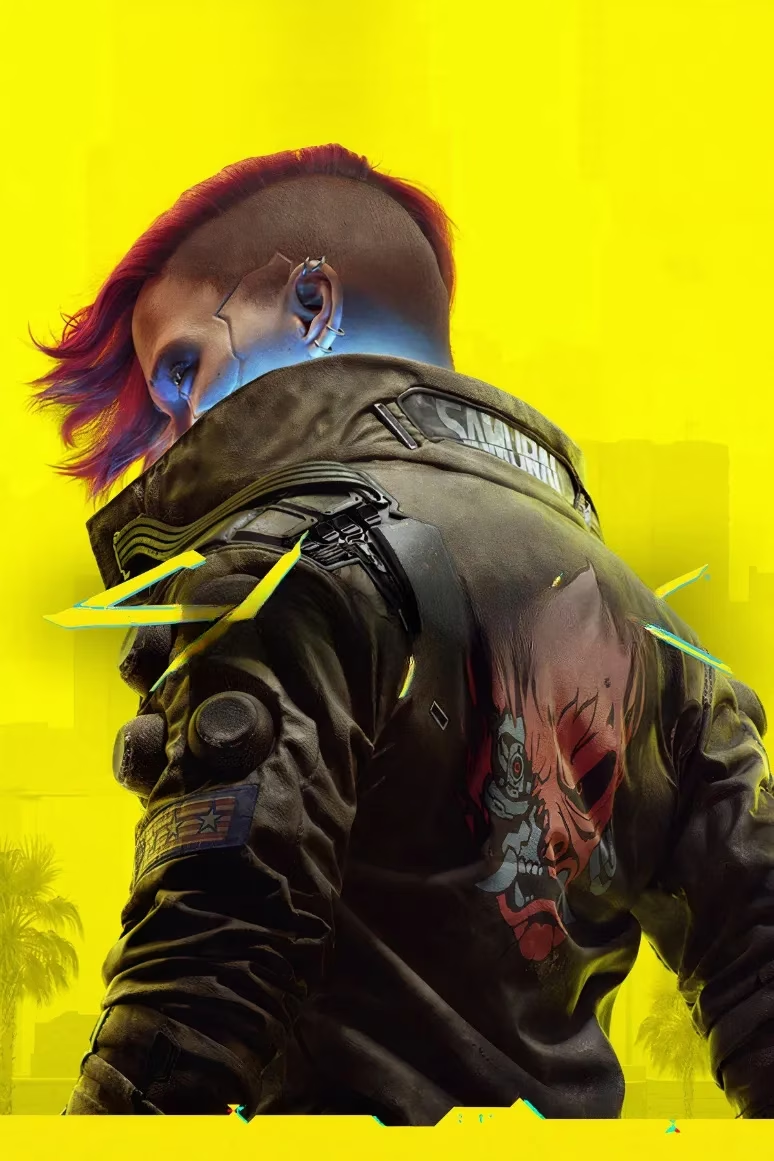
A Wider Echo in Digital Realms
I know Cyberpunk 2077 is not the first to hold this tension. I felt it years ago in the Commonwealth of Fallout 4, the frantic search for my son rendered absurd by my hours spent building settlements and helping random settlers. That game's plot holes were widened by this dissonance. Both Fallout 4 and Cyberpunk 2077 share this core conflict: an urgent, linear narrative crammed into a freeform, exploratory structure. The lesson for all future open worlds seems clear: the story must suit the sandbox. A hyper-focused, personal tale of imminent doom might sing in a more linear corridor, but it can choke in a world begging to be wandered. CD Projekt Red crafted one of gaming's most ambitious cities—a character in its own right. For the next journey, I dream of a story that is born from its streets, one where every side alley and every Fixer's call feels not like a distraction, but like another verse in the same epic, neon poem.
My time in Night City is a memory of light and shadow, of profound connection and gentle frustration. It is the memory of a masterpiece that whispered its greatest potential just out of reach. As I look to the future, to the promise of a new chapter in this universe, I hold that hope close—the hope that in the next city of dreams, I will never have to choose between living the story and loving the world. They will be one and the same.