I wander the rain-slicked streets of Night City in 2026, a ghost among ghosts, my footsteps echoing through canyons of chrome and despair. The neon signs bleed their garish light onto the pavement, a digital aurora borealis forever trapped in the perpetual night. Though years have passed since the world first fell into the rabbit hole of Cyberpunk 2077 and its soul-crushing anime counterpart, Edgerunners, the city continues to exhale its secrets, one tragic whisper at a time. The fandom, a collective of digital archaeologists, never rests, forever sifting through the data-ash of this dystopia to find connections that bind the game and series in a web of shared sorrow. The latest discovery isn't a gleaming weapon or a hidden cred-chip; it's a stain, a quiet, brutal monument to betrayal in the Santo Domingo district—a blood-soaked dumpster believed to be the final, ignoble resting place of the netrunner, Kiwi.
To the uninitiated, it's just another forgotten crime scene in a city built on them, a Rorschach blot of violence quickly scrolled past. But for those who lived through David and Lucy's story, this pixelated puddle is a gut punch. Comparing the in-game surroundings to that harrowing scene in Edgerunners—the cold execution ordered by the fixer Faraday—leaves little doubt. This is a deliberate scar left by CD Projekt Red, a piece of lore as subtle and devastating as a single, flatlining heart monitor tone in a symphony of chaos. Kiwi herself was a character of shifting loyalties and shadowed intentions, a secondary figure who coiled into an antagonist, her mentorship of Lucy fraying into betrayal. Her end was as calculated as a corrupted subroutine, a deletion by Faraday to silence her knowledge. This dumpster is her tombstone, unmarked but unmistakable.

This grisly landmark is not the only echo of Kiwi in the sprawling digital corpse of Night City. I have made the pilgrimage myself, taking the elevator in the Yaiba building in Watson's Kabuki sector to the thirteenth floor. There lies her apartment, a space frozen in time like a insect trapped in digital amber. It's worn, looted, and hauntingly familiar—a shell that once housed a complex, conflicted soul. Finding it feels less like discovery and more like trespassing on a memory that isn't yours, a poignant reminder that every scorch mark and empty synth-caffeine cup in this city has a story.
Cyberpunk 2077 is, in truth, a vast, interactive mausoleum for the Edgerunners crew. CDPR, in a move that felt less like fan service and more like an act of poignant preservation, seeded the game with these ghosts after the anime's release. The connections are everywhere for those who look:
| Character | In-Game Memorial | Location |
|---|---|---|
| David Martinez | Iconic Jacket (Quest Reward), Apartment | Megabuilding H10, Santo Domingo |
| Rebecca | "Later, choom." Inscription | Columbarium, North Oak |
| Maine | "Got a dream." Inscription | Columbarium, North Oak |
| Kiwi | Bloodstained Dumpster, Apartment | Santo Domingo, Yaiba Building (Watson) |
| Dorio, Pilar | Individual Inscriptions | Columbarium, North Oak |
The Columbarium in North Oak is perhaps the most solemn of these sites. Here, among thousands of niches, you can find the digital urns for Maine, Dorio, Rebecca, and Pilar, each bearing a fragment of their essence—a catchphrase, a sentiment—etched into the databanks. It’s a quiet place, a pocket of silence in the sensory overload, where the weight of their sacrifices hangs in the air like static after an EMP blast.
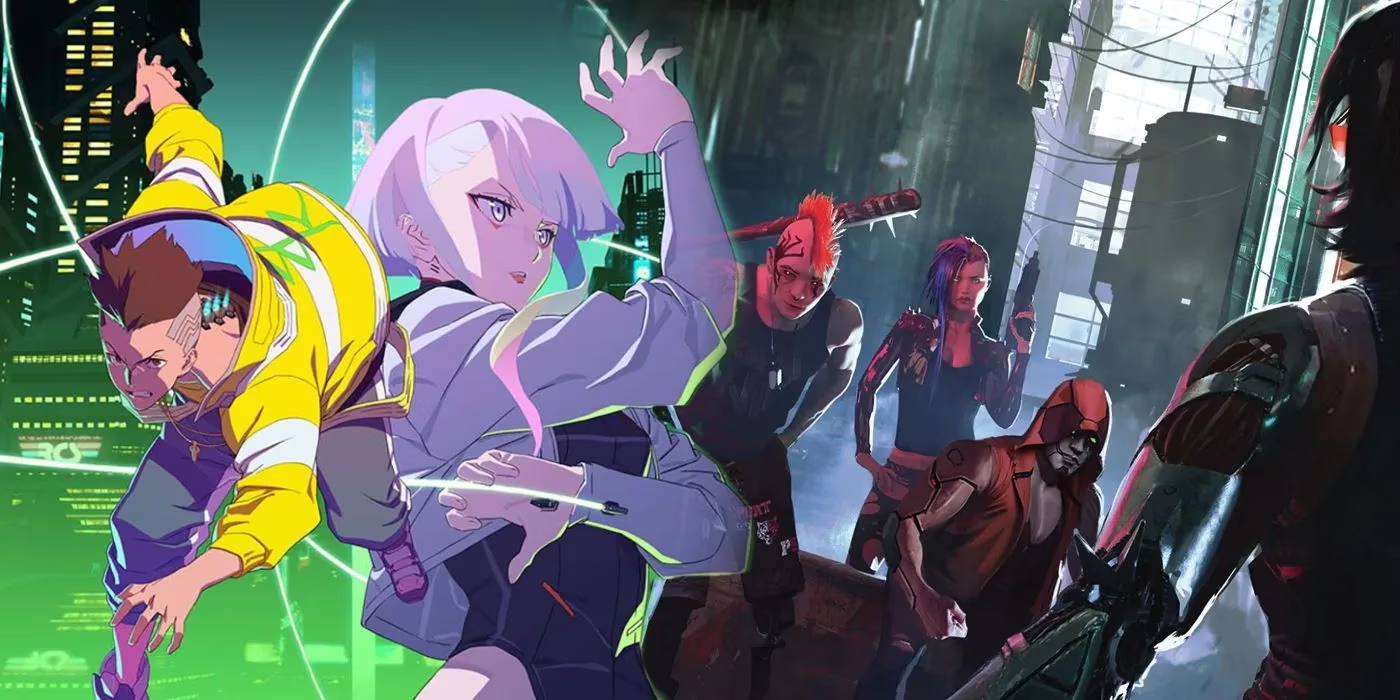
These Easter eggs are more than mere references; they are the connective tissue between two masterpieces of cyberpunk tragedy. Playing the game after seeing the anime transforms Night City from a playground of chaos into a gallery of ghosts. Every corner whispers a might-have-been, every alleyway hums with the echo of a flatline. The blood on that dumpster in Santo Domingo isn't just a texture; it's a tragedy rendered permanent in code, a final, bitter note in Kiwi's symphony of deceit and regret. To find it is to understand that in Night City, legends aren't just born in the blaze of glory—some are sealed in the quiet, rusting dark, a secret told only by the ever-falling rain. The city remembers, even when it tries to forget, and through these digital graves, we remember too, our own chrome hearts glitching with a borrowed, poetic sorrow.