I still feel the static hum of Johnny's engram in my teeth, a phantom vibration from a world that taught me choices aren't just dialogue options; they are the very code that writes your soul. Night City was a brutal, beautiful beast, a character in its own right, built with a density of detail that made every rain-slicked alley and neon-drenched market feel like a living, breathing memory. My journey as V wasn't just about surviving; it was about defining a legacy in a city that eats dreams for breakfast. The true mastery of that experience, the part that still echoes in my mind as we look toward the shimmering, uncertain horizon of Project Orion, wasn't just the sprawling main narrative. It was the quiet, pivotal moments hidden in the circuitry, like the quest known as Chippin' In—a lesson in intimacy and consequence that the sequel must not just repeat, but transcend.
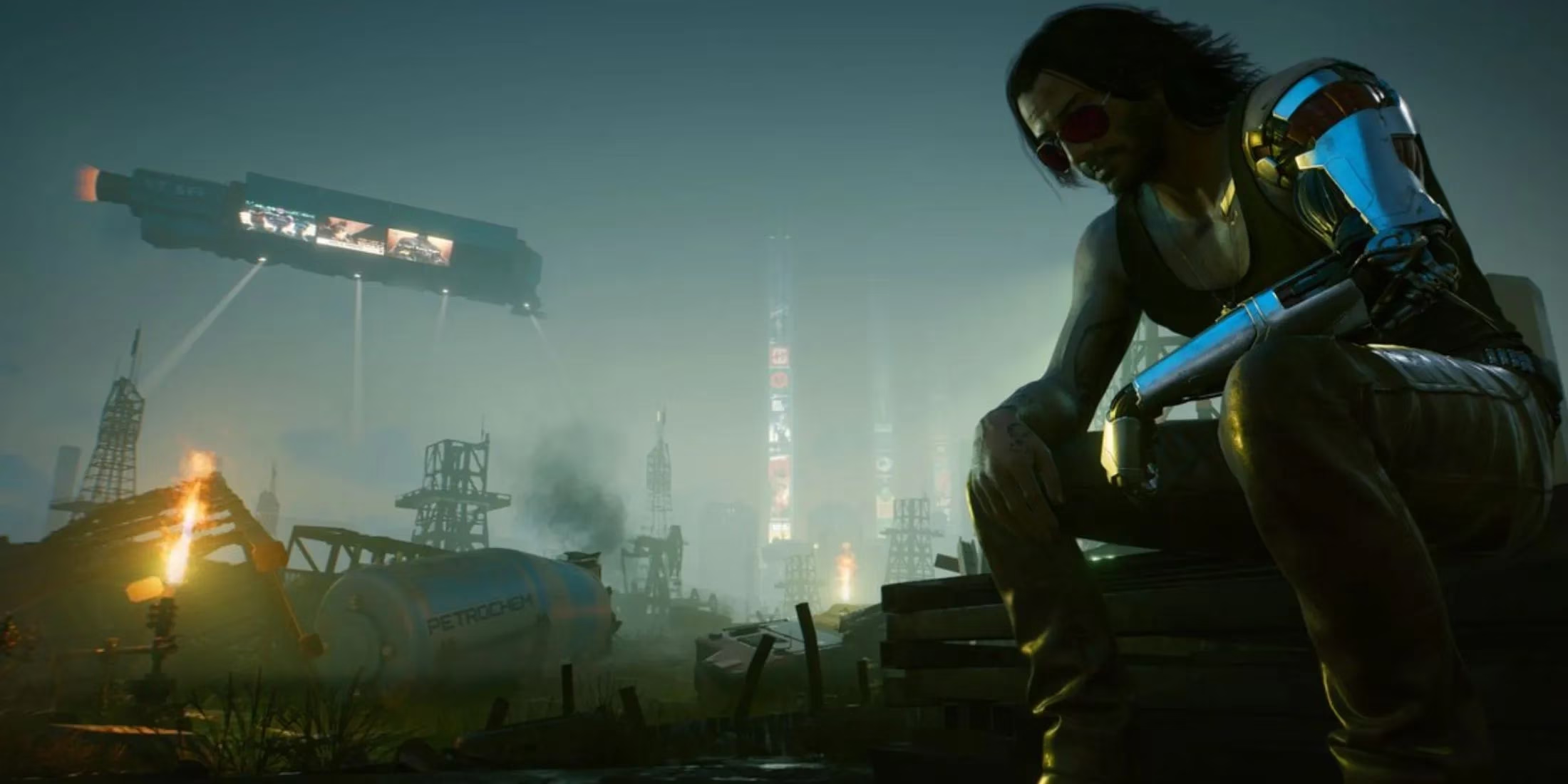
The genius of Chippin' In was its deceptively simple premise. On the surface, it was another side job with the digital ghost in my head. Yet, the words I chose in that dusty junkyard, surrounded by the skeletal remains of a bygone era, held the weight of a binary star. They weren't just unlocking a new mission (Blistering Love, a date with a rockerboy's memory); they were forging or fracturing a bond. That quest taught me that the most profound consequences are often personal, woven into the relationship between player and companion. It whispered a truth: the path to a secret ending shouldn't be a checklist, but a natural culmination of a connection earned.
Project Orion stands at a crossroads, born from a legacy that has, against all odds, evolved into something magnificent. The bar is stratospheric. To vault over it, the sequel must learn from these intimate ghosts. Imagine a world where the stakes of your decisions don't just wait for you at the finale like a destination, but permeate every step of the journey like the very air you breathe.
-
Consequences in Real-Time: What if a choice made in a tense negotiation altered the physical landscape of a district hours later? Not just a news ticker, but a changed skyline, new factions on the street, different faces behind the counter of your favorite noodle bar.
-
Companion Ecosystems: Building on Chippin' In, relationships could be dynamic ecosystems. Trust, resentment, loyalty—these wouldn't be hidden meters but palpable forces affecting mission availability, dialogue trees, and even the AI behavior of your allies in combat. A betrayed companion might not just leave; they could become a persistent, clever antagonist tailored to your playstyle.
-
The Ripple, Not the Wave: The Phantom Liberty DLC showed us the power of divergent, heart-wrenching outcomes. Orion should make every major quest a miniature Phantom Liberty, with branches that feel organically grown from the player's moral and tactical DNA.
| Cyberpunk 2077's Lesson | Project Orion's Potential Evolution |
|---|---|
| Secret endings locked behind relationship thresholds. | Entire narrative pathways, character arcs, and world states dynamically shaped by a web of cumulative, often subtle, choices. |
| Quests like Chippin' In affect the ending. | Every mission, main or side, contains branching nodes that permanently alter the living world, making "side content" a misnomer. |
| Consequences are often narrative-centric. | Consequences are systemic, affecting economy, enemy density, faction reputation, and environmental storytelling in real-time. |
The vision is daunting. To craft a world so reactive that no two playthroughs are merely different, but fundamentally unique experiences, is the holy grail. It would mean that my neon-drenched tragedy could be your corporate espionage thriller, and another player's story could be a chaotic street-level revolution—all within the same city framework. The technology and narrative ambition required are immense, a testament to the years of silence we must grant the developers at CD Projekt Red.
As we float in the net-space of speculation in 2026, the hype for Orion is a palpable static. Yet, the most important choice lies not with the player, but with the creators: the choice to take the time. Rushing a vision of this scale would be the one unforgivable sin. Cyberpunk 2077's own launch is a ghost that must be heeded—a cautionary tale etched into the genre's code. The success of its redemption arc has earned them trust, but with it comes the weight of expectation.
So, I dream of the day I jack into Orion's world. I don't just want a bigger city or shinier chrome. I want to feel the weight of my digital soul again. I want a quest that feels like Chippin' In not because it unlocks an ending, but because it changes everything that comes after in ways I couldn't possibly predict. I want to build relationships that can spectacularly fail, not just quietly fade. I want my every action to send ripples through the neon-lit canals of this new dystopia, creating a story that is irrevocably, beautifully, mine. The sequel's potential lies not in out-gunning its predecessor, but in out-feeling it. It must listen to the whispers in the machine, the lessons learned in the junkyards and love stories of Night City, and have the courage to build a world where every choice truly matters, from the first interface to the final, fading signal. 🎮✨