The sprawling, neon-drenched metropolis of Night City in Cyberpunk 2077 is rife with secrets, but few are as chilling and psychologically intricate as those buried within the optional investigation known as The Hunt. This side quest, which tasks the mercenary V with assisting former NCPD detective River Ward in finding his missing nephew, Randy, leverages the game's signature braindance technology to plunge players into the profoundly disturbed psyche of a serial killer. What initially appears as a standard detective procedure using virtual reality recordings evolves into a surreal and harrowing journey into childhood trauma and spectral haunting, a detail that, though later patched, added a layer of supernatural dread that continues to be a point of discussion among the game's dedicated community even years after the seminal 2020 release.
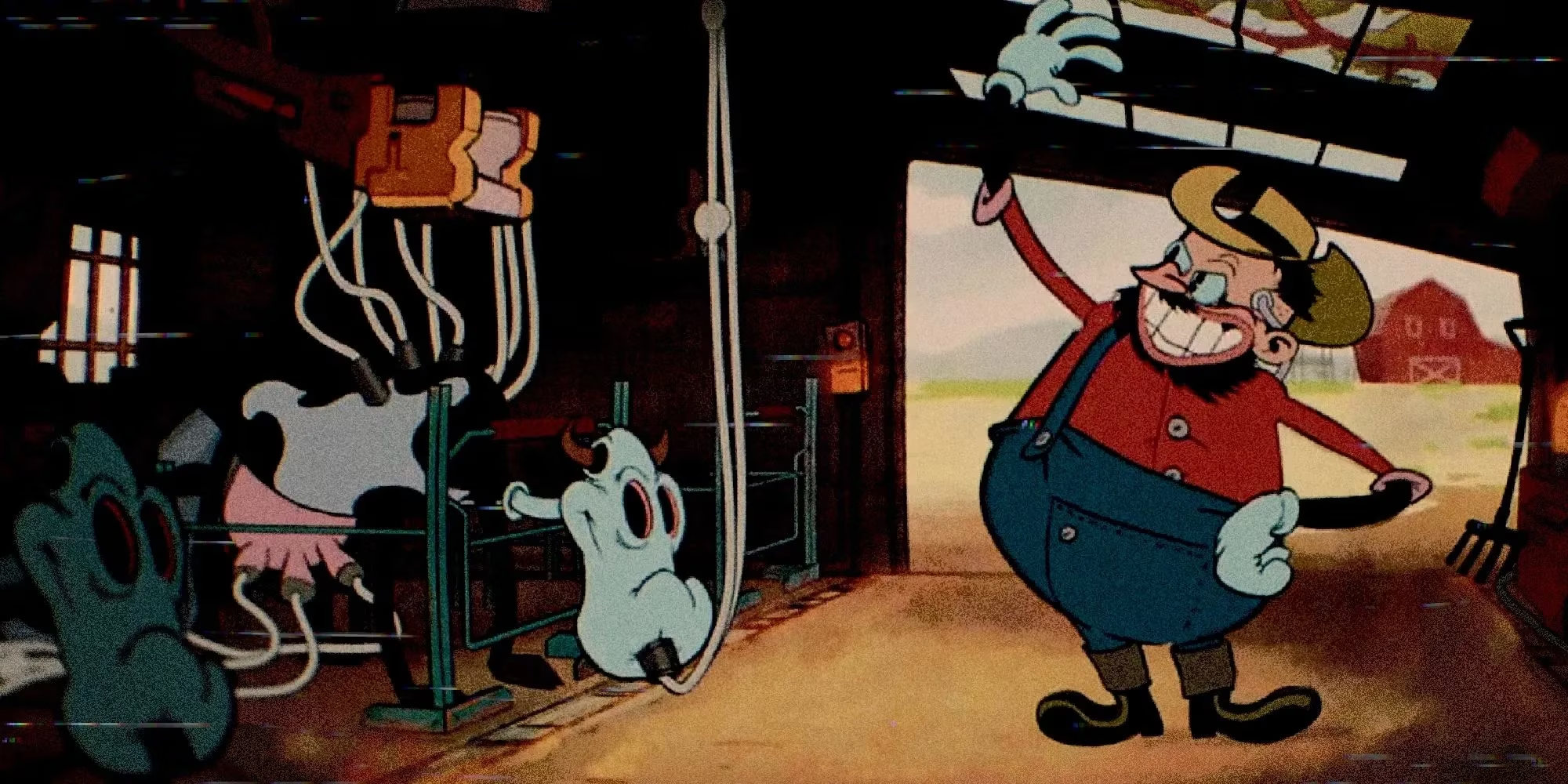
At the heart of this quest lies the braindance archive of Anthony Harris, a figure whose monstrous actions at Edgewood Farm are eclipsed only by the tragic origins of his pathology. These braindances are not simple recordings; they are fragmented, dream-like memories filtered through a broken mind. They reveal a childhood marred by severe paternal abuse, with a father who blamed young Anthony for his mother's death. This foundational trauma manifests in sequences that blend reality with nightmarish symbolism, such as a schoolteacher transforming into a cow—a clear representation of how Harris came to see his victims as mere livestock. This surreal quality differentiates these braindances from others in the game, serving not just as evidence but as a direct conduit into a killer's fractured perception.
However, the most unsettling element, later altered by the developers at CD Projekt Red, was a hidden, ghostly observer within these recordings. During the quest's climactic sequences, particularly in the braindance's final act where Harris stalks a victim through his grisly farm operation, a spectral figure could be spotted in the distance using the thermal vision layer. This same ethereal presence appeared earlier, silently watching young Anthony endure his father's wrath. Initially, this figure was scannable, and her identifier revealed her to be 'Lena Harris', Anthony's deceased mother. This implied that, within the confines of his own tormented memories, Harris was perpetually haunted by his mother's ghost—a psychological specter born from his father's cruel accusation that he was responsible for her demise.
The community's dissection of this detail was extensive. Players theorized that the ghost's positioning in the final scene—watching from a specific spot outside—aligned with a potential burial site on the farm, a location where a body can indeed be found outside the braindance context. This layer of environmental storytelling suggested that the haunting was not merely symbolic but anchored to a physical, grim reality within Night City. The decision to patch out the scannable name, while removing a direct clue, arguably deepened the mystery, leaving players to wonder about the nature of the apparition: was it a genuine supernatural element in the Cyberpunk universe, a powerful psychological projection of Harris's guilt, or a haunting glitch within the braindance technology itself?
The lasting impact of The Hunt lies in its masterful use of the braindance mechanic to transcend simple puzzle-solving. It employs the technology as a narrative device to explore themes of generational trauma, abuse, and the genesis of evil. By immersing players in Harris's subjective, surreal recollections, the quest achieves a disturbing intimacy that a straightforward crime scene replay could never match. The player doesn't just investigate the killer; they temporarily inhabit his distorted worldview, making the eventual discovery of the victims and the confrontation with the reality of his actions all the more potent and horrifying.
In the broader context of Cyberpunk 2077's legacy and its continued evolution into 2026, quests like The Hunt stand as benchmarks for environmental and psychological storytelling in role-playing games. They demonstrate how interactive systems can be woven into narrative to create profound, unsettling experiences. The hidden ghost of Lena Harris, whether intentionally left as an enigmatic Easter egg or a detail refined post-launch, encapsulates this approach—offering a glimpse into a deeper, darker layer of Night City's lore that rewards observant players and fuels endless speculation. It confirms that the most terrifying monsters are not those lurking in dark alleys, but the ones shaped in broken homes, whose memories are prisons haunted by the ghosts of their own past.
| Quest Element | Narrative Function | Psychological Impact |
|---|---|---|
| Surreal Braindance Imagery | Conveys Anthony Harris's distorted perception | Blurs line between memory, dream, and reality, unsettling the player |
| Ghostly Figure (Lena Harris) | Represents haunting guilt and paternal blame | Adds a layer of supernatural/psychological dread to the investigation |
| Childhood Abuse Sequences | Establishes the root cause of Harris's pathology | Evokes a tragic empathy that complicates the pure villain narrative |
| The Farm Environment | Serves as both crime scene and symbolic slaughterhouse | Creates a consistently oppressive and horrifying atmosphere |
Ultimately, The Hunt remains a pinnacle of side content in the genre, a chilling reminder that in Night City, the most advanced technology often reveals the most primal and human horrors. 🎮🔍