In 2026, let's be real, sometimes you just wanna get the heck out of dodge. For gamers, that escape hatch is often a beautifully crafted open world—a place to forget your real-life woes and just... vibe. Whether you're into ancient history, post-apocalyptic nightmares, or fantastical realms, these virtual playgrounds are more than just backdrops; they're the main event. It's not always about the grind or the story; sometimes, it's about the sheer joy of exploration and soaking in the atmosphere. As they say, it's the journey, not the destination, and these games have journeys for days.
Ancient Sands and Timeless Wonders
When Ubisoft decided to hit the pause button and take an extra year with Assassin's Creed Origins, they didn't just cook up a new RPG system—they built a time machine. Transporting players to 49 BC Egypt, the game is a masterclass in historical tourism. You're not just playing as Bayek of Siwa; you're living in his world. From the awe-inspiring Pyramid of Giza to the bustling streets of Alexandria and the serene, life-giving oases, every pixel feels authentic. The NPCs chatter in period-appropriate language, going about their daily biz, making the world feel genuinely lived-in. It's a setting so rich, you might forget you have a cult to dismantle and just wanna go sightseeing. Seriously, who needs a history book when you have this?
A Stylized Kingdom of Adventure
Nintendo's The Legend of Zelda: Breath of the Wild (and its successor, Tears of the Kingdom) proved that realism isn't everything. By embracing a gorgeous, cel-shaded art style, they created a Hyrule that's pure magic. Each region is a character unto itself, home to distinct races like the elegant Zora in their aquatic domain and the fierce, merchant-minded Gerudo in their desert town. The lore is baked into the environment—you can feel the history in the crumbling ruins and hear it in the wind. The game practically begs you to ignore the main quest and just get lost. It's the ultimate "stop and smell the Silent Princesses" experience.
The Gritty, Neon-Drenched Future
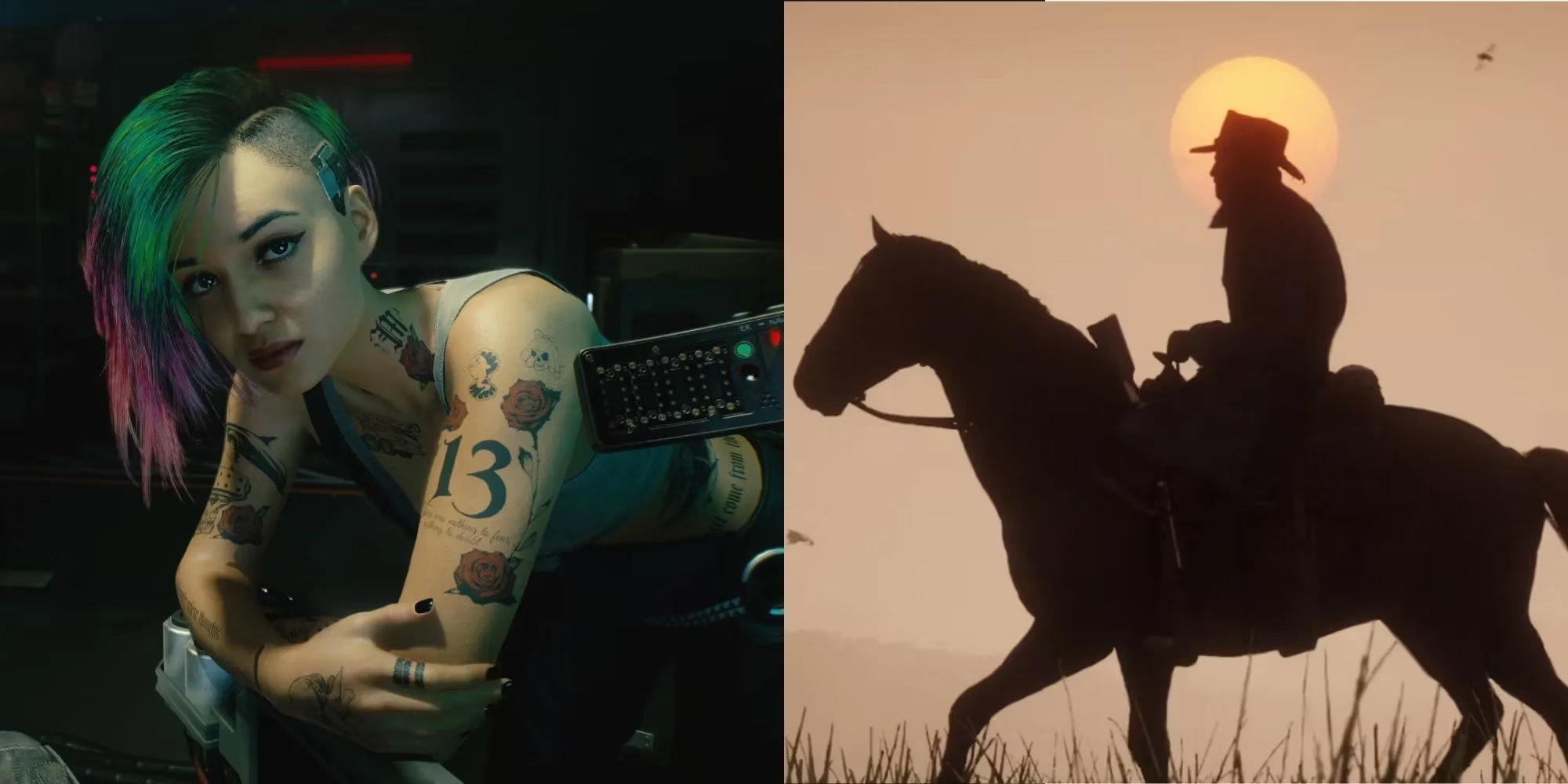
Alright, let's address the elephant in the room: Cyberpunk 2077 had a, uh, rocky launch. But fast forward to 2026, after years of patches and the stellar Phantom Liberty expansion, Night City stands tall as one of gaming's most compelling dystopias. This place is all vibes, and they're not good ones. It's a neon-soaked hellscape of corporate greed, chrome, and chaos. Every alleyway tells a story of desperation, and every mega-building screams corruption. CD Projekt Red didn't just create a city; they bottled the essence of cyberpunk—the genre's obsession with transhumanism, decay, and style over substance. Getting lost here is a dangerous, unforgettable trip.
War... War Never Changes. But the Setting? Iconic.
For a proper dose of post-nuclear melancholy, you can't beat Fallout 4. The Commonwealth (Boston, post-boom) is a masterpiece of environmental storytelling. It's a world where the American Dream has been reduced to finding a can of un-irradiated beans and a bed that isn't full of radroaches. Mutated creatures roam, Ghouls shuffle through the ruins, and every dilapidated house has a tragic tale. The story might have its critics, but the setting is an A+.
Key Locations in the Commonwealth:
-
Diamond City: The "Great Green Jewel," a stadium-turned-metropolis.
-
The Glowing Sea: A brutally radioactive wasteland, home to the worst mutations.
-
Vaults: Each one a horrifying social experiment frozen in time.
A Satirical Playground of Sun and Sin
Grand Theft Auto V's Los Santos is, frankly, chef's kiss. Rockstar's parody of Los Angeles is so detailed and alive that it puts many modern games to shame. From the vapid celebs of Vinewood to the meth labs out in Blaine County, it's a hilarious and scathing critique of modern America. The world feels so believable because it's buzzing with activity—people jogging, arguing, getting robbed. You can spend hours just people-watching or causing mayhem, and it never gets old. A decade later, it's still the gold standard for a living, breathing sandbox city.
The Wind Guides You Through Beauty
Ghost of Tsushima is a love letter to feudal Japan and classic samurai cinema. The island of Tsushima isn't just a map; it's a painting in motion. Golden fields of pampas grass sway in the wind, guiding you to secrets. Serene bamboo forests stand in stark contrast to the smoky, war-torn villages. Jin Sakai's journey is one of vengeance, but the world constantly reminds him (and you) of what he's fighting for: peace, tradition, and breathtaking natural beauty. It's a setting that encourages contemplation, making you pause your katana-swinging to compose a haiku.
Dragons, Magic, and "Hey, You're Finally Awake"
Bethesda's Skyrim is the gift that keeps on giving. Why? Because the province of Skyrim itself is a character. This high-fantasy world, with its snow-capped mountains, ancient Dwemer ruins, and cozy taverns, is the ultimate digital comfort food. It's a world rich with:
-
Deep Lore: From the civil war to the dragon cults, history is everywhere.
-
Diverse Biomes: Frozen tundras, autumnal forests, and volcanic hot springs.
-
Random Encounters: You're never just traveling from A to B; you're stumbling upon a giant's camp, a wandering bard, or a rogue dragon.
People don't keep returning for the 100th playthrough just for the story; they come back to live in Skyrim. It's a second home.
The Unmatched Cinematic Frontier
If we're talking about a world that feels more real than some real places, Red Dead Redemption 2 takes the cake. Rockstar's depiction of the American frontier at the dawn of the 20th century is a staggering technical and artistic achievement. As Arthur Morgan, you don't just ride through the world—you exist in it. NPCs have routines, animals behave realistically, and every campfire conversation adds depth. From the muddy streets of Saint Denis to the pristine snow of the Grizzlies, it's a world that begs to be explored slowly. You can hunt, fish, get a haircut, play dominoes, or just sit on a cliff and watch the sunset. It's the most immersive "cowboy simulator" ever made, bar none.
| Aspect of the World | Why It's Immersive |
|---|---|
| Wildlife Ecosystem | Animals hunt, graze, and react to you authentically. |
| NPC Schedules | Characters go to work, drink at saloons, and sleep at home. |
| Dynamic Weather | A storm completely changes the feel and gameplay of an area. |
| Character Interaction | Your honor level and appearance affect how people treat you. |
A Continent of Monsters and Morality
Finally, we have the world of The Witcher 3: Wild Hunt. The Continent is a place of stunning beauty and profound ugliness, often right next to each other. A sunny field might hide a nest of monsters, and a bustling city like Novigrad is a hotbed of prejudice and political intrigue. CD Projekt Red created a setting that feels authentically medieval-fantasy, grounded in Slavic folklore. The side quests aren't filler; they're poignant short stories that make the world feel deeply interconnected and morally complex. You remember the places—Velen's war-torn swamps, Skellige's majestic islands, Toussaint's storybook vineyards—as much as the characters. It's a world that truly transcends the game, living on in our imaginations.
So there you have it, folks. In 2026, these open worlds remain the pinnacle of virtual escapism. They prove that a great setting isn't just a pretty picture; it's the soul of the game. Now if you'll excuse me, I have a horse to brush in Rhodes and a contract to take in Velen. Happy exploring!