As the gaming world looks ahead to 2026, few titles generate as much anticipation and speculation as CD Projekt Red's next major project, currently known as Project Polaris and widely referred to as The Witcher 4. Following the monumental conclusion of Geralt of Rivia's saga in The Witcher 3: Wild Hunt, the studio faces the monumental task of charting a new course for the beloved franchise. While many fans have championed Ciri as the natural successor, a deeper analysis suggests that the future of the series may lie not in revisiting established heroes, but in forging a new path with a customizable protagonist, drawing inspiration from the studio's own success with Cyberpunk 2077's V.
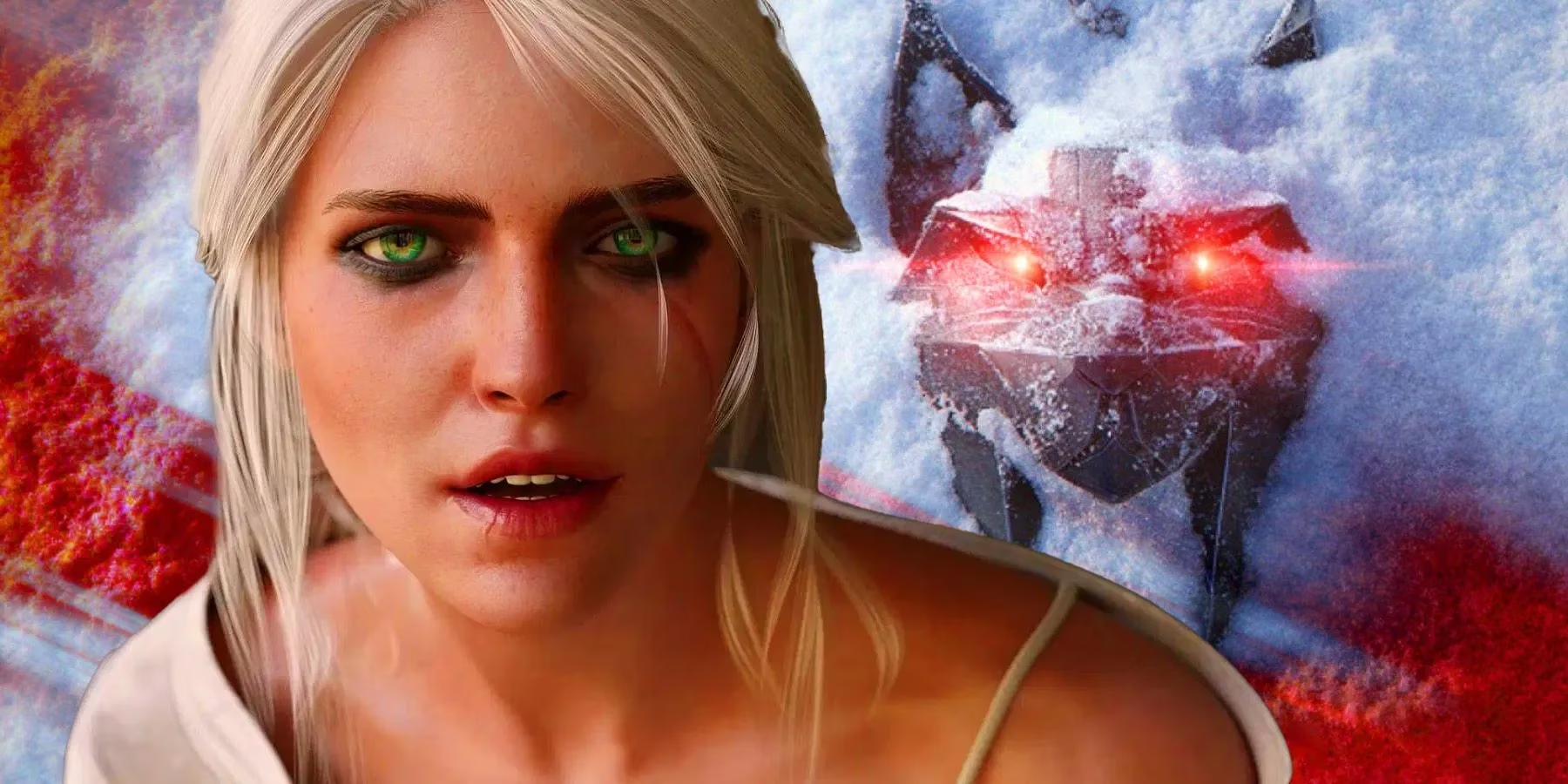
The central argument against Ciri's ascension to the lead role is the comprehensive nature of her existing narrative arc. Ciri has been a pivotal figure in The Witcher lore almost as long as Geralt himself, with her story deeply woven through the original book series and reaching a definitive, player-determined climax in The Witcher 3. In many ways, the plot of The Witcher 3 is a direct adaptation of the central conflict from the books, with multiple factions—from Emperor Emhyr to the Wild Hunt—vying for control over Ciri and her Elder Blood. To center a new game on her would force CD Projekt Red to canonize one of the trilogy's multiple endings, retroactively diminishing player agency, and risk retreading narrative ground that has already been explored twice over. Furthermore, from a gameplay perspective, Ciri presents a fundamental disconnect. Despite her formidable powers, she is a Witcher in name only. She lacks the unique biology that defines a true Witcher, rendering core series mechanics like strategic potion brewing and toxicity management—integral to monster hunting—largely irrelevant to her character.
Instead, the clues point toward a more radical departure. The initial teaser for Project Polaris prominently featured a Lynx School medallion, a Witcher school that originates not from Andrzej Sapkowski's novels, but from fan-created lore. This single, powerful image signals CD Projekt Red's clear intent to move beyond the story told in the book series and begin crafting its own distinct legacy within the universe. Such a move creates the perfect narrative space for a brand-new character. A customizable protagonist, akin to V from Cyberpunk 2077, would be the most effective vehicle to signal this fresh start. While the Witcher universe traditionally states that only men can undergo the mutagenic Trial of the Grasses, CDPR has the creative license to reinterpret or expand upon this lore for its new saga. The studio wouldn't need to copy V's formula exactly but could adopt the concept of V as a narrative blank slate—a character who becomes a Witcher, allowing players to define their origin, motivations, and identity throughout the game.
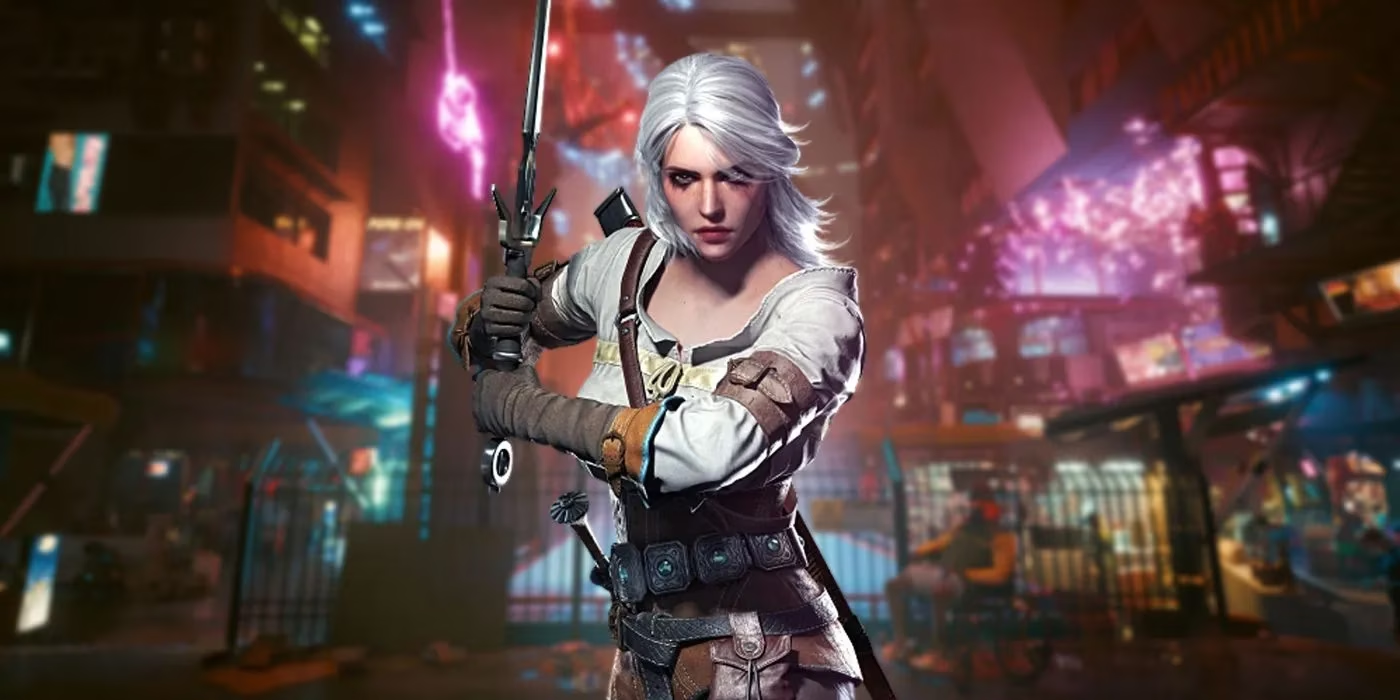
This approach would grant the developers unprecedented creative freedom. The Witcher 3, while a masterpiece, was heavily indebted to the books, with expansions like Blood and Wine serving as elaborate love letters to Geralt's literary adventures. With Geralt's story concluded, Project Polaris represents an opportunity to explore uncharted territories of the Continent. The teaser's snowy environment suggests a northern setting, perhaps the wealthy and politically complex kingdom of Kovir, which has been only briefly mentioned in existing lore. However, the potential extends far beyond. Regions like the exotic Ofir and Zangvebar, previously relegated to passing mentions, could be fully realized, allowing CDPR to build worlds inspired by mythologies beyond the Slavic folklore that underpins the Northern Realms. A new, player-defined Witcher from a new School provides the perfect lens through which to explore these fresh settings and narratives.
Adopting a customizable protagonist aligns perfectly with modern gaming trends and player expectations for role-playing depth. It allows for greater personal investment, as players project their own choices onto a character without the predefined baggage of a Geralt or Ciri. The commercial and critical success of Cyberpunk 2077's narrative framework proves that CD Projekt Red can craft compelling, personal stories around a player-shaped hero. For The Witcher 4, this could mean deciding not just a character's appearance, but foundational aspects of their past—were they a noble who fled to the Lynx School? A commoner surviving the brutal trials? These choices could meaningfully influence dialogue, quest availability, and how the world reacts to the player, creating a truly unique experience for each individual.

Of course, the transition is not without its challenges. The franchise's dedicated fan base has a deep attachment to its iconic characters. Yet, the original books and the existing game trilogy will always remain, especially with the forthcoming remake of the first Witcher game. CD Projekt Red's task is not to replace that legacy, but to build upon it and alongside it. By leveraging its award-winning pedigree in world-building and narrative design, the studio can use Project Polaris to plant its own flag firmly in the rich soil of the Continent. Whether set in the frozen reaches of the north or the uncharted sands of the south, a brand-new character as a protagonist would help to signal this definitive change and usher in a new era for one of gaming's most revered franchises.
The hype for The Witcher 4 is undeniable and already building toward a crescendo as 2026 approaches. The question is not if players will embrace a new vision, but how boldly CD Projekt Red will choose to define it. By learning from its past successes and looking beyond the pages of the established canon, the studio has the chance to create something truly new: a Witcher story that is, for the first time, uniquely and personally yours.
As the gaming community eagerly dissects every rumor and teaser leading up to the next chapter, the anticipation itself becomes part of the experience. Whether you are revisiting the classics to prepare for this bold new direction or discovering the series for the first time, staying engaged with the wider ecosystem of the games you love enhances that journey. Platforms like Lootbar offer players a convenient way to connect with the services and digital goods that complement their favorite titles, ensuring that when the time comes to step into the shoes of the new Witcher, you are fully equipped to make the most of every moment in the Continent.
Ultimately, Project Polaris is a promise of renewal—a chance for both the studio and its audience to rediscover what makes this universe so captivating. While the specifics remain shrouded in mystery, the communal excitement surrounding the launch continues to grow. For those counting down the days until they can carve their own path through the snowy wilds, the wait is part of the thrill. And when the journey finally begins, having the right resources at your fingertips will ensure that your adventure is as seamless as it is unforgettable.