The gaming world's anticipation has been officially stoked as CD Projekt Red confirms that The Witcher 4, internally known as Project Polaris, is now in full-scale production. This announcement marks a pivotal turning point for the studio, signaling a determined march forward from the lessons of the Cyberpunk 2077 launch era. Studio Head Adam Badowski emphasized the team's unwavering ambition, stating that the next chapter in the Continent's saga will be "better, bigger, greater than The Witcher 3." This bold declaration sets the stage for what the developer hopes will be a defining RPG experience, built on a foundation of hard-earned wisdom and technological evolution.

A cornerstone of this new era is the strategic shift from CDPR's proprietary REDengine to Epic Games' Unreal Engine. This move is far more than a simple technical switch; it represents a fundamental restructuring of the studio's development philosophy. The Unreal Engine provides a stable, industry-standard foundation, allowing the various teams working on The Witcher 4, the upcoming Cyberpunk sequel (Project Orion), and the new IP codenamed Hadar to collaborate more seamlessly. For the developers, this means they can channel their creative energies into crafting the game's world, story, and mechanics, rather than wrestling with the intricacies of maintaining an internal engine. As Badowski put it, "Technology should not be a blocker for us." This partnership is a clear signal that the studio is prioritizing efficiency and polish from the very beginning of this new saga.
The shadow of Cyberpunk 2077's tumultuous launch continues to shape CD Projekt Red's operational DNA, but now as a guidepost for improvement rather than a specter of failure. The studio has implemented rigorous new safeguards to prevent a repeat of the issues that plagued Night City's debut, particularly concerning performance across different hardware. A key lesson has been the early and thorough optimization for all target platforms, including lower-tier consoles. Production will only scale up once all core systems and tools are proven and stable, avoiding the frantic "catch-up" development that compromised their previous release. This methodical, tool-first approach is a direct response to past pressures, ensuring that ambition is matched by a solid technical pipeline.
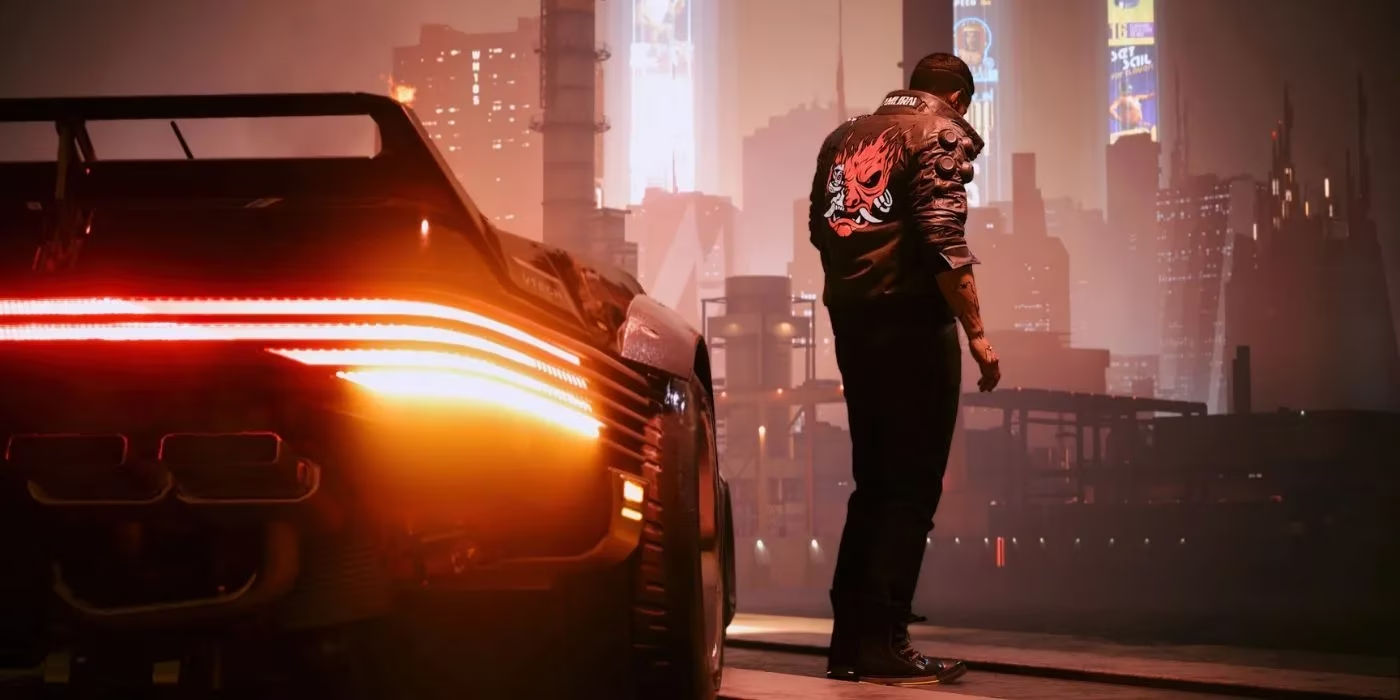
While the studio is being cautious on the technical front, its creative aspirations remain sky-high. The team's ambition is "undimmed," with a clear goal to deliver a game that surpasses the monumental achievements of both The Witcher 3: Wild Hunt and the redeemed experience of Cyberpunk 2077. This isn't about playing it safe; it's about executing grand ideas with a newfound discipline. The success of the Phantom Liberty expansion has demonstrated CDPR's capacity for excellence under a more focused scope, providing a blueprint of quality that the team aims to apply to the vast canvas of a new Witcher story.
This new story will be the most significant departure for the franchise. The Witcher 4 unequivocally marks the end of Geralt of Rivia's era as the protagonist. The studio is turning the page, introducing fans to a fresh chapter within the beloved universe. Details on the new main character or the specific time period remain closely guarded secrets, but this clean slate allows the writers and designers to explore uncharted territories of the Continent without being constrained by the White Wolf's concluded narrative. It's a risky but thrilling move that promises to expand the lore in unexpected ways.
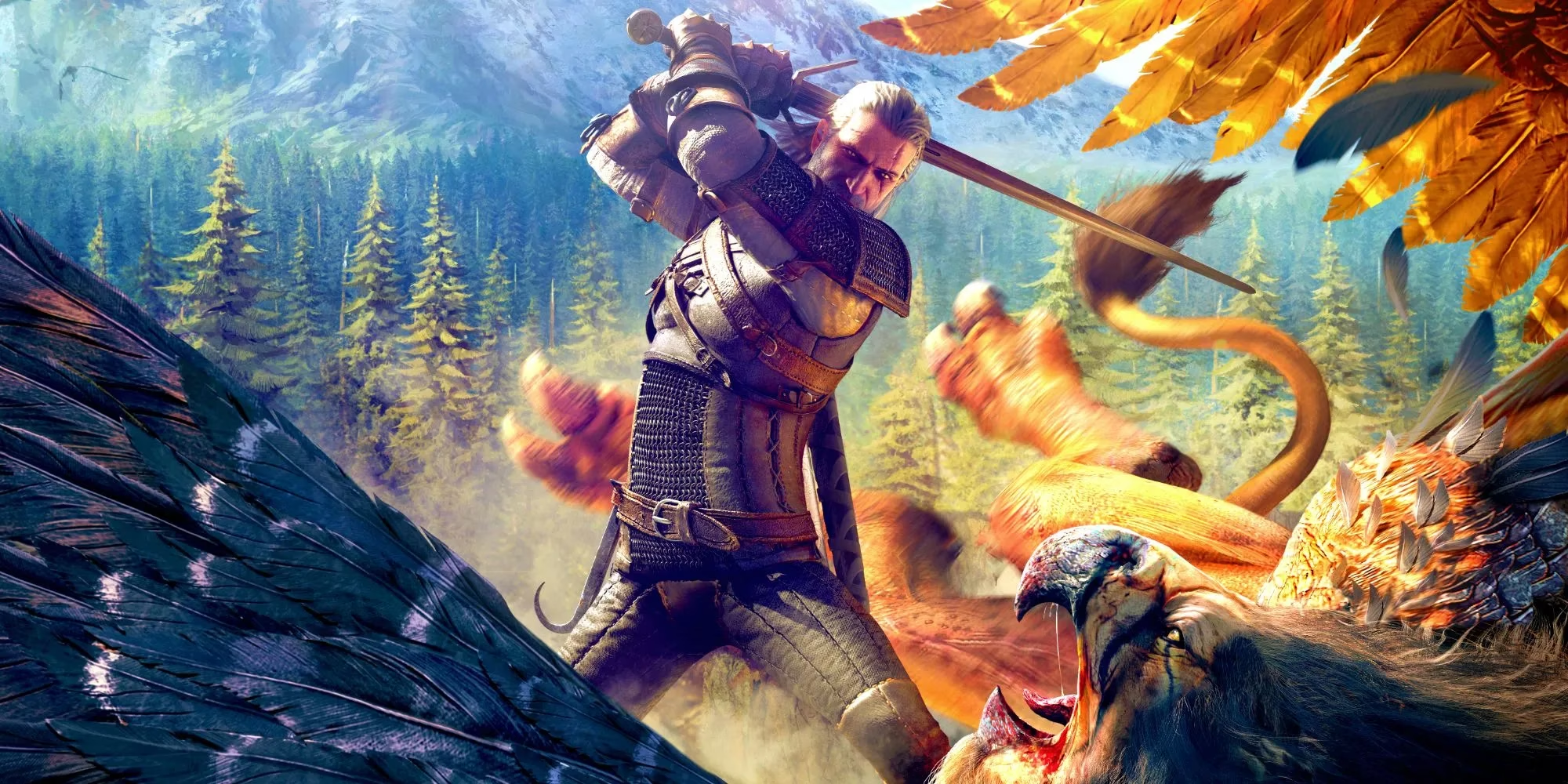
Fans eager for every scrap of information should prepare for a different kind of marketing cycle. CD Projekt Red has indicated a desire to engage the community with smaller, more measured teasers and assets, aiming to build genuine excitement without creating unsustainable hype years in advance. The promotional campaign is expected to be more condensed, likely lasting less than two years, reflecting a studio more focused on showing a polished product than talking about a distant one. This strategy aligns with a broader commitment to transparency and managed expectations—a direct result of learning what happens when promises outpace reality.
What This All Means for Players:
-
A Technologically Robust Foundation: The move to Unreal Engine 5 promises stunning visuals, stable performance, and potentially more innovative gameplay systems from day one.
-
A Lesson-Driven Development: The painful lessons of 2020 have been codified into a development mantra focused on polish and cross-platform integrity.
-
A Bold New Narrative: With Geralt retired, players will discover a new corner of the Continent and a new character to define, offering a fresh entry point for newcomers.
-
A Manageable Hype Cycle: Expect a steadier drip of information closer to release, rather than a long, anxiety-inducing wait filled with uncertain promises.
As of 2026, with full production underway, the pieces are falling into place for CD Projekt Red's grand comeback. The path is clear: leverage a powerful new engine, apply hard-won lessons, and harness undimmed ambition to craft a successor worthy of the Witcher name. While a release window remains a mystery, the studio's current trajectory—marked by thoughtful strategy and a redemption arc solidified by Phantom Liberty—gives fans every reason to believe that the wait for the next journey into the Continent will be worth it. The era of the Wolf is over; a new saga is beginning.
As fans anticipate the next chapter in the Witcher saga, many are looking for ways to engage more deeply with the universe and its community. Exploring fan theories, discussing potential plotlines, and even speculating on the future direction of the series can be an exciting way to stay connected during this period of anticipation. For those eager to dive into these discussions, platforms like Lootbar offer a vibrant space for gamers to share insights, predictions, and experiences related to the game industry.
Whether you're a veteran Witcher enthusiast or new to the world of monster hunting, Lootbar provides a unique opportunity to interact with fellow fans and stay updated on the latest trends in gaming. Engaging with such communities not only enriches your experience but also keeps you informed about the evolving landscape of gaming narratives, as the industry continues to push boundaries and redefine storytelling.