As I sit here, my own neural pathways tingling with anticipation for the future, I can't help but reflect on the seismic journey of Cyberpunk 2077. From its mythic announcement in the ancient year of 2012 to its phoenix-like rise from the ashes of a tumultuous launch, this game didn't just enter the market—it detonated a cultural bomb in the collective consciousness of gamers worldwide. I remember the feverish speculation, the mountains of hype that felt like they would crush the very developers at CD Projekt Red. Based on the prophetic tabletop visions of Mike Pondsmith, it promised a descent into a dystopian future so vivid, so visceral, that we would feel the grime of Night City on our own skin. And oh, what a descent it was! The initial release in 2020 was a paradox—a masterpiece of narrative and world-building trapped in a prison of technical malfunctions on older consoles. It was like witnessing a glorious, chrome-plated angel with a tragically faulty power core. But then, the redemption arc began. Years of relentless patching, a symphony of hotfixes, culminating in the earth-shattering 2.0 update of September 2023. This wasn't just an update; it was a rebirth, smoothing out the jagged edges and unlocking the game's true, terrifying potential. And let's not forget the Phantom Liberty expansion, a masterclass in espionage thriller storytelling that plunged a new, electrifying angle into the game's core themes. But as I gaze into the neon-drenched horizon of 2026, I realize the foundation has been laid for something even more profound, more unsettling. The sequel has a monumental opportunity to not just show us a cyberpunk world, but to make us feel its most horrifying implications in our very bones.
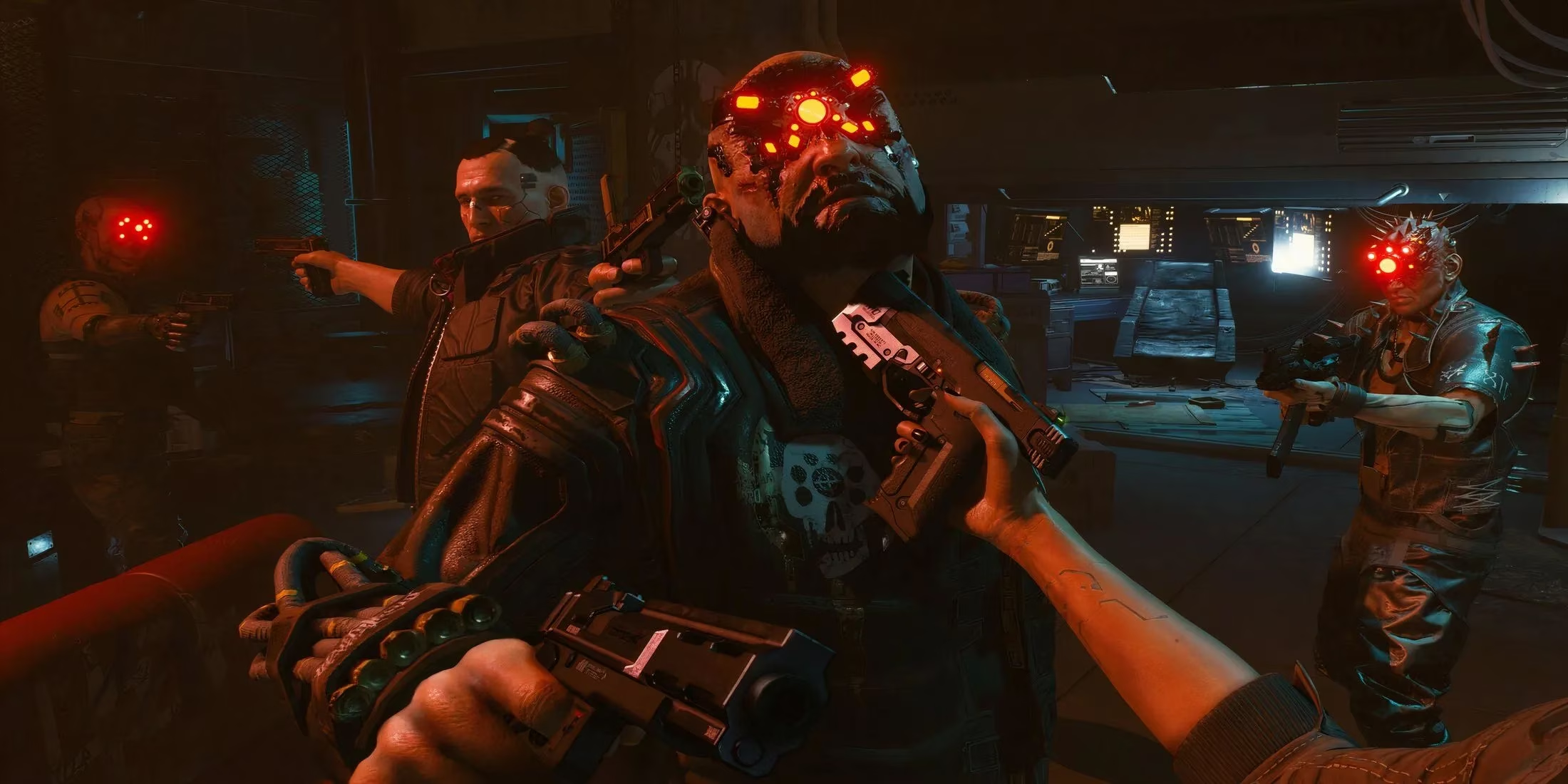
The Grotesque Gallery: Night City's Living Nightmares
The original game introduced us to factions that were less like gangs and more like walking, talking manifestos of bodily corruption. Let's break down the most iconic examples:
-
The Maelstrom Gang: These weren't just criminals; they were avant-garde artists of the abominable. Their explicit, stated goal was to shed their humanity entirely, replacing flesh and soul with cold, jagged metal and pulsating optics. Every encounter with them was a confrontation with a deliberately engineered nightmare—a rejection of the human form so complete it bordered on religious fanaticism.
-
The Animals: If Maelstrom sought to become machine, The Animals pursued a different kind of transcendence. They embraced a primal, bestial ideology, using implants and mods to twist their anatomy into hulking, monstrous forms. The body horror here wasn't about machinery, but about the violent, uncontrolled regression into something raw and savage.
These groups were more than enemies; they were signposts pointing toward the dark destinations on the road of transhumanism.
The Ultimate Horror: The Fragile Human Psyche
Beyond the intentionally intimidating gangs lies the most pervasive and tragic horror in Cyberpunk's world: Cyberpsychosis. This isn't just a game mechanic; it's the central, chilling cautionary tale.
| The Descent into Cyberpsychosis | The Tragic Outcome |
|---|---|
| An individual, often already vulnerable, begins installing "chrome." | Each mod chips away at their sense of self, blurring the line between person and prosthesis. |
| The human brain and psyche struggle to cope with the alien sensory input and physical alterations. | The result is a catastrophic dissociation, a total loss of identity and control. |
| The final, violent outburst is not an act of malice, but a symptom of a profound psychological collapse. | What remains is not a villain, but a victim—a ghost in a machine that was once a person. |
Even we, as V, danced on the razor's edge of this horror. Every visit to a ripperdoc was a Faustian bargain. Would those gleaming Mantis Blades or lethal Monowires come with a hidden cost to our sanity? The visual design of these implants alone—organic metal slicing from flesh, wires whipping from a wrist—was dripping with visceral, body horror unease.
The Future is Frightening: A Blueprint for the Sequel
As of 2026, the technological canvas for a sequel is unimaginably vast. The power to render psychological and physical decay in photorealistic detail is here. The sequel shouldn't just iterate; it should terrify. Here’s my manifesto for its chilling evolution:
-
Deepen the Corporate Horror: We got glimpses with Arasaka's soul-snatching Relic. Now, let's plunge into the abyss. Imagine narrative arcs involving:
-
Forced Experimental Modifications: Corporations like Militech or Biotechnica using captured citizens or unsuspecting employees as living test beds for unethical, reality-warping implants.
-
Subtle Psychological Manipulation: "Safety" chips or mandatory neuralware that slowly, insidiously alters behavior and loyalty, creating a workforce of blissfully unaware slaves.
-
-
Visualize the Unraveling: Cyberpsychosis shouldn't just be a status effect. Let's see it happen. Gradual visual distortions in the UI, haunting auditory hallucinations, NPCs' faces morphing into glitching metal for a split second. Make the player question their own character's grip on reality.
-
Embrace the Uncanny Valley of the Flesh: The sequel can look to contemporaries like Stellar Blade and the legacy of Deus Ex for inspiration in portraying the fusion of organic and synthetic. Not clean cuts, but grotesque, wet, imperfect integrations—scars that glow, flesh that grows over circuitry, synthetic organs that visibly pulse under the skin.
The core themes are a goldmine for dread: Transhumanism, identity erosion, and corporate sovereignty over the human body. The sequel has the chance to explore these not just as philosophical concepts, but as sources of genuine, existential horror. It doesn't need to become a pure horror game, but a calculated, amplified dose of unease woven into its DNA would be transformative. The potential is there, lurking in the dark alleyways of Pondsmith's universe, waiting for its moment to leap out and remind us that the most terrifying monster in Night City isn't a machine—it's what happens to the person trying to become one. For now, we wait, our own nerves humming with a mixture of excitement and trepidation for what nightmares CD Projekt Red will craft next.