In 2026, long after the dust of its tumultuous launch had settled, I found myself wandering the rain-slicked streets of Night City once more. I was a veteran of this neon-drenched hellscape, a mercenary who had seen it all—or so I thought. The city, a place where ambition curdles into desperation like milk left in the chrome sun, is built on layers of secrets, each one darker than the last. I’d dealt with corrupt corporations, chrome-plated killers, and rogue AIs, but the most profound mystery I ever stumbled upon wasn't a person or a plot; it was a simple, unassuming switch on a Westbrook sidewalk.
It was hidden in plain sight, a piece of urban furniture as innocuous as a fire hydrant. Above it, a message glowed in the perpetual twilight: 'Don't press me after dark!' The reverse psychology was as transparent as a corporate lie, a dare whispered directly into the synaptic interface of every curious soul. During the day, pressing it did nothing—the city's cacophony of light and sound continued unabated. But I’ve never been one for following warnings. One night, with the acid rain falling like a million shattered data-streams, I pressed it.
The effect was instantaneous and breathtaking. It was as if I had plunged a syringe of pure void into the city's carotid artery. Across the skyline, vast swathes of light winked out. The towering megastructures of City Center became silent, black monoliths. The arterial glow of the highways faded, leaving only the lonely, pulsing guide-lights of flying vehicles, now moving like ghost-ships through a starless sea. Entire districts were swallowed by shadows, with only the defiant, sporadic glow of a few corporate logos and apartment windows piercing the gloom. The city's vibrant, chaotic soul was replaced by a profound, whispering stillness. The constant hum of neon was gone, leaving only the patter of rain and the distant, mournful wail of a sirensong. Night City, stripped of its electric skin, felt ancient and vulnerable, a fossilized leviathan dreaming of a time before wires and code.
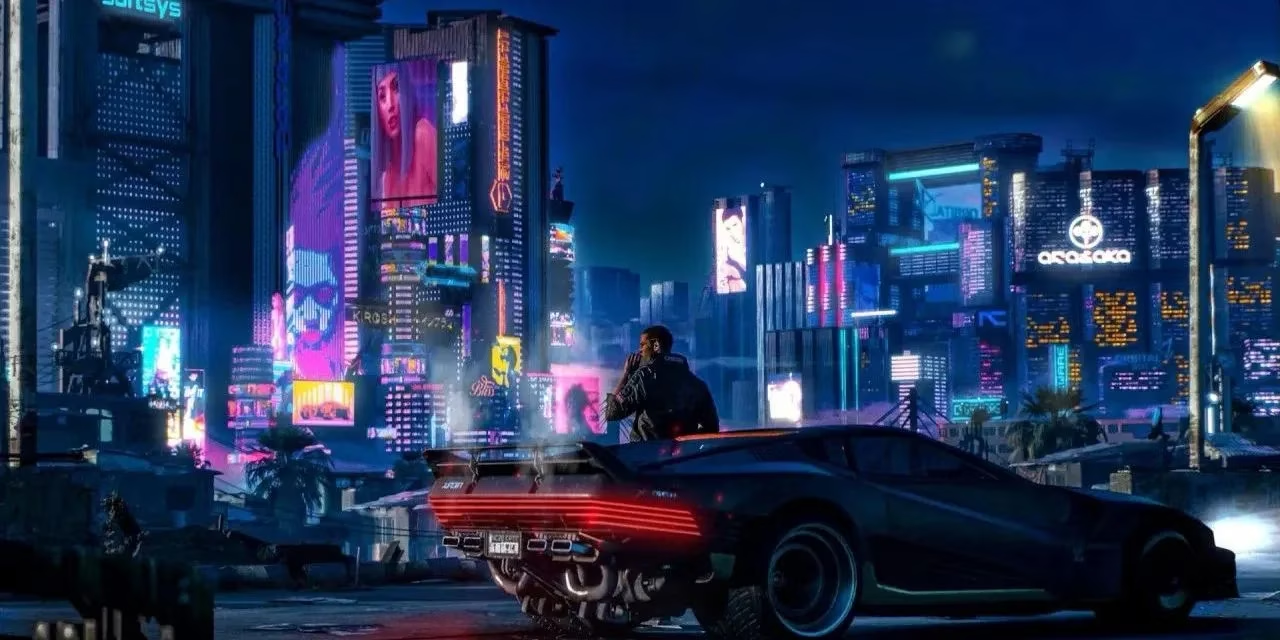
The switch itself, now the only source of light on that street corner, had changed its message. The warning was gone, replaced by a line of text that flickered with a knowing, almost melancholic wit: 'Turn out the lights, the party's over.' I later learned, from fragments of data shards and whispers on the old 'Reddit' nets, that this was just one of many lyrical ghosts the switch could conjure. It became a personal quest to see them all. Each activation was a roll of the dice, the switch offering a different snippet of poetry to the newly darkened world:
-
'Hello darkness my old friend' – A classic, feeling apt as the shadows embraced me like a long-lost lover.
-
'Fast cars, shooting stars' (though the switch, in a delightful glitch, sometimes displayed 'shooting cars'—a perhaps more Cyberpunk interpretation).
-
'I remember how the darkness doubled' – This one always sent a shiver down my spine, as the darkness in Night City is never just an absence of light; it's a tangible, living thing.
-
'Under blue moon I saw you' – A rare moment of romance offered to the concrete jungle.
This feature, I discovered, was a gift from the game's 1.5 patch years prior, part of the next-gen overhaul that finally let the city's true beauty—and horror—shine. It wasn't just a visual trick; it was a mood-altering device. Exploring the city in this state was a fundamentally different experience:
| Normal Night City | 'Switch-Activated' Night City |
|---|---|
| 😎 Aggressive, sensory overload | 😨 Tense, atmospheric, contemplative |
| ✨ Threats are obvious in the glow | 👁️ Threats feel hidden, lurking in every alley |
| 🏙️ A city that never sleeps | ⚰️ A city holding its breath |
The newfound ambiance turned familiar streets into alien landscapes. Watson's market stalls, usually buzzing with life, were now just hulking shapes, their wares invisible. Pacifica, already a district of broken dreams, felt like the set of a horror braindance. I half-expected figures to detach themselves from the walls, their optics gleaming in the residual light from a distant billboard for some forgotten synth-food. The city became a library of whispered secrets, each darkened window a closed book. I didn't have to worry about being stuck in this state forever, thankfully. Like the city's own circadian rhythm, the lights would flood back with the dawn cycle, resetting the stage for another day of chaos—and another potential night of deliberate quiet.
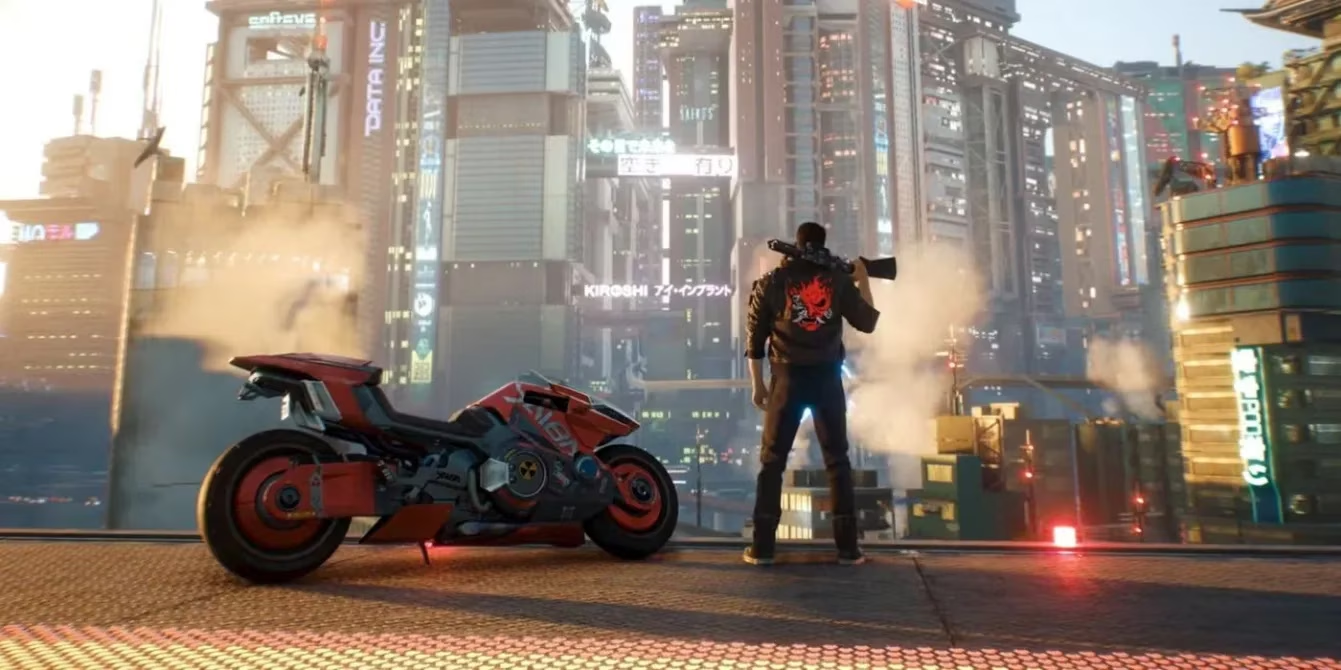
Finding this switch was a reminder that Cyberpunk 2077, in 2026, is less a game and more an ecosystem of stories, waiting for the curious to stumble upon them. It doesn't advance any questline or give you legendary loot. Its reward is purely experiential—a moment of awe, a shift in perspective. It's for the players who look at a suspiciously labeled button and think, not of consequence, but of possibility. It turns the player from a passive consumer of the city's narrative into an active participant in its atmosphere, a god of light and shadow for one fleeting night. In a world obsessed with the next big score, this little switch taught me that sometimes the most valuable thing you can find is a new way to see everything you thought you already knew. The city's true darkness wasn't in its crime or corruption; it was this beautiful, optional silence waiting beneath the noise, a secret heart beating slowly in the chest of the machine.