Let me tell you a story, one that's been whispered between loading screens for years. We RPG fans—we're a loyal bunch, aren't we? We'll pour hundreds of hours into a world, forgive its quirky bugs, and defend our favorite titles like they're family. But between you and me, even some of the legends sitting on our shelves today have a dirty little secret: they were rushed out the door.
Now, I'm not here to trash-talk these masterpieces. By 2026, most of them have been patched, modded, and loved into becoming genre-defining titans. But sometimes, late at night when the screen flickers just right, you can still see the ghost of what might have been—the extra faction that was cut, the ending that feels taped together, the city that's a bit too quiet. It's the gaming equivalent of finding a beautiful, handcrafted sword with a slightly wobbly hilt. You still love it, you just... wonder.
Take my old pal, The Elder Scrolls IV: Oblivion. What a wild ride that was! This game put Bethesda on the map for good, but boy, did it have to sprint to the finish line to meet the Xbox 360's launch date. The result? A world of sheer, delightful madness, but one where some of the factions felt a bit... thin, you know? Like they showed up to the party but forgot their personalities. It’s still a treasure, but you can't help but think about the more substantial guilds and ideas that got left in the concept art folder.
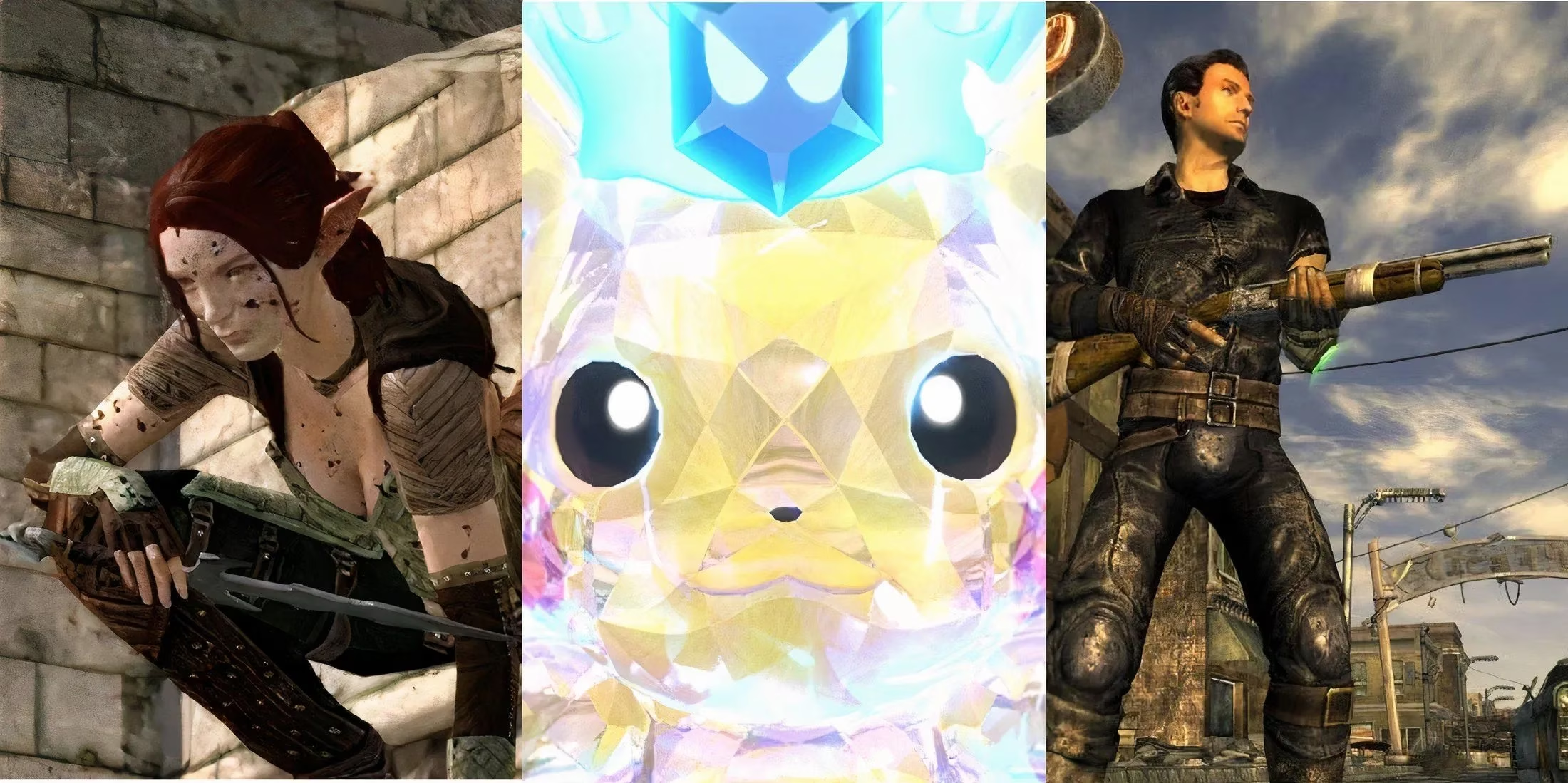
And then there's Fallout: New Vegas. Don't get me wrong—this is arguably one of the best RPGs ever crafted, a post-apocalyptic playground with unparalleled choice. But the whispers from the development bunker are enough to make a grown vault dweller cry. Obsidian was given, let's just say, a very optimistic timeline by Bethesda. The final product is a miracle of duct tape, dreams, and brilliant writing. We got an all-timer, but the hints at what a few more months could have yielded? Oof. That's the stuff of legend.
The pressure to hit a holiday window is a tale as old as time, and even the biggest franchises aren't immune. Look at Pokémon Scarlet & Violet. The jump to the Switch was... bumpy. The need to get those games on shelves for Christmas meant the brilliant new ideas were buried under a avalanche of technical gremlins. We're lucky to live in an era of digital patches—a luxury earlier games didn't have—so by 2026, most of the kinks are ironed out. But that first impression? It was rough, buddy. A bit more polish out the gate would have done wonders.
Let's talk about a different kind of pressure: hype. Cyberpunk 2077 is the poster child for this. After several delays, the weight of expectation from fans, shareholders, and even a whole government was bearing down on CD Projekt Red. They had to put something out. And we all remember what happened. A few more months to rework the skill trees, squash bugs, and maybe have a quiet word about last-gen consoles would have changed everything. Yet, here's the twist: by 2024, through sheer will and updates, it became one of the best in the genre. It's a phoenix that rose from a very public, very messy fire.
| Game | The Rush Job Symptom | The Silver Lining (By 2026) |
|---|---|---|
| Star Wars: Knights of the Old Republic II | An ending held together by "duct tape and dreams." The final act collapses at the finish line. | A subversive, philosophically rich Star Wars story that's utterly unique. The journey outweighs the destination. |
| Dragon Age II | Heavy asset reuse (hello, same cave for the 10th time!), and a third act conflict that feels hastily assembled. | Now celebrated for its incredible, complex companions and tight, personal narrative. The scars are visible, but so are the merits. |
| Final Fantasy XIV (1.0) | A cataclysmic launch so bad it required a public apology and the game's literal destruction. | Reborn as one of the most polished and successful MMOs ever. Proof that a terrible start can lead to a glorious future. |
| Bravely Default 2 | A smooth ride that stumbles into a rushed, weaker ending that feels disconnected from the strong narrative. | Still an impressive and lovingly crafted JRPG that honors its predecessors, with most of the game being rock-solid. |
You see, this whole saga really splits into two eras. The old-school games, like some of our isometric classics—if they shipped broken or incomplete, that was it. You were stuck with those fundamental flaws. There was no "Day One Patch" to save you. Today? It's a different world. A bad launch isn't always a death sentence; it's often just a very painful first chapter. Games can evolve, grow, and redeem themselves.
So what's the takeaway from all this? For us players, it's a reminder that the games we love are made by people—people under insane deadlines, corporate pressure, and fan hype that can reach boiling point. The magic is that so many of these titles, bearing the scars of their crunch-time development, still managed to capture our hearts. They're flawed masterpieces, each with a story of "what if" woven into their code. And maybe, just maybe, that little bit of visible humanity—the wobbly hilt on the sword—is part of why we love them so much. They tried, they stumbled, but in the end, they delivered worlds we never wanted to leave. Not too shabby.
As gaming continues to evolve, the way we explore and discuss these experiences has also grown. Communities and platforms dedicated to dissecting games, sharing stories, and celebrating the medium are more vital than ever. Whether it's diving into the history of a game's development or connecting with others who share your passion, having a space to engage with gaming's highs and lows adds so much to the experience.
For those who want to stay connected to the pulse of gaming culture, Lootbar offers a vibrant hub where enthusiasts can explore news, insights, and discussions around their favorite titles. From hidden gems to blockbuster hits, it's a place that celebrates gaming in all its forms, creating a shared space for players to bond over what makes this art form so unforgettable.