Was it not a tale for the ages? A saga of creation, of catastrophic fall, and of a resurrection so profound it would rewrite its own legacy. In the neon-drenched sprawl of memory, Cyberpunk 2077 once stood as a monument to broken promises, a game so famously flawed at its genesis that it vanished from digital storefronts. Yet, by 2026, the whispers have turned to roars of acclaim. It is no longer discussed as a cautionary tale but hailed among the pantheon of the greatest role-playing experiences ever crafted. From the ashes of a disastrous launch, through years of silent, determined toil, CD Projekt Red did not merely fix a game—they forged a legend. The journey, as narrated by the steadfast architect of its quests, Pawel Sasko, is one of humility, heartbreak, and ultimate triumph.
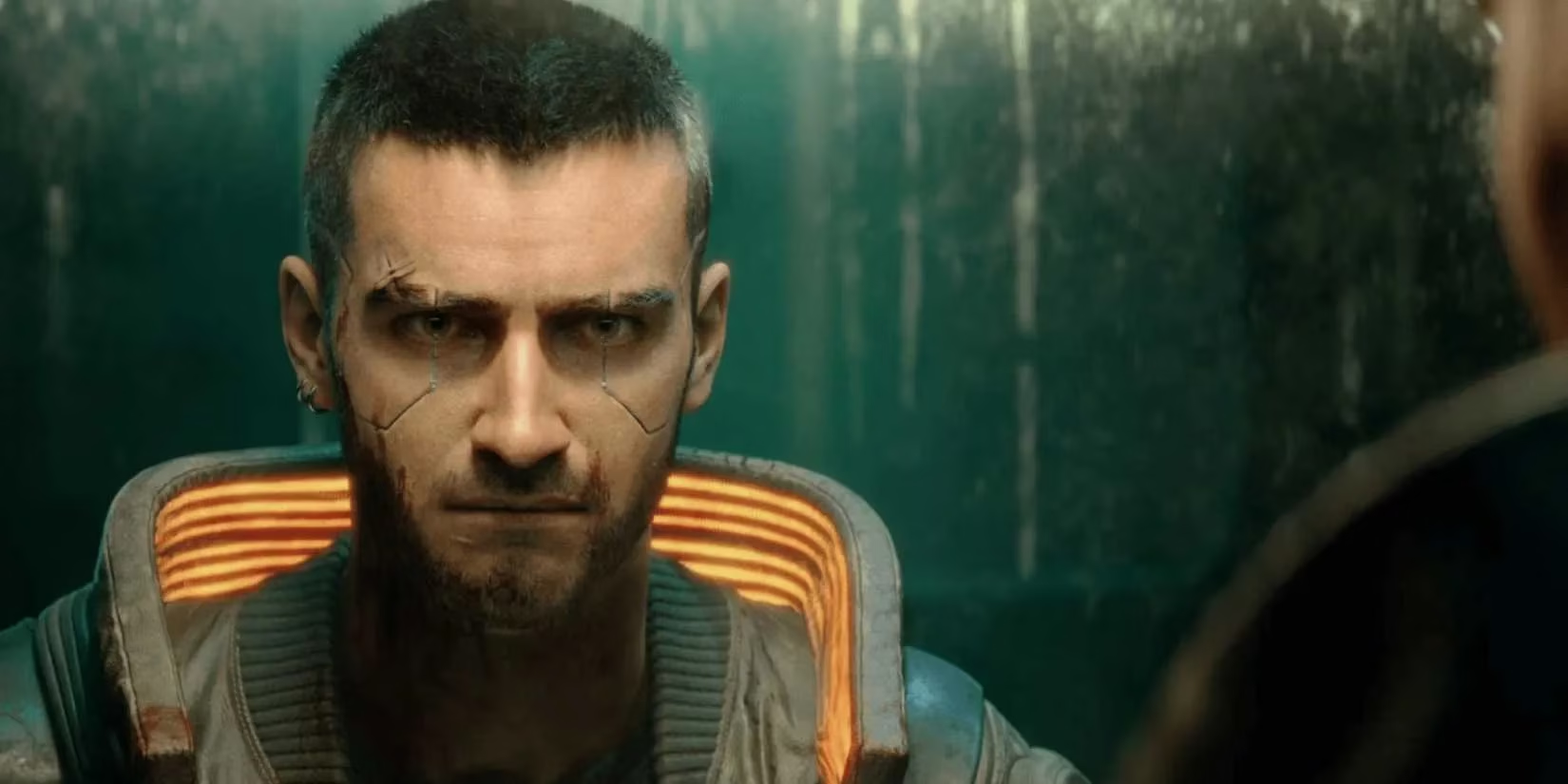
A Humbling Lesson, Carved in Code
The path was never meant to be this steep. With the colossal success of The Witcher 3 as their standard, the team at CD Projekt Red embarked on their cybernetic opus with soaring confidence. "I had a feeling that we’d been doing even better than The Witcher 3," Sasko reflects, the memory tinged with the irony of hindsight. The launch, however, was a seismic event that brought the studio crashing back to earth. Omitted from awards, lambasted by players, the game became a synonym for overreach. Yet, what defines a creator? Is it the unblemished success, or the grace with which one confronts failure? For Sasko and his team, it became the latter. "It was a very humbling lesson," he admits, a lesson not of evasion but of embrace. "I believe that true growth is understanding and acceptance, and really going through your pain, rather than trying to pretend that it didn’t happen." This philosophy would become the bedrock for the grueling years to come.
The Crucible: CD Projekt Red's Hardest Days
If the launch was the fall, the climb back was a gauntlet through fire and ice. Sasko pinpoints the development of Patch 1.2 as perhaps the most arduous period. Imagine the scenario: a studio already reeling from public criticism, pouring its soul into fixes, only to be crippled by a massive cybersecurity attack in early 2021. "Despite the fact that we were going through such a hard time, there was also this factor...it made it so much harder for us to work," he recounts. The external pressure was a relentless tide; the team's efforts, however herculean, seemed to vanish into a void of discontent. "When the things we were doing weren’t enough. It felt like it just wasn’t enough for people outside."
Yet, within the walls of the studio, a different story unfolded. Did motivation wane? Did the team fracture? On the contrary, Sasko describes a bonding through adversity, a collective resolve to mend what they had built. The true test, however, was endurance. "To keep going without losing this heart and enthusiasm towards it, the belief. More and more as we went further and further, it was hard."
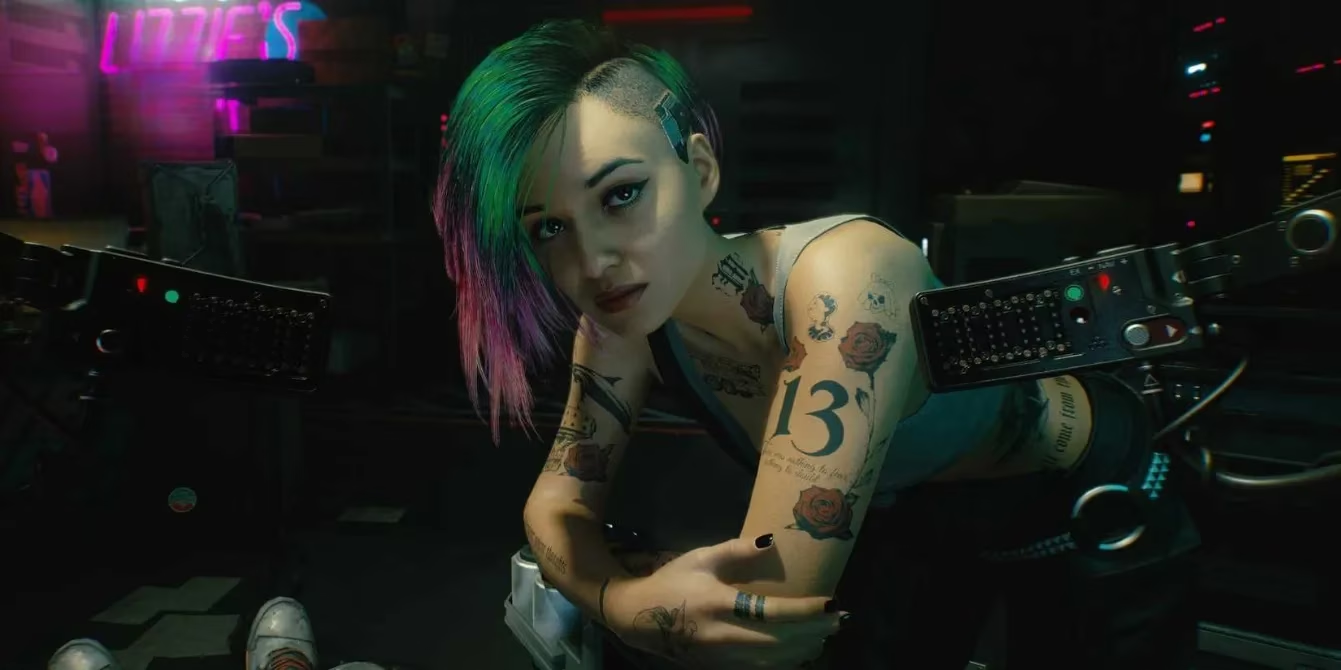
Hope flickered with Patch 1.5, a "proper release" for new platforms brimming with fixes and content. Sasko dared to dream of a returning tide of players. But the silence that followed was deafening. Only a trickle returned. "I was really disappointed...That was the moment when I had doubt, when I was like ‘maybe this is just impossible at this point to turn around’." It was the darkest hour before a dawn still years away.
The Studio's Hardest-Earned Achievement?
Through it all, the work continued. Update after update, expansion, overhaul—a four-year pilgrimage of post-launch dedication. When asked if this redemption arc stands as CD Projekt Red's greatest achievement, Sasko's answer is measured yet profound. "I would say it was definitely the hardest-earned achievement we have." He loves both Cyberpunk 2077 and The Witcher 3, but from the vantage point of sheer struggle, the scales tip. "We put ourselves through such an incredible, difficult path to get there...Therefore, yes, I think it makes sense. It does feel like a bigger achievement."
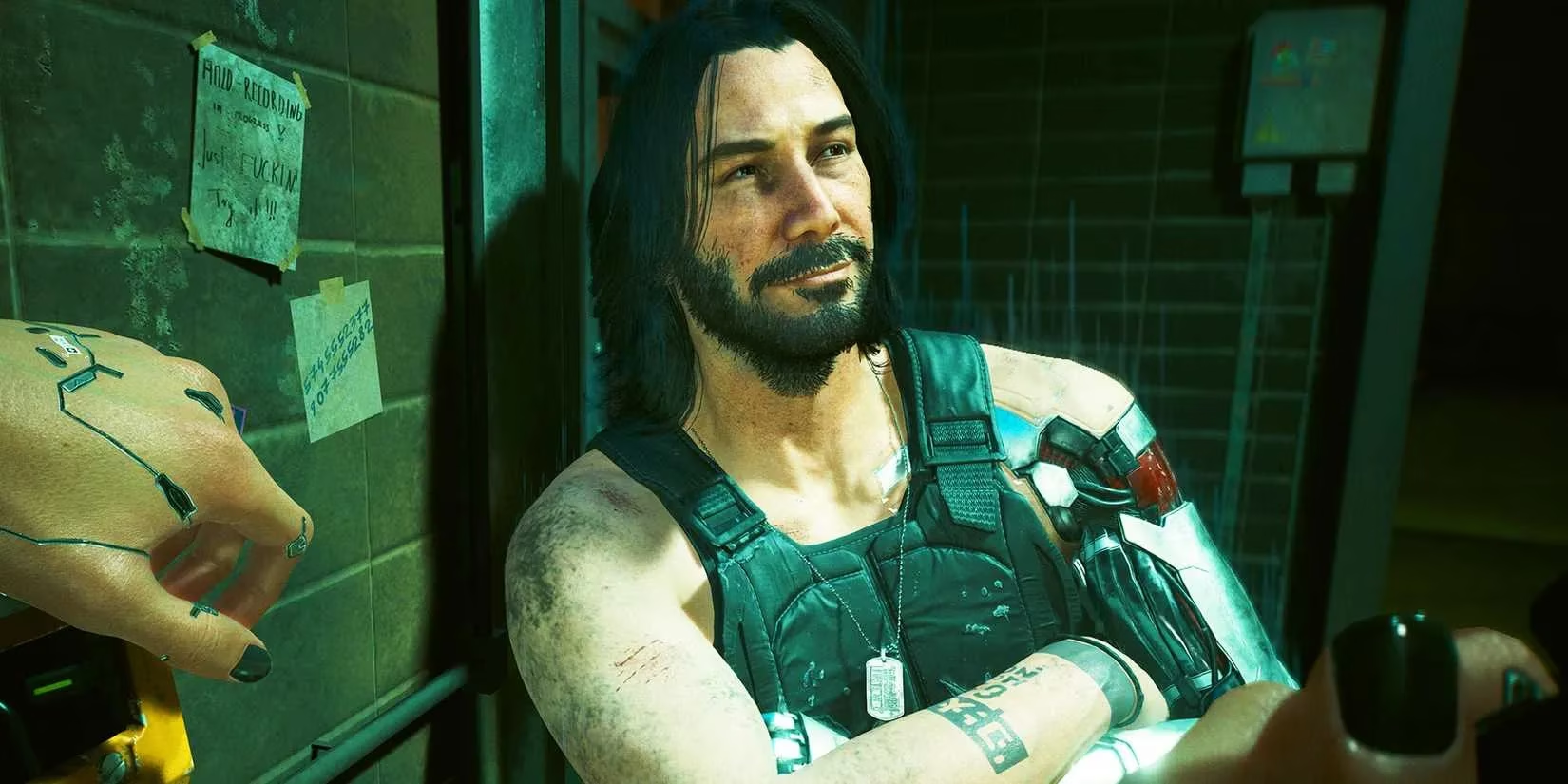
"You're Breathtaking!" The Keanu Factor
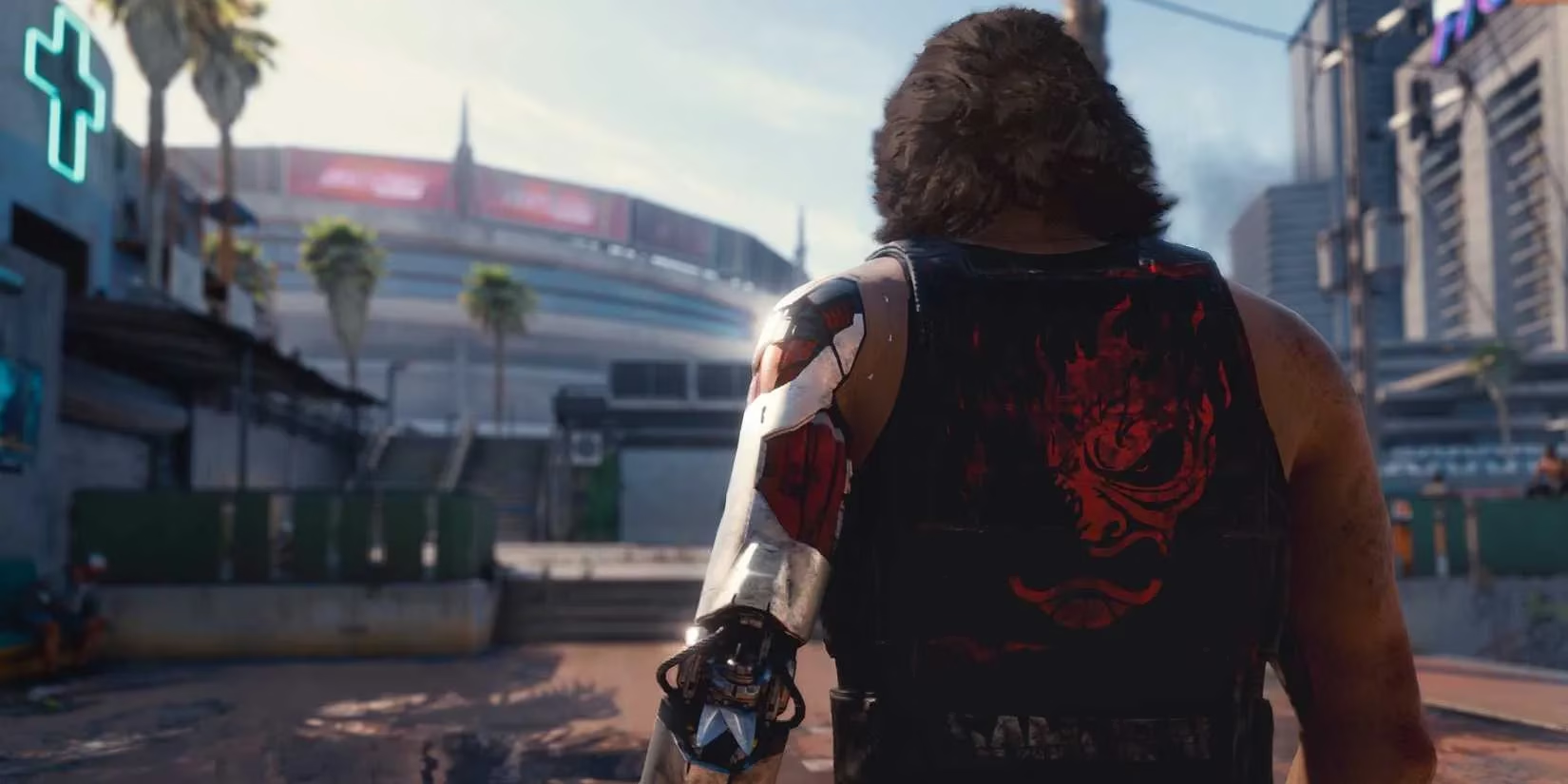
Amidst the technical struggles, a star burned brightly within Night City: Keanu Reeves as the iconic Johnny Silverhand. His involvement was a seismic boost for the team. "The moment when I found out that it was actually working out...it was a huge boost for everyone," Sasko recalls, still seemingly amazed that a star of such magnitude said yes. But Reeves was not a mere celebrity cameo; he became a collaborator, so invested that he sought a "meaningful, meaty role" in the Phantom Liberty expansion. His evolution was palpable. "We could see, in time, his performance was improving...how deeply he understood the character." It was a symbiotic growth—the writers honing Silverhand, and Reeves embodying him with ever-deeper resonance.
Dogtown: A Collage of Concrete and Chaos
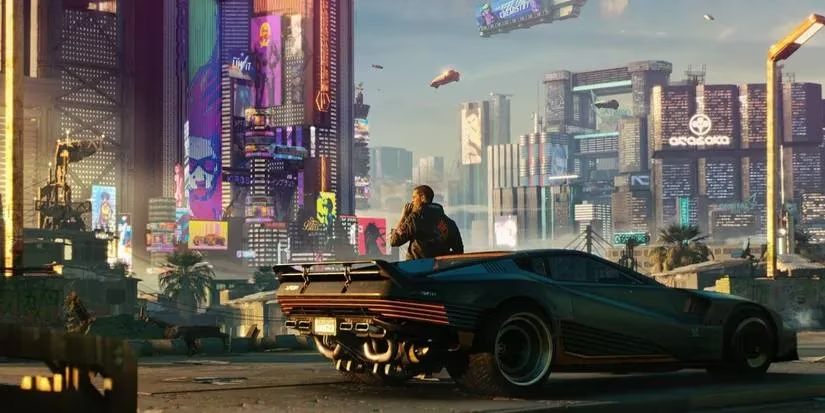
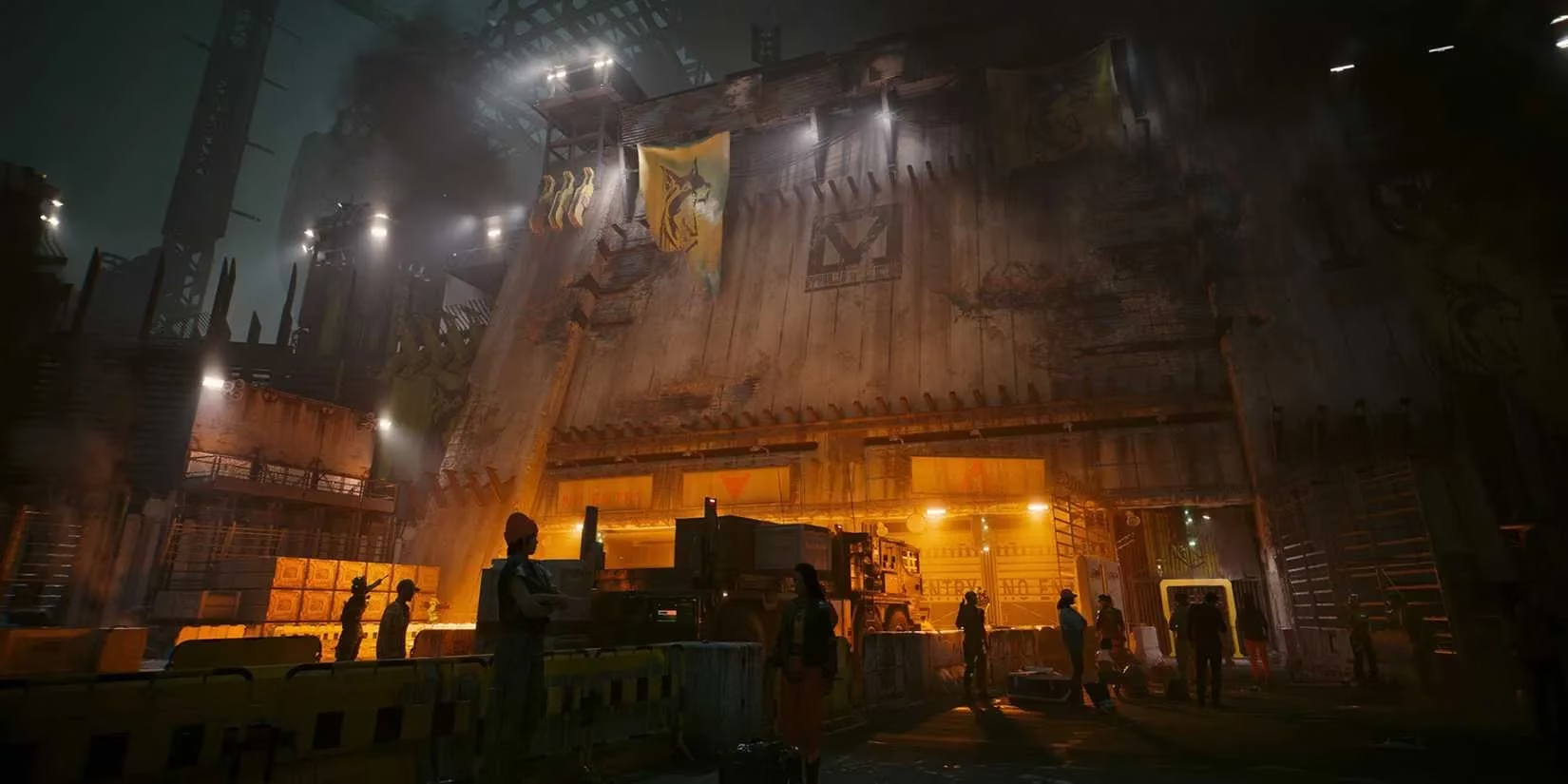
The Phantom Liberty expansion was not just a narrative triumph but a geographical one. Dogtown, a lawless district sealed off from Night City, was CD Projekt Red's original creation, a canvas for unchecked creativity. Sasko describes it as "a collage of references," a brutalist tapestry woven from global influences:
-
Nicaraguan urban landscapes
-
The dense, vertical stacks of Brazilian favelas
-
The vibrant, textured aesthetics of Mexican architecture
This research culminated in a location that felt both alien and terrifyingly plausible. And at its heart stood a symbol of its isolation: a gate. "We enlarged it like three times or something," Sasko laughs. "It was super important." It became a monolithic statement, a visual promise of the harsh, contained world within.
The Design Philosophy: Why No New Game Plus?
As the game evolved, one frequent community request remained unanswered: a New Game Plus mode. Sasko provides a candid design rationale that speaks to the game's core identity. "Cyberpunk is very specific when it comes to its construction," he explains. The issue was one of foundational integrity. The game's systems—its balance, its progression, its very narrative pacing—were not built to accommodate a god-like V restarting their journey. "It’s incredibly difficult to figure out a way where NG+ could be done...in a way that doesn’t completely break the way the game is constructed."
Instead, the design encouraged replayability through diversity:
🎭 Different Life Paths (Corpo, Nomad, Street Kid)
💖 Varied Romance Options
⚙️ Myriad Character Builds (Netrunner, Solo, Techie)
🔀 Branching Narrative Choices
"Cyberpunk 2077 is designed to be replayed," Sasko states. While he acknowledges this might not satisfy all, it was a choice made for the cohesion of the experience they envisioned.
The End of the Road? A State of Grace
By late 2025, the active development chapter for Cyberpunk 2077 had closed. The graph showed zero developers assigned. Yet, does a masterpiece ever truly leave its creator's care? Sasko is quick to reassure. "That is true for every game that we have ever made that there are people who are looking into stability, into securing things." A dedicated few remain, the custodians of Night City, ensuring its neon lights stay flicker-free. "We are always looking into things...I cannot imagine a scenario where we are not looking into it."
Epilogue: From the Ashes, a New Dawn
Stepping away was "very difficult," Sasko confesses. How could it not be? This game was a decade of lives, a trial by fire, and finally, a vindication of stubborn belief. But the future beckons. The studio's gaze is now split between the familiar forests of new Witcher sagas and the uncharted orbital frames of Project Orion, the sequel to Cyberpunk 2077 brewing in their new Boston studio.
The journey of Cyberpunk 2077 is a modern epic. It is a testament to the fact that a game is more than its launch day; it is a living entity shaped by the hands that build it and the community that believes in it. It asked: can something broken be made not just whole, but transcendent? In the glow of Night City's eternal night, the answer, now in 2026, shines brighter than any neon sign: Yes.