As the dust settles on Cyberpunk 2077's remarkable post-launch redemption arc, culminating in the acclaimed Phantom Liberty expansion and transformative 2.0 update, developer CD Projekt Red stands at a pivotal crossroads. The studio has officially shifted the bulk of its creative might towards two monumental projects: the next chapter in The Witcher saga and the highly anticipated Cyberpunk sequel, codenamed Project Orion. With the final updates for the original game now deployed, a palpable silence descends over Night City, leaving a legion of devoted fans gazing into a future that, by all accounts, remains years away. In this extended interim, the question of how to sustain the franchise's vibrant pulse within the public consciousness becomes paramount. The answer, increasingly echoed across the entertainment landscape, may lie not within the confines of a game engine, but on the silver screen.
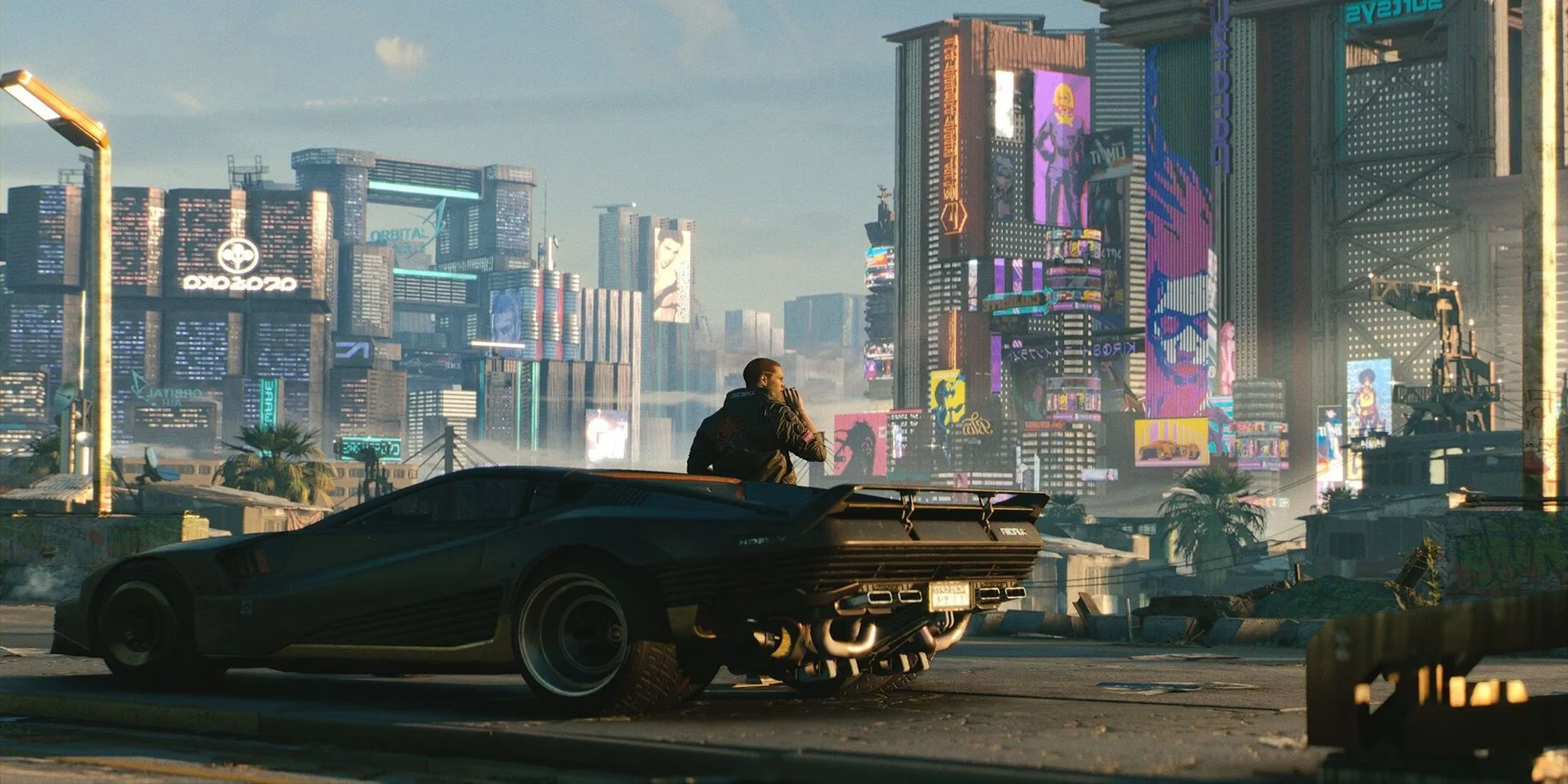
The landscape of entertainment has undergone a significant paradigm shift. Once considered a risky and often critically panned endeavor, the live-action adaptation of beloved video game intellectual properties has blossomed into a formidable and respected genre. The commercial and critical triumphs of series like The Last of Us and Fallout, alongside successful cinematic ventures, have shattered preconceived notions. These projects have demonstrated a powerful truth: there exists a vast, eager audience beyond the core gaming community, hungry for the rich narratives and immersive worlds that games provide. This successful trend presents a golden, untapped opportunity for CD Projekt Red. While the studio has already dipped its toes into adaptation waters with the sensational Cyberpunk: Edgerunners anime—a project so successful it reportedly greenlit a follow-up—the potential of a live-action leap represents an entirely new stratum of reach and cultural impact.
Intriguingly, the seeds for such a project have already been planted by key figures within the Cyberpunk universe. Idris Elba, whose portrayal of the enigmatic sleeper agent Solomon Reed in Phantom Liberty was met with widespread acclaim, has publicly voiced his enthusiasm for a live-action incarnation. In a recent interview, the celebrated actor highlighted the unique prospect of reuniting with his co-star, the iconic Keanu Reeves, who forever etched the digitized rockerboy Johnny Silverhand into gaming history. Elba mused that exploring their dynamic in a new, cinematic medium would be a compelling venture. This is not mere speculation; it's a vision backed by formidable star power.
Consider the assets such a project would inherently possess:
-
Established Legacy Characters: Both Reeves and Elba are not just actors lending their voices; they are integral parts of the game's lore. Their digital performances have already defined these characters for millions, making a transition to live-action feel organic and authentic.
-
Global Star Power: As A-list talents with massive, diverse fanbases, their involvement would guarantee instant visibility, drawing in audiences who may have never picked up a controller but are ardent followers of cinematic spectacle.
-
Narrative Continuity: Utilizing these established figures could allow for a seamless expansion of the existing storyline, preserving the core essence and tonal DNA of Cyberpunk 2077 while exploring new narrative avenues.
The studio itself has acknowledged this potential path. Back in late 2023, CD Projekt Red confirmed that a live-action project was in the early stages of discussion within its halls. However, concrete details have been scarce since that initial announcement, leaving the fanbase to wonder about the project's ultimate direction. Would CDPR follow Elba's hinted path, crafting a narrative that retells or expands upon V and Johnny Silverhand's saga with its original cast? Or would the studio take a leaf from Edgerunners' successful playbook, using the sprawling, dystopian canvas of Night City to tell a completely original story with new protagonists, perhaps set in a different district or time period?
| Adaptation Approach | Potential Pros | Potential Cons |
|---|---|---|
| Direct Game Story Retelling | Leverages existing fan attachment; utilizes proven narrative; seamless actor integration. | Risk of being overly familiar; constraints of adapting a 50+ hour RPG into a 2-hour film. |
| New Story in Night City | Total creative freedom; can explore unseen corners of the lore; attracts new viewers without prior knowledge. | Lacks immediate recognition of main game characters; requires building new audience connections from scratch. |
| Sequel/Spin-off to Game Events | Builds directly on established ending; satisfies fan curiosity about the world's future. | Must navigate and potentially canonize one of the game's multiple endings, which could alienate some players. |
While the Edgerunners blueprint is undoubtedly tempting given its stratospheric success, the live-action medium offers a fundamentally different, broader avenue for engagement. Animation, while beloved, often operates within a specific niche. A big-budget, live-action Cyberpunk film or series has the potential to become a cultural event, dominating streaming charts and watercooler conversations in a way that even the most popular anime might not. This kind of sustained visibility is precisely what could keep the embers of the franchise glowing brightly during Project Orion's lengthy, and undoubtedly complex, development cycle.
Beyond mere brand maintenance, the financial incentives are substantial. A successful adaptation could open a lucrative secondary revenue stream. The "Edgerunners Effect"—which saw player counts for Cyberpunk 2077 skyrocket following the anime's release—provides a clear precedent. A live-action hit could drive a similar, or even greater, resurgence in interest, introducing the game to entirely new demographics. These new fans, captivated by the world, would then become the prime audience for Project Orion when it finally arrives. The revenue generated could also be reinvested directly into the sequel's development, allowing CDPR to dream even bigger for Night City's next generation.
Ultimately, the journey from the neon-soaked streets of a video game to the curated frames of a cinematic experience is fraught with challenges. Faithfulness to the source material must be balanced with the demands of a new medium. Yet, the core appeal of Cyberpunk—its exploration of transhumanism, corporate dominion, and the search for identity in a fractured world—is profoundly cinematic. As we look ahead to 2026 and beyond, the silence from CD Projekt Red regarding a live-action project is palpable. But in that silence lies immense potential. By harnessing its existing iconic talent, learning from the triumphs of its peers in the industry, and leveraging the timeless, compelling dystopia it has created, CDPR has a rare opportunity. It can craft a bridge made not of code, but of celluloid and spectacle—a bridge that carries the legacy of Cyberpunk 2077 forward, keeping the lights of Night City burning ever bright until the day fans can once again lose themselves in its digital depths with Project Orion.