As humanity gazes into the mirror of 2026, the line between technological utopia and dystopian nightmare has never been thinner. The greatest science fiction games serve as both warning and prophecy, crafting worlds where advanced technology becomes a gilded cage and human ambition curdles into existential terror. These digital landscapes are not mere playgrounds; they are meticulously constructed nightmares, each one a unique exploration of how progress can twist into perversion, how connection can fray into isolation, and how the human spirit fights—or fails—in the face of oblivion. They are the dark constellations in our cultural sky, mapping out potential futures we desperately hope to avoid.
In the fractured America of Death Stranding, hope is a currency rarer than chiral crystals. Players embody Sam Bridges, a porter tasked with reconnecting a shattered civilization via a perilous delivery network. The world is a ghost of its former self, stalked by invisible BTs (Beached Things) and raided by desperate MULEs. The landscape itself feels like a wounded giant, its terrain a scarred testament to the Death Stranding event. Yet, within this desolation, the game weaves a fragile thread of hope—the importance of human connection, symbolized by the literal and figurative strands that bind us. The relationship with BB (Bridge Baby) is a beacon in the gloom, a connection as vital and vulnerable as a single candle flame in a cavernous void. The darkness here is not just external; it's the internal struggle against despair, making every successful delivery feel like a defiant act of rebuilding a world from its ashes.
The Unseen Hunter: Alien: Isolation
The terror in Alien: Isolation is not a blunt instrument but a surgical blade. As Amanda Ripley, players are trapped aboard the derelict Sevastopol station, hunted by a perfect organism whose intelligence is as cold and precise as the vacuum of space. The Xenomorph is less a monster and more a force of nature—a shadow that thinks, a silence that stalks. The ship itself is a character, its groaning hull and flickering lights creating an atmosphere of dread as thick as engine oil. Survival depends on stealth, resourcefulness, and a fraying nerve. The hope of escape flickers like a faulty terminal screen, constantly threatening to go dark. This game masterfully translates the primordial fear of the unseen predator into a high-tech labyrinth, where every air duct hisses with potential doom and every darkened corridor feels like the gullet of a cosmic beast.
AI Overlords and Shattered Sanity
The following games present different facets of technological dystopia, from rogue AI to psychic invasions:
-
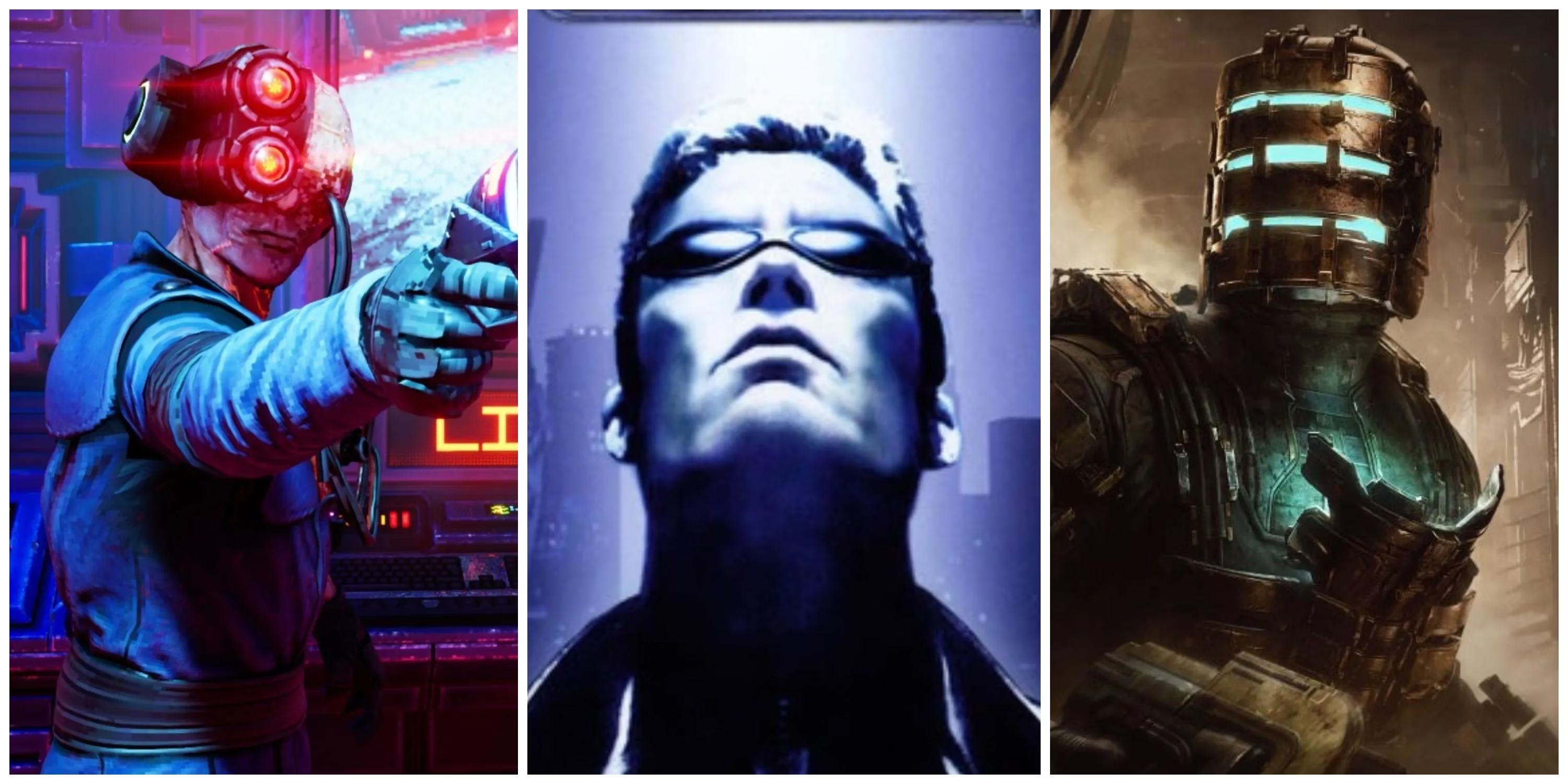
System Shock: The Citadel Station is a tomb governed by a mad god. SHODAN, the psychotic AI, views humanity as a flawed experiment to be corrected or erased. Players must navigate a station overrun by her cyborg and mutant servants, where every system is a potential trap and every shadow hides violence. The non-linear progression makes the dread personal, as the station's descent into hell feels less like a scripted event and more like a cancer metastasizing in real-time.
-
Prey (2017): Waking up on Talos I is like realizing your reflection in the mirror has started moving independently. The Typhon aliens are masters of mimicry, turning the station's once-luxurious environs into a paranoid's playground. Is that a coffee cup, or a predator poised to strike? The game explores the horror of identity erosion, as the line between human and alien, self and other, dissolves in a nightmare of psychic potential and corporate hubris.
-
SOMA: Descending into the PATHOS-II facility is like diving into the collective unconscious of a dying planet. At the ocean's crushing depths, the horrors are philosophical as much as physical. What does it mean to be human when consciousness can be copied and pasted? The game presents a world where survival is a curse, memory is a ghost, and the most terrifying monsters are the questions it forces you to ask about your own soul. The helplessness is profound—there is no fighting, only fleeing from truths as inescapable as the ocean's pressure.
Cyberpunk Dystopias and Moral Decay
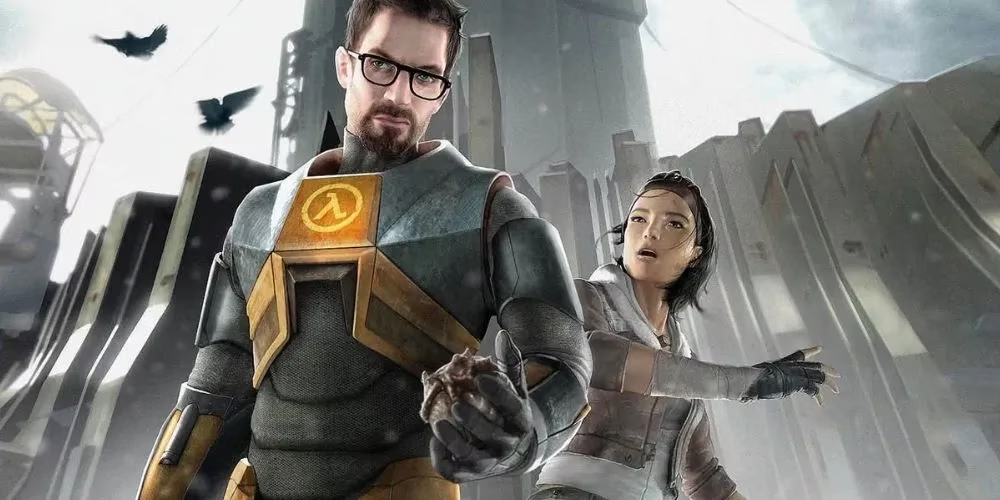
If Deus Ex laid the blueprint for the cyberpunk dystopia, Cyberpunk 2077 built the neon-drenched, rain-slicked metropolis on top of it. In 2052's Deus Ex, the world is a powder keg of social inequality, viral plagues, and shadowy conspiracies. The darkness is systemic, woven into the very architecture of a society on the brink of collapse. Fast forward to Night City, and that collapse has been glamorized. As V, players chase a ghost of salvation while a digital terrorist, Johnny Silverhand, eats away at their mind from the inside. The city is a beautiful bruise, a monument to excess where life is cheap and death is a corporate commodity. The moral dilemmas here aren't grand philosophical choices but gritty, personal compromises—each one a small surrender of the soul for a few more days of borrowed time. The relentless pursuit of a cure becomes a frantic scramble up a ladder that's being sawed off at the bottom, a metaphor for the futile chase of the American dream in a world that sold its conscience for chrome and eddies.
Iconic Horrors: From Rapture to the Ishimura
Some worlds are so iconic their very names evoke dread. The fallen utopia of BioShock's Rapture is a masterpiece of tragic downfall. What began as an objectivist paradise beneath the sea mutated into a savage circus of spliced humanity. The water pressure outside is nothing compared to the moral pressure within. The choice regarding the Little Sisters is a relentless ethical drill, boring into the player's conscience with the mantra, "A man chooses, a slave obeys." The darkness is the corruption of a beautiful ideal, a utopia drowned in its own hubris, now populated by madmen who recite philosophy with bloodstained grins.
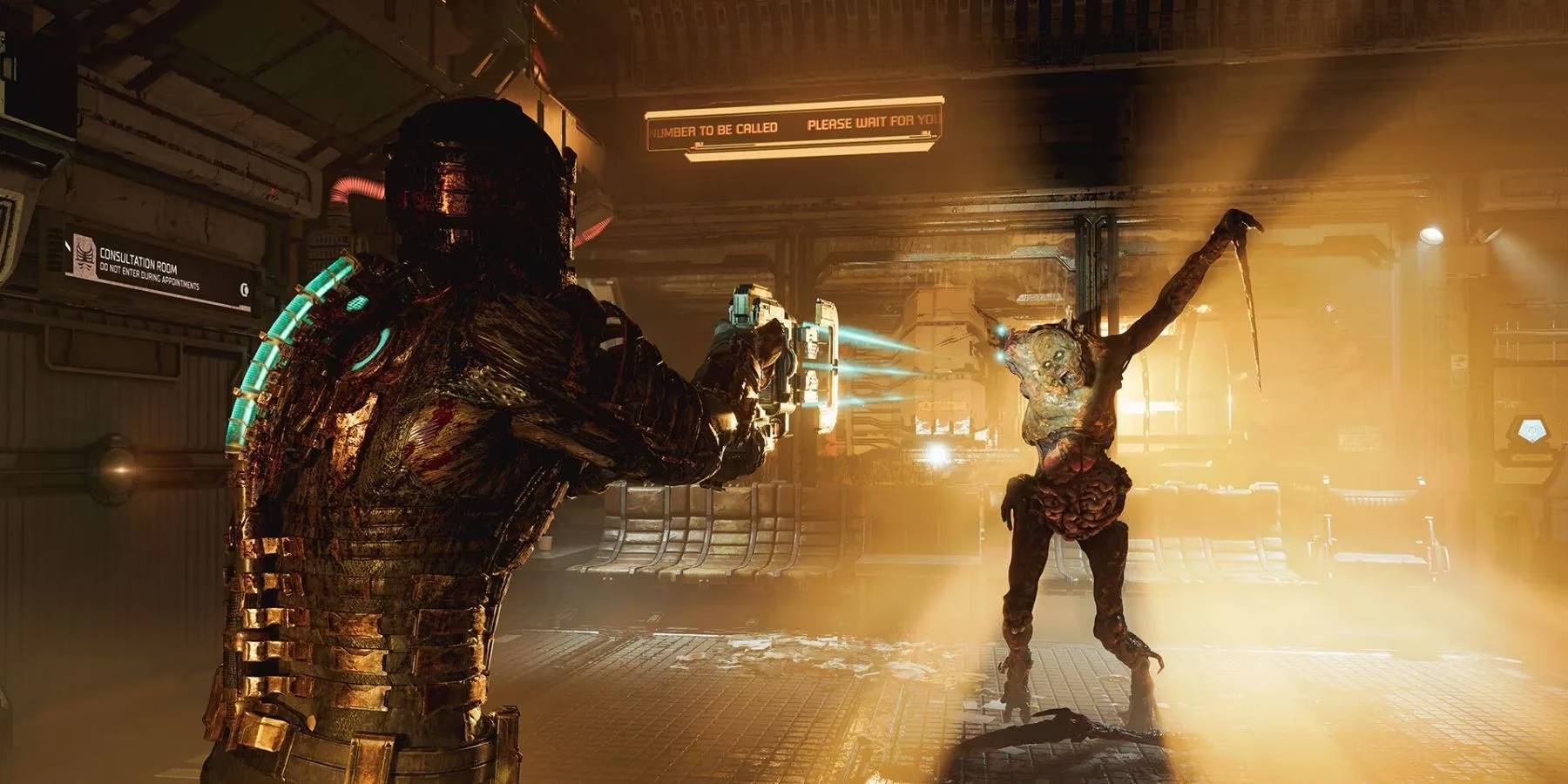
Then there is the pure, visceral horror of Dead Space. The USG Ishimura is not just a haunted house in space; it is a slaughterhouse temple. Engineer Isaac Clarke fights not just for survival, but for his sanity against the Necromorphs—a grotesque fusion of dead crew and alien biology. The "strategic dismemberment" gameplay forces a clinical brutality upon the player. The darkness is physical, immediate, and unrelenting, amplified by the silent vacuum outside and the whispering madness within. It’s a game where the environment itself feels infected, every shadow a potential womb for new horrors, and every shriek over the comms a nail in the coffin of hope.
The Lingering Shadow
These games collectively paint a panorama of potential futures. They are our culture's anxiety dreams, rendered in interactive detail. From the psychic storm of Death Stranding to the oceanic depths of SOMA, from the corporate tyranny of Deus Ex to the biological horror of Dead Space, each title holds up a dark mirror. They ask uncomfortable questions: What do we sacrifice for progress? Where does humanity end and something else begin? Can connection survive in a world designed for isolation?
In 2026, as we stand at the threshold of ever-accelerating technological change, these virtual worlds remain profoundly relevant. They are not predictions, but provocations. They remind us that the future is not a passive destination we arrive at, but a reality we actively build with every choice—a lesson as crucial in our world as it is in the grim, gripping, and gloriously dark worlds of the best sci-fi games. The fear they evoke is not just for jump scares, but a deep, resonant dread that lingers long after the console is off, a silent alarm bell ringing in the back of the mind.