Photo modes in games... where did the magic go? Once upon a time, stumbling upon a photo mode in a game was like finding a developer's secret love letter to their own world. It was deliberate, it was deep, and it made you feel like a true co-creator, capturing moments that felt uniquely yours. Now in 2026? They're often just a glorified screenshot tool slapped on as a checklist feature, which honestly feels like a downgrade—even as the absolute best ones, like those from Sony's first-party studios, get more and more sophisticated. Watching Civil War recently totally revived that old feeling, that yearning for a game that isn't just about taking pictures, but one that truly is about the art and politics of seeing through a lens.
The Stark Politics of the Camera Lens in 'Civil War'
Speaking of Civil War, that movie is... something else. Forget red vs. blue in the traditional sense. The film throws a curveball by having California and Texas team up (imagine that!) against a rogue president, and it tells this wild story entirely through the viewfinders of war photographers. It's low-key a masterclass in showing how observers shape history. Some folks call it apolitical, but that's a major misread. It's deeply political, just not in the way of partisan soundbites. Its politics are in the ethics of the frame—what you choose to shoot, what you turn away from, and how witnessing violence changes you.
The plot follows journalists trying to get a sit-down with the President while navigating active warzones, constantly having to pick sides for survival. It’s intense, personal, and a stark reminder that a camera is never a neutral tool.
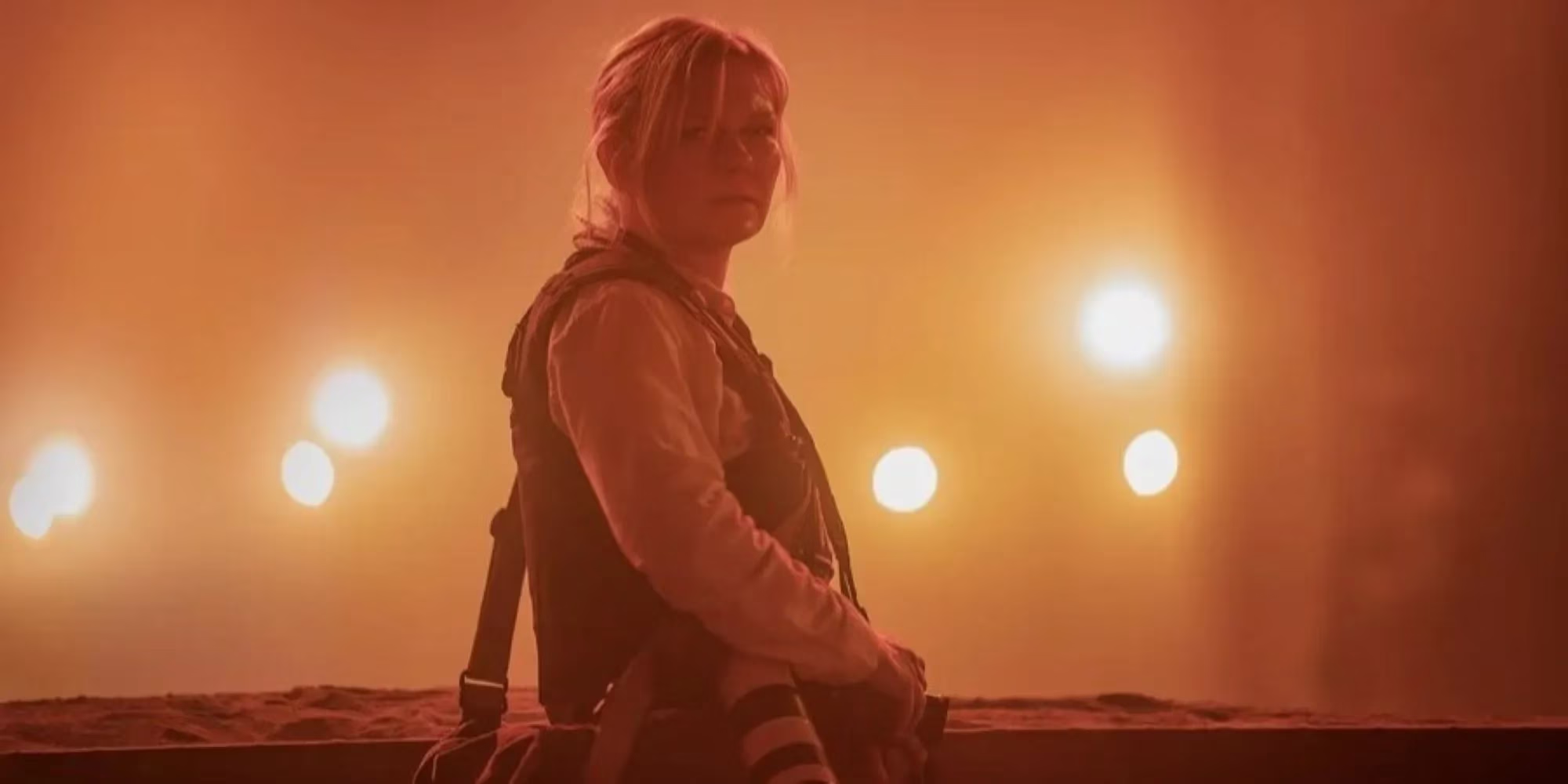
This vibe is pure artistic tension. It forces you to ask: What is the photographer's responsibility? It’s a question that the best photo modes in games quietly ask us, too.
From Snapshot to Statement: The Games That Get It Right
This is where that feeling of creating versus just capturing comes in. Civil War is, in a way, a road trip movie about a photographer honing her craft. It instantly brought to mind the indie gem Umurangi Generation. Now that’s a game that's actually about photography. It's not just a relaxing snap-sim; it's a dystopian documentary tool. The game gives you new lenses and filters while the world around you crumbles under a fascist regime more concerned with silencing dissent than fighting alien invaders. Your photo objectives push you to document protests, military occupation, and civilian grief. You're not just taking pretty pictures; you're building evidence and making a statement. That's powerful.
Compare that to something cute and cozy like Toem—which is lovely!—but it's more a visual scavenger hunt (a Where's Wally situation). The difference is stark:
| Game | Core Photo Philosophy | Vibe Check |
|---|---|---|
| Umurangi Generation | Photography as witness, protest, and archive. | 😤 Radical, tense, thought-provoking. |
| Toem | Photography as collection, puzzle-solving, and chill exploration. | 🥰 Adorable, wholesome, stress-free. |
Most AAA photo modes live somewhere in between, but the great ones lean into the former's philosophy.
The Holy Grail: Photo Modes That Make You a Photographer
The best photo modes in 2026 don't just give you a camera; they give you a photographer's eye. Think about it:
-
In The Last of Us Part II, you're not just snapping a shot of a Clicker. You're framing Ellie's loneliness in a crumbling bookstore, finding poetry in decay.
-
In Cyberpunk 2077, you're capturing the brutal, neon-drenched irony of Night City—the beauty in the chaos.
-
In Ghost of Tsushima, you're composing a living Hokusai painting with every swing of your katana and flutter of maple leaves.
These modes provide the tools for true composition: depth of field, rule of thirds grids, complex filters, and character posing. They ask you to find the moment, not just wait for it. Landing a flashy limit break in Final Fantasy XVI and pausing for a snap is cool, but it's passive—the game served you the moment on a platter. In Red Dead Redemption 2, you have to hunt for that perfect moment when the light hits the mist just right over a sleeping deer. That's the difference between a tourist and a photographer.
So... Can a Game Be 'About' Photography?
The big question is: can a AAA game make photography its core, its entire raison d'être, without losing that creative spark? We've seen sports games try with dedicated career modes for sports photographers, but it's tricky. The danger is that by making it a literal job with mechanics, you might strangle the organic, artistic expression that flourishes in games where photography is a choice, not the assignment.
Civil War the movie works because it's about photographers, not just photography. Their choices, their trauma, their morality are the story. A game could do that—a narrative-driven experience where your lens choices directly alter relationships, reveal truths, or even change outcomes. That would be next-level.
For now, the call is simpler: devs, stop phoning it in! A photo mode shouldn't be a barebones pause-menu afterthought like it felt in Dragon's Dogma 2. It should be a suite of tools that respects the player as an artist and respects the game world as a subject worthy of deep observation. It’s about fostering that connection between the player, the character, and the digital world—making us feel something through the frame. Because when it's done right, hitting that photo mode button isn't just about taking a screenshot. It's about seeing your game in a whole new light. And in 2026, we deserve nothing less. ✨