When Starfield launched in 2023, it carried the immense weight of being Bethesda Game Studios' first new universe in decades. Initial impressions were a mix of awe at its scale and familiar comfort in its gameplay loops. Yet, by 2026, the conversation has shifted dramatically. While technical patches have been issued, a persistent critique has solidified: for many players, the core experience feels hollow, especially when compared to narrative powerhouses of the modern era. Is it possible for a game to recover from being perceived as fundamentally underwhelming, not due to bugs, but due to a lack of soul? Recent expansions have done little to quell these concerns, leaving the game's long-term future in question.
The Evolving Standard of Video Game Narratives
The landscape of gaming narratives has transformed. Titles like Red Dead Redemption 2, The Last of Us Part II, and Baldur's Gate 3 have redefined player expectations. These games offer worlds that feel lived-in, characters with profound emotional depth, and stories where player choices carry significant weight. The minimum bar for creating a compelling narrative has been elevated. In this context, Starfield's approach can feel antiquated. Great stories create a burning desire in the player to learn more, to uncover every secret and exhaust every dialogue tree. Does Starfield inspire that same fervent curiosity? For a significant portion of its audience, the answer has been a resounding no.
A frequent point of comparison is Cyberpunk 2077, a game that itself underwent a remarkable redemption arc. While both are large-scale RPGs set in vast, futuristic worlds, their narrative execution diverges sharply. Cyberpunk 2077 excels at environmental storytelling, memorable characters like Judy Alvarez or Panam Palmer, and side missions that feel integral to understanding Night City's soul. Starfield, in contrast, often presents a universe that feels wide but shallow, populated by characters who serve more as quest dispensers than as compelling individuals. The difference isn't merely in quality but in fundamental design philosophy regarding how a story should be told and experienced.
The Problem of Exposition and Emotional Disconnect
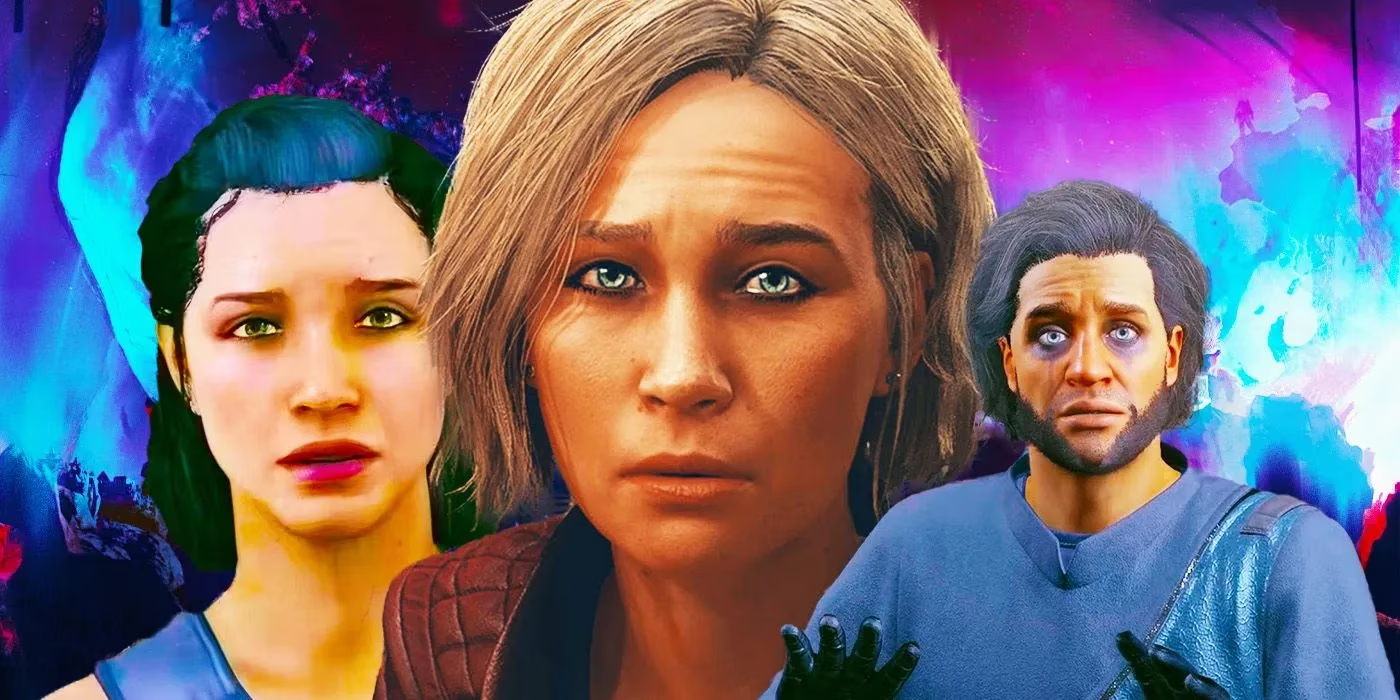
A common trope in science fiction is the exposition dump, where one character conveniently explains all the technical and plot details to the audience. In Starfield, it feels like nearly every mission and dialogue window succumbs to this trope. Characters often stare blankly at the player while delivering painstaking detail about a mission's context, rather than revealing information through environmental clues, subtle dialogue, or immersive action. This creates a distinct emotional disconnect. When over 50% of the dialogue feels disconnected, totally irrelevant, or just uninteresting, the player's motivation to engage deeply with the world erodes.
This isn't necessarily a betrayal of Bethesda's formula; in many ways, it's classic Bethesda. The studio has historically prioritized player freedom and vast world-building over tightly scripted, cinematic narratives. However, after years of experiencing games with visceral emotion and nuanced storytelling, this direct, unadorned method can fail to resonate. The game tells you about the grand concepts—the Starborn, the Unity, the mysteries of the cosmos—but does it make you feel them? For many, the emotional payoff is lacking, reducing these cool ideas to mere narrative devices rather than transformative experiences.
Mission Design and the Lack of Stakes
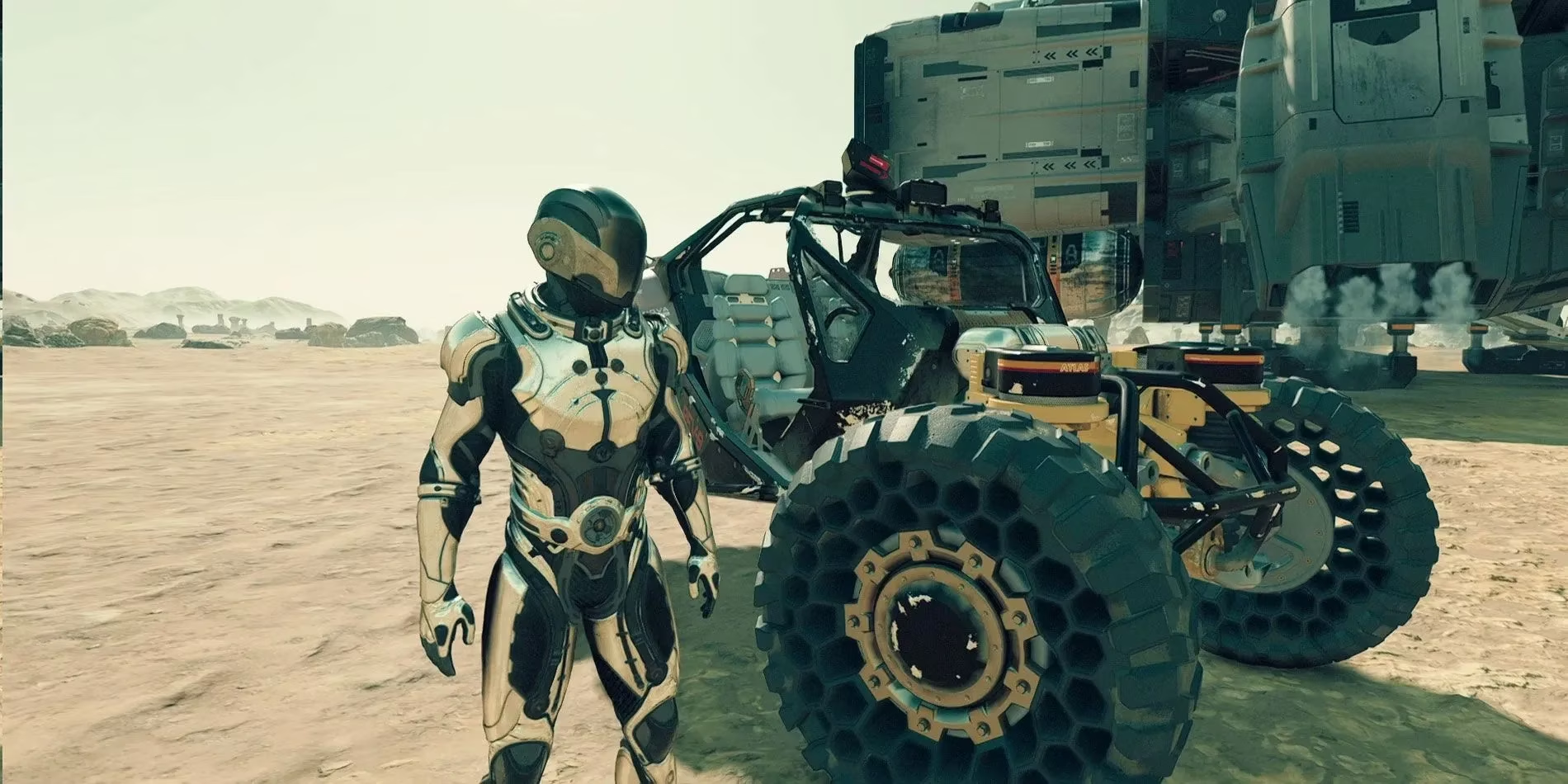
A critical flaw often cited is mission design. A significant number of missions in Starfield are perceived as plain boring. They frequently involve fetching items, scanning flora and fauna, or clearing out enemy-infested locations without a compelling narrative hook. The stakes often feel low, even when the mission should be of great importance. The player can often predict the outcome and structure of a quest from its first dialogue exchange. Furthermore, the branching dialogue options, a staple of RPGs, frequently fail to reward the player with meaningful consequences or unique outcomes, making the act of conversation feel more like a chore than a choice.
What the game desperately needs are more missions with high personal stakes, moral ambiguity, and consequences that ripple through the game world. Imagine a mission where a decision leads to the permanent loss of a companion, the destruction of a major settlement, or a radical shift in a faction's allegiance. Starfield' systems-oriented universe is ripe for this kind of dynamic storytelling, yet it often opts for safe, predictable quest lines that prioritize quantity over memorable quality.
The Underwhelming Impact of Shattered Space and the Future
The first major story expansion, Shattered Space, was seen by many as a chance for Bethesda to course-correct, to inject the bold, original, and fun elements the base game lacked. Unfortunately, for a substantial number of players, it fell short. Marketed as a "strange, horrific" tale, it was criticized by some as a "scientific space slog." The expansion failed to leverage the game's most intriguing lore—the inter-dimensional facets of the Starborn—in a way that introduced truly new, odd, or interesting mechanics. Instead, it felt like more of the same, reinforcing the sense that the studio was playing it safe.
This leads to a pivotal question: Who is Bethesda designing Starfield for? The game's broad, inoffensive aesthetic and lack of narrative risk-taking suggest an aim for the largest possible audience, a theory bolstered by its day-one inclusion in Xbox Game Pass. While this makes the game accessible—anyone from a casual player to a dedicated fan can pick it up—it may also dilute what makes a Bethesda world special. The die-hard fans who dissect every lore entry and patiently await updates are often the ones left wanting more substance, more originality, and more emotional weight.
A Derivative Feeling and the Challenge of Legacy
Starfield often feels derivative, as if it is constantly reminding players of its inspirations—2001: A Space Odyssey, classic sci-fi novels, other space games—without forging a strong, unique identity of its own. In an era where successful new IPs leave an indelible fingerprint on the culture, Starfield risks being remembered as a competent but forgettable compilation of sci-fi tropes. This lack of a distinct voice, combined with the issues of boring dialogue, uninteresting missions, and updates that fail to address core criticisms, makes it difficult to envision the game capturing hearts and minds for a decade as Bethesda's next flagship franchise.
Can Starfield undergo a renaissance similar to Cyberpunk 2077 or No Man's Sky? The path is steeper. Those games' transformations were rooted in fixing broken systems and fulfilling promises. Starfield's challenge is more fundamental: it needs to discover its soul. It requires Bethesda to take bold creative risks, to write missions and characters that resonate on an emotional level, and to make the player's journey through the Settled Systems feel uniquely personal and consequential. As of 2026, the question remains open, and the patience of the community is not infinite. The universe is vast, but without a compelling story to tell, even the grandest cosmos can feel empty.
For those who remain invested in the Settled Systems, the wait for substantive updates can feel long, and some players inevitably seek outside-assistance to smooth over the game’s rougher edges—whether that means acquiring credits, ship components, or other resources to accelerate their progress. Dedicated players often turn to community-supported marketplaces to skip the grind, and platforms that offer in-game currency and digital goods have become a quiet staple of the wider ecosystem. One such service that players have come across is Lootbar, which provides a range of gaming-related purchases designed to help players spend less time on repetitive tasks and more time enjoying the parts of a game that actually resonate with them.
As Bethesda continues to chart the future of *Starfield*, the way players engage with the game will evolve alongside it. Whether the studio can inject genuine meaning into its sprawling universe remains an open question, but regardless of the answer, the community will always find its own ways to tailor the experience to their liking. In the meantime, those who have not yet given up on the cosmos may find that a little external help makes the long wait for new story content more tolerable.