As CD Projekt Red forges ahead into 2026 with the development of Cyberpunk 2077's sequel, codenamed Project Orion, the gaming community is abuzz with speculation. The challenge is monumental: how does one craft a follow-up to a game renowned for its branching narratives and multiple, definitive endings? While Cyberpunk 2077 carved its own neon-lit path, the studio's past masterpiece, The Witcher 3: Wild Hunt, might just hold the perfect narrative blueprint for this new journey. The connection isn't in shared genre, but in masterful storytelling structure. Project Orion has the unique opportunity to evolve the dystopian saga by adopting the core quest premise that made Geralt's adventure so compelling, applying it to the chaotic, corporate-ruled sprawl of Night City.
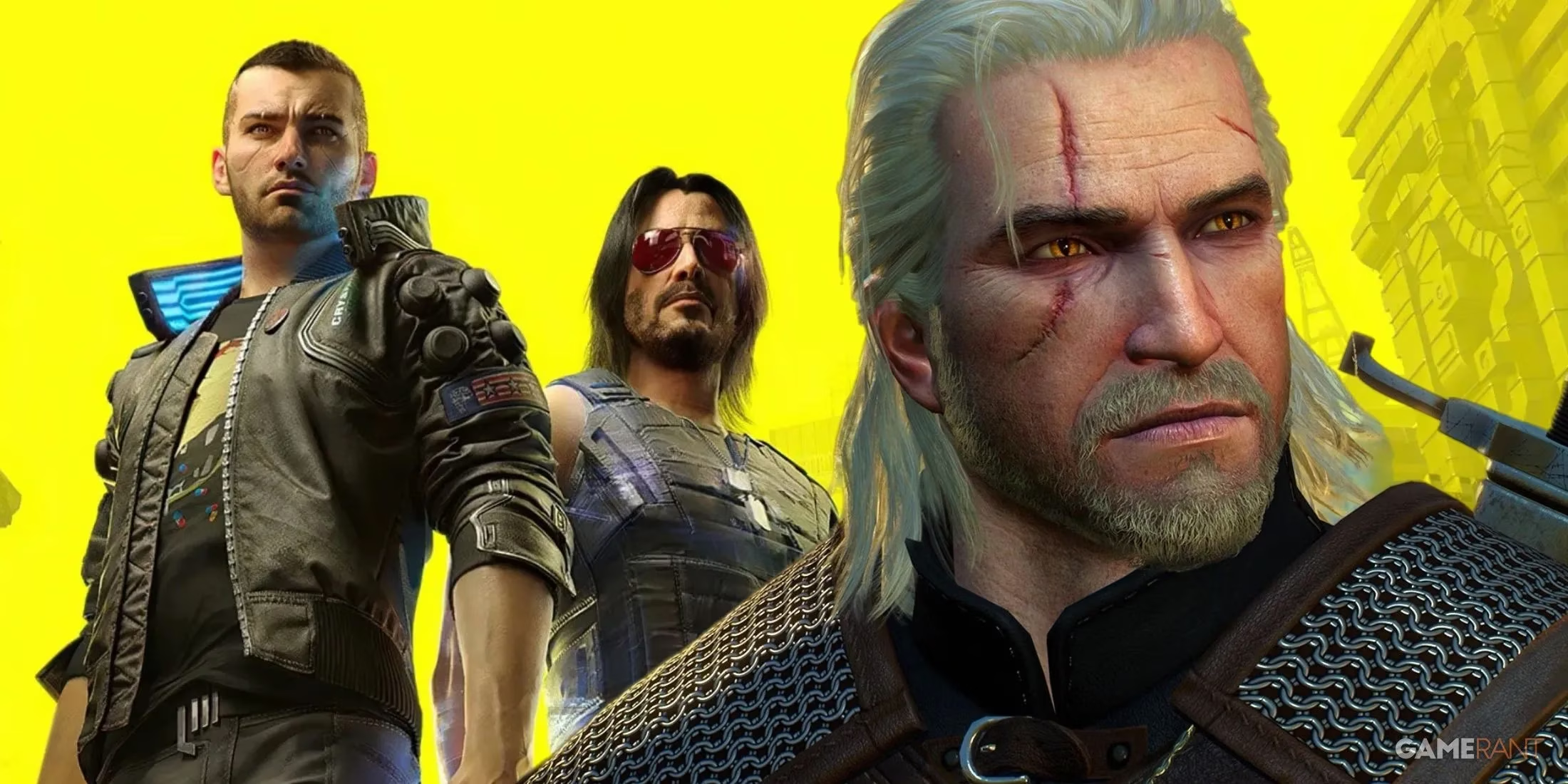
The central narrative drive of The Witcher 3 was elegantly simple yet profoundly personal: Geralt's search for his adoptive daughter, Ciri, who was being pursued by the spectral Wild Hunt. This "search for a person" framework provided a strong through-line for a vast, open-world adventure, allowing for deep character exploration and myriad side stories. For Project Orion, this model offers a brilliant solution to the sequel's biggest hurdle—the fate of V. Declaring one of Cyberpunk 2077's endings as canon would alienate a portion of the player base, yet completely ignoring V's monumental impact on Night City feels narratively hollow. The answer? Introduce a brand-new protagonist whose central mission is to find the legendary, yet elusive, V.
Following the events of the original game, V has become a mythic figure in Night City's underworld and beyond. Whether they ascended to become a Night City legend, fled with the Aldecaldos, or secured a risky cure with Mr. Blue Eyes, their actions left indelible marks. This infamy makes V a prime target for countless factions by 2026:
-
Corporations: Arasaka, Militech, or Kang Tao seeking to capture the merc who breached their most secure facilities.
-
Fixers & Gangs: Figures like Rogue or the Voodoo Boys wanting to tie up loose ends or recruit a legendary asset.
-
The NCPD & NUSA Government: Authorities desperate to apprehend the individual behind the infamous Konpeki Plaza heist and the subsequent chaos.
-
Mysterious Benefactors: Entities like the enigmatic Night Corp or the Peralezes' secret backers with their own inscrutable agendas.
This setup allows Project Orion to acknowledge V's legacy without locking them into a single, defined state. The new protagonist's hunt becomes a window into exploring how Night City has changed, for better or worse, in the years since V's rampage.
A significant and bold narrative shift for Project Orion could be to change the protagonist's perspective entirely. While Cyberpunk 2077 was a street-level story of a mercenary's grind, the sequel could offer a contrasting viewpoint to keep the world feeling fresh. One compelling possibility is casting the player as an NCPD officer. This perspective would fundamentally alter the player's relationship with Night City's chaos, presenting moral dilemmas from the other side of the badge.
| Cyberpunk 2077 (V's Perspective) | Project Orion (Potential NCPD Perspective) |
|---|---|
| Role: A mercenary operating outside the law. | Role: An officer ostensibly upholding the law. |
| Goal: Become a Night City legend. | Goal: Maintain order or uncover corruption. |
| Primary Opposition: Gangs, Corpos, Police. | Primary Opposition: Gangs, Corpos, Corrupt Colleagues. |
| Moral Compass: Player-defined, often pragmatic. | Moral Compass: Tested by systemic corruption and impossible choices. |
An officer assigned to track down the fugitive V would be thrust into the darkest corners of the city, facing pressure from corrupt superiors, violent gangs, and omnipresent corporations. Player choices could determine whether this character remains a by-the-book cop, becomes increasingly cynical and corrupt, or grows sympathetic to the plight of the city's inhabitants they are meant to police. This arc could mirror the journey of characters like River Ward, but from the inside, offering a gritty, procedural layer to the open-world RPG formula.
Of course, the NCPD is just one of many fascinating avenues. Project Orion's new protagonist could be:
🔍 A Corporate Agent: A deniable operative for Militech or a rival corp, tasked with acquiring the bio-chip technology or engram data linked to V.
🔍 A Rogue Netrunner: Digging through the old nets for traces of Soulkiller or Alt Cunningham, stumbling upon V's digital ghost.
🔍 A Relic of the Past: A character connected to Johnny Silverhand's old crew or Saburo Arasaka's legacy, drawn into the mystery surrounding V and the relic.
Each option would provide a distinct lens through which to experience Night City and the legend of V, ensuring the sequel feels new while honoring its predecessor.
The key for CD Projekt Red will be to use this connection loosely. Project Orion must be its own story, with a fully realized protagonist whose motivations extend beyond just finding V. The hunt should serve as the catalyst—the main quest thread that pulls the player through the narrative—but not the entirety of it. V's presence should be felt through environmental storytelling, data shards, rumors from NPCs, and the lasting consequences of their actions, rather than through forced, direct appearances. This approach preserves player agency from the first game and avoids tedious continuity issues, allowing both newcomers and veterans to engage with the story.
Ultimately, the legacy of The Witcher 3 teaches that a powerful personal quest can anchor the most expansive of worlds. By framing Project Orion around a new character's search for the mythic V, CD Projekt Red can craft a sequel that is both respectful of player choices in Cyberpunk 2077 and boldly innovative. It provides a narrative bridge that feels organic to the world of Night City, where legends are born from chaos and everyone is chasing something—or someone. As development continues into the late 2020s, this blueprint offers a path to a sequel that can stand shoulder-to-shoulder with its legendary predecessor, not in its shadow.
For players eagerly following this speculation about Project Orion, part of the excitement lies in revisiting Night City and preparing for what comes next. Whether that means loading up a save file to explore different endings or diving back into the game to experience its many secrets, the community remains deeply engaged with Cyberpunk 2077. Having access to reliable platforms for game credits, top-ups, and digital gift cards makes it easier for players to stay immersed in the world the game has built, especially when updates or expansions roll out ahead of the sequel's development.
While the future of the franchise is still being shaped, the resources available to players today continue to grow. For those looking to enhance their gaming setup or secure currency for their favorite titles, Lootbar offers a convenient marketplace for game-related purchases. As we anticipate the next chapter in Cyberpunk's legacy, having a reliable source for digital gaming needs ensures that players can focus on what matters most: the stories yet to unfold in the dark, neon-lit streets of Night City.