Looking back from the vantage point of 2026, the journey of Cyberpunk 2077 feels like watching a phoenix rise from a digital inferno. CD Projekt Red's monumental effort to salvage and elevate their ambitious sci-fi RPG has become a case study in post-launch redemption. By meticulously squashing bugs, introducing sweeping quality-of-life features, and expanding the universe with the acclaimed Phantom Liberty expansion, they didn't just fix a game—they rebuilt its very soul. This hard-won renaissance wasn't just an endpoint; it was the crucial launchpad for the future. Now, all that rehabilitated goodwill and refined vision is funneled into Project Orion, the highly anticipated sequel currently taking shape. If Cyberpunk 2077 was the rough, brilliant prototype, then Project Orion is poised to be the polished, fully realized production model, and nowhere is this evolution more critical than in its beating, chrome heart: the cyberware system.
The Hollow Core of 2077's Chrome
In my countless hours navigating the neon-drenched streets of Night City, I've come to a stark realization: for a game about transhumanism and bodily modification, the actual act of installing cyberware often felt as emotionally impactful as upgrading the RAM in my old computer. The system, while sprawling on paper, suffered from a fundamental disconnect. A visit to a ripperdoc was less a transformative, body-horror-tinged ritual and more a mundane shopping trip for incremental stat boosts.
-
The Illusion of Choice: The clinics were stocked with dozens of implants, but their effects were overwhelmingly passive. A "Kiroshi "Optic" Mk.3 might promise a 5% increase in crit chance, while a "Militech "Apogee" Sandevistan" could shave a few seconds off a cooldown. These weren't game-changing augmentations; they were glorified armor pieces with different icons. The experience became a routine of equipping the item with the highest number in the desired category, a process as thrilling as filing a tax return.
-
The Standout Exceptions: This made the rare, truly transformative cyberware all the more glaring—and all the more beloved. Sliding Mantis Blades from your forearms or launching yourself across rooftops with Reinforced Tendons didn't just change a number on a spreadsheet; they fundamentally altered how I perceived and interacted with the city. They were the flashes of brilliance that highlighted the pervasive dullness of the rest. They were like finding a live, roaring dragon in a museum full of meticulously painted lizard skeletons.
The Lore-Gameplay Chasm
From a narrative and worldbuilding perspective, this created a jarring dissonance. The world of Cyberpunk constantly lectures you on the dangers and profound implications of cybernetic modification—the loss of humanity, the slippery slope into cyberpsychosis, the sheer physical trauma of the procedure. Yet, the gameplay loop treated swapping out your circulatory system with the same narrative weight as buying a new jacket. Installing a new set of optics should feel momentous, a permanent alteration of your sensory reality, not a +2% bonus you forget about five minutes later. Project Orion has a golden opportunity to suture this gaping wound between lore and mechanics.
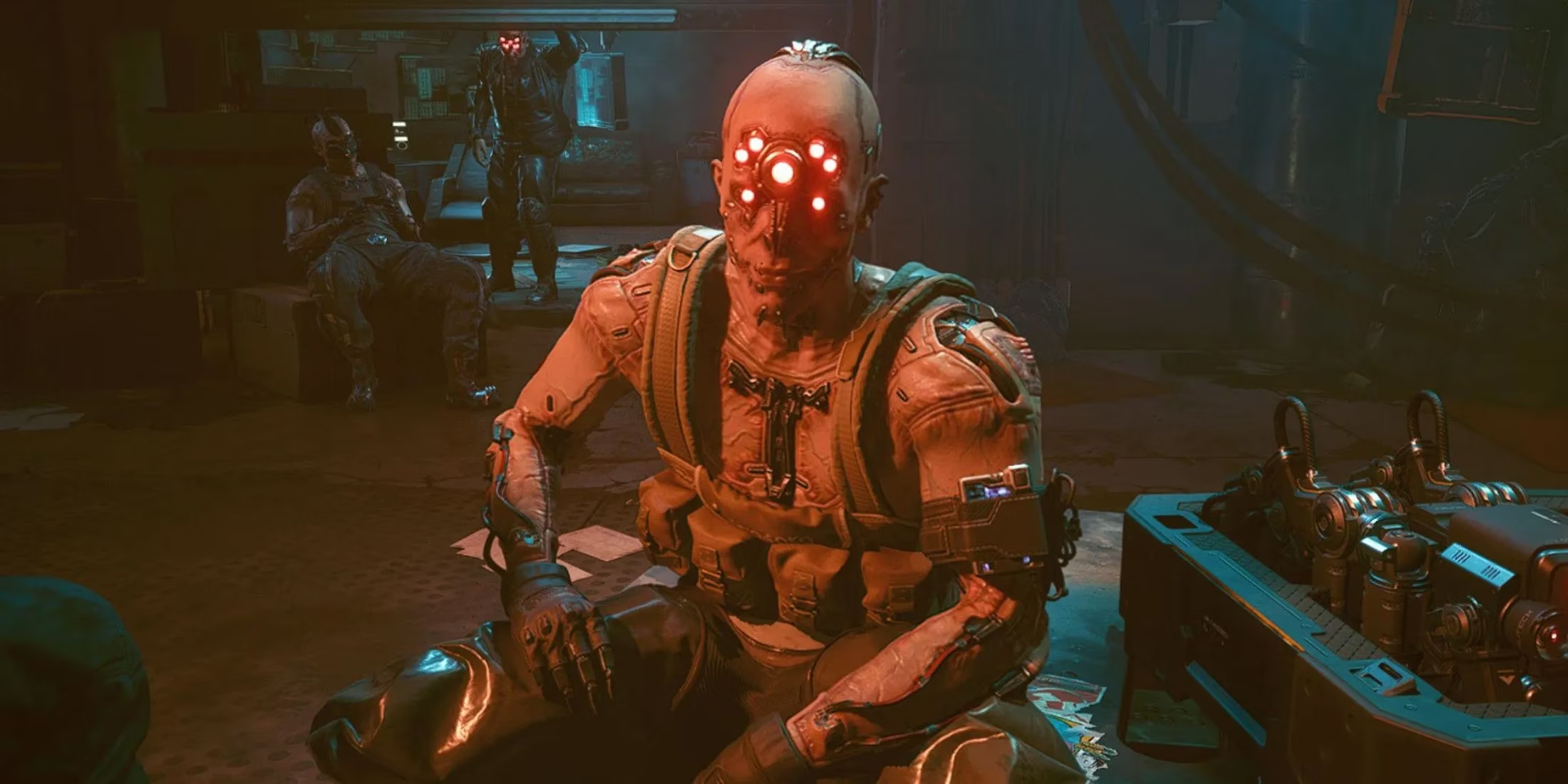
A ripperdoc's chair should feel like a crucible of transformation, not a dentist's office for stats.
A Blueprint for Orion's Augmented Future
So, what should Project Orion do? The path forward isn't necessarily about more, but about meaningful depth. Here's my manifesto for a reinvented cyberware system:
-
Quality Over Quantity: Radically prune the list of available cyberware. Instead of 50 variants of neural link that offer minor hacking buffs, offer three, each representing a distinct philosophical and gameplay path:
-
The Netwatch Enforcer: Specializes in aggressive, combat-focused quickhacks that can overheat and explode enemy cyberware.
-
The Rogue AI Symbiont: Grants unparalleled access to system control and stealth hacking, but at the risk of occasional, unpredictable directives from the AI.
-
The Old-School Chiphead: Focuses on defense, firewalls, and detecting netrunners, offering pure stability at the cost of offensive flair.
Each choice would redefine your playstyle, not just tweak it.
-
-
Integrate Cyberpsychosis as a Core Mechanic: This shouldn't be a hidden meter or a simple debuff. It should be a constant, tangible pressure. Installing too much high-grade, unsynced chrome could lead to:
-
Visual and auditory hallucinations.
-
Involuntary weapon discharges or cyberware activations during dialogue.
-
Faction reputation shifts (corpos see you as unstable, scavengers see you as a target).
Managing your humanity would become a strategic resource as vital as eddies or ammunition, turning every augmentation into a Faustian bargain.
-
-
Make Cyberware Visceral and Contextual: Augmentations should interact with the world and each other. Gorilla Arms shouldn't just deal more melee damage; they should allow you to rip open sealed doors, tear turrets from their mounts, or perform context-specific brutal takedowns on oversized enemies. A fortified skeleton should let you withstand crashes from greater heights or enable a "bullet charge" through light cover. These systems should talk to each other, creating emergent gameplay possibilities that feel uniquely "cyber."
The Dream and the Lesson
The ideal, of course, is a vast arsenal where every implant feels as revolutionary as the Monowire. A world where choosing between a subdermal armor plate and a holographic epidermis projector is a agonizing choice between raw survival and social infiltration. Achieving this would be like conducting a symphony where every instrument is a soloist, yet all harmonize perfectly—a daunting, but worthy ambition.
Yet, the greatest lesson Cyberpunk 2077 taught us is the virtue of focused, achievable ambition. Project Orion doesn't need to give us a thousand pieces of chrome. It needs to give us two dozen that truly matter, that change who we are in the game world as profoundly as they change our character's body. If each visit to the ripperdoc feels like a pivotal chapter in my character's evolution, a moment of both power and profound cost, then Project Orion will have successfully upgraded not just its cyberware system, but the very soul of the Cyberpunk experience. The future of Night City isn't in more chrome; it's in chrome that means something.