The neon-drenched streets of Night City have always been a brutal playground where chrome meets flesh, and the choice between a razor-sharp katana and retractable Mantis Blades was more than a tactical decision—it was a statement. As the gaming world looks ahead to 2026 and the mysterious Project Orion, the sequel to Cyberpunk 2077, a central question looms large over its combat design: in a world defined by augmentation, what is the true place of the traditional melee weapon? The original game presented players with a dazzling, sometimes overwhelming, arsenal, but it also created a fascinating tension between the visceral appeal of physical weapons and the high-tech allure of integrated arm cyberware. Project Orion now faces the monumental task of evolving this dynamic, ensuring both paths feel not only viable but uniquely thrilling, without one rendering the other obsolete. It's a high-stakes balancing act, and how CD Projekt Red navigates it will be the make-or-break factor for the sequel's combat soul.
The Allure of the Analog: Why Melee Weapons Still Pack a Punch
Let's be real, choom—sometimes, you just wanna get up close and personal. Cyberpunk 2077 offered a wild and wonderfully eccentric collection of melee tools that went far beyond simple damage dealers. They were artifacts with stories, each carrying the grime and history of Night City.
-
Iconic Personalities: Weapons weren't just stat sticks; they had character. Take the "Jinchu-maru" katana, a blade that didn't just cut—it calculated. Its ability to quadruple damage against healthier foes and guarantee critical hits during a Kerenzikov slow-mo made it a thinking fighter's weapon. Then there was "Tinker Bell," a cattle prod whose innocuous name became deeply unsettling once you discovered its location and backstory. These items created moments you couldn't get from standard-issue cyberware.
-
Status & Style: From the phallic Sir John Phallustiff to the weighted heft of a legendary hammer, melee weapons allowed for unparalleled role-playing. Want to be a silent, efficient blade master? A brutal, bone-crushing enforcer? Or just a gonk with a ridiculous yet surprisingly effective dildo? The weapon was your costume.
-
Build Synergy: The Blade and Blunt skill trees allowed players to go all-in on a specialized martial path, turning V into a whirlwind of destruction that could close gaps and eviscerate enemies before they could draw a bead. It was a high-risk, high-reward playstyle that felt distinctly different from gunplay or quickhacking.
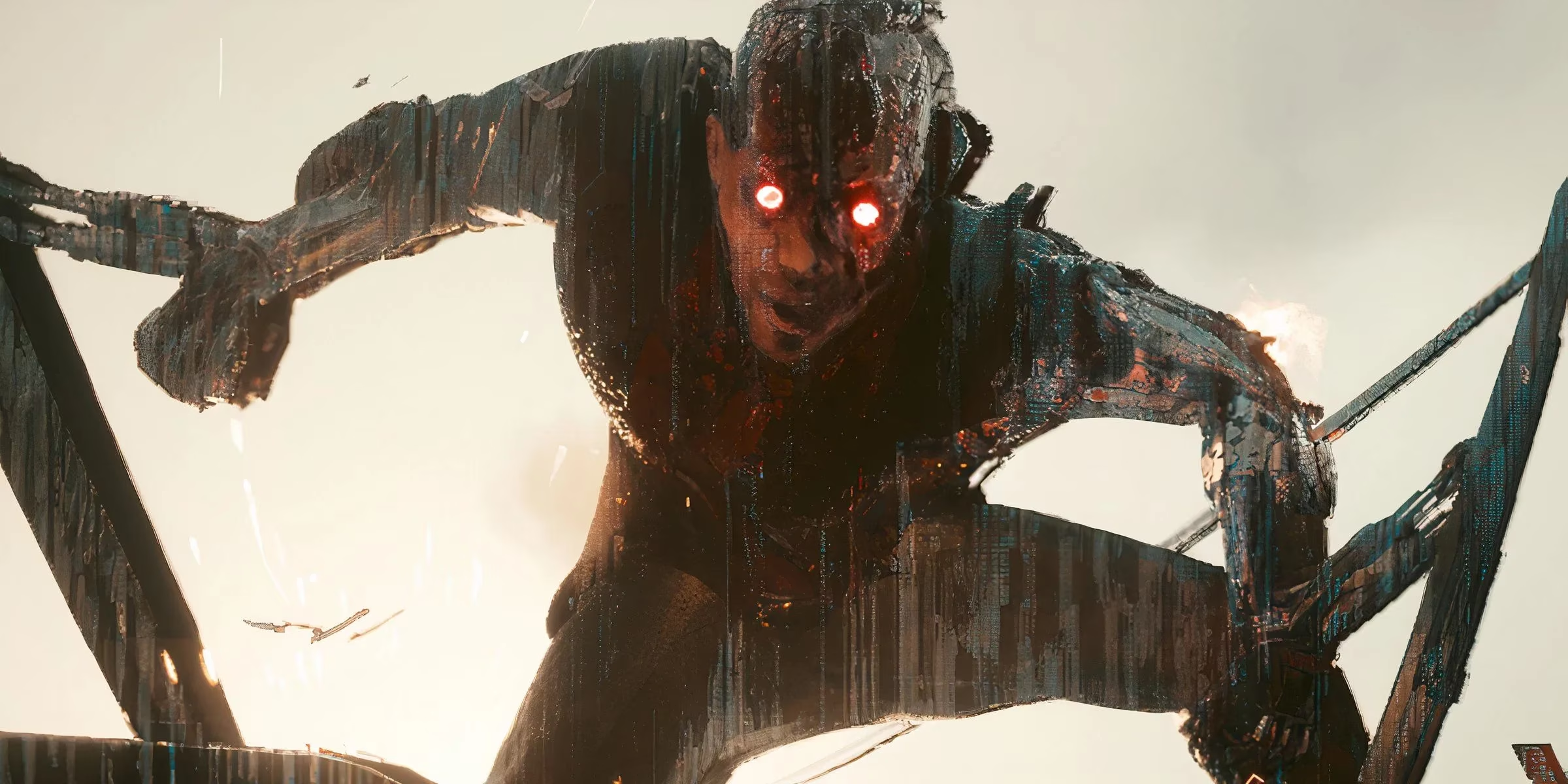
The Chrome Revolution: How Arm Cyberware Stole the Show
Despite the charm of physical weapons, it was the arm cyberware that truly screamed "cyberpunk." These weren't tools you carried; they were parts of you. They fundamentally changed your body and, by extension, your approach to combat in a way a sword never could.
| Cyberware | Core Appeal | The "Wow" Factor |
|---|---|---|
| Mantis Blades | Lightning-fast, retractable dual blades. | The iconic visual of blades shooting from your forearms. Pure street-samurai fantasy. |
| Monowire | A whip-thin, ultra-sharp filament that could slice through groups. | Stealthy, elegant, and brutally efficient. Made you feel like a futuristic assassin. |
| Gorilla Arms | Massive hydraulic fists for pure blunt force trauma. | Ripping turrets from mounts and punching through walls. Pure, unadulterated power fantasy. |
Phantom Liberty's game-changer was the Relic skill tree, which added incredible new dimensions to this chrome. Suddenly, your Monowire could become a quickhack conduit, or your Gorilla Arms could unleash seismic slams. This expansion made cyberware feel less like a simple weapon swap and more like an evolving, integral part of your nervous system. The problem? It set a new bar that made picking up a baseball bat feel almost quaint. Why carry a knife when you are the knife?
The Project Orion Conundrum: Separate but Equal?
This is the elephant in the room for the sequel. In 2077, despite their strengths, melee weapons often felt like they were playing second fiddle to their cybernetic counterparts, especially in a combat meta dominated by smart guns and Overwatch snipers. For Project Orion to succeed, it must solve this identity crisis.
Potential Paths Forward for Melee Weapons:
-
Hyper-Specialization: Make physical weapons the masters of specific, powerful effects that cyberware can't replicate. Imagine a sword that disrupts enemy cyberware on hit, or a hammer that creates localized EMP pulses. Make them tools for specific problems.
-
Stealth & Concealment: A key advantage of a hidden knife or collapsible baton is that it's not visibly a weapon. Project Orion could deepen stealth gameplay, where equipped arm chrome immediately marks you as a threat to scanners and guards, but a concealed blade keeps your options open.
-
Legacy & Authenticity: In a world drowning in synthetic enhancement, a master-crafted, non-augmented weapon could be a rare symbol of "authentic" skill. This could tie into new lore, factions, and skill trees that reward purity or anti-cyberware sentiment.
Evolving Arm Cyberware:
-
Meaningful Drawbacks: High-end cyberware should come with more pronounced trade-offs—increased vulnerability to EMPs, higher threat generation, or even social penalties (fear, distrust). This creates a choice, not just an upgrade.
-
Customization & Uniqueness: Allow players to deeply customize their chrome. Not just damage types, but visual style, attack animations, and combo chains. If my Mantis Blades can look and function wildly differently from yours, they retain personal value.
-
Synergy, Not Redundancy: The system should encourage combining weapons and ware, not choosing one. What if Gorilla Arms allowed you to wield gigantic, normally two-handed weapons in one hand? What if the Monowire could be used to grapple and pull enemies onto your waiting katana? Make them a dynamic duo.
Ultimately, the goal for Project Orion shouldn't be to declare a winner, but to create a richer ecosystem. Melee weapons should offer tactical depth, unique lore, and a connection to the physical world of Night City. Arm cyberware should deliver the transcendent, body-horror-adjacent power fantasy that defines the genre. By giving each a distinct and compelling niche—where a Street Samurai with a bonded katana and a Chrome-Junkie with whirling blades feel like they're playing entirely different, equally powerful games—CD Projekt Red can ensure that in 2026, the question won't be "which is better?" but "which legend will I become tonight?" The future of close-quarters combat in Night City depends on it.