As I look toward the neon-drenched horizon of 2026, the anticipation for Project Orion—the sequel to Cyberpunk 2077—buzzes through the gaming community like a rogue AI in the Net. Currently simmering in its concept and planning phase, concrete details remain as elusive as a perfect stealth run in Dogtown. Yet, the foundational pillars seem destined to endure: that sprawling, narrative-rich open world, the mature and gritty tone that scrapes against your soul like corroded chrome, and those deeply personal side quests that often eclipse the main plot in emotional weight. One legacy, however, casts a particularly long and complicated shadow over Night City's future—the tradition of casting A-list Hollywood celebrities in pivotal roles.
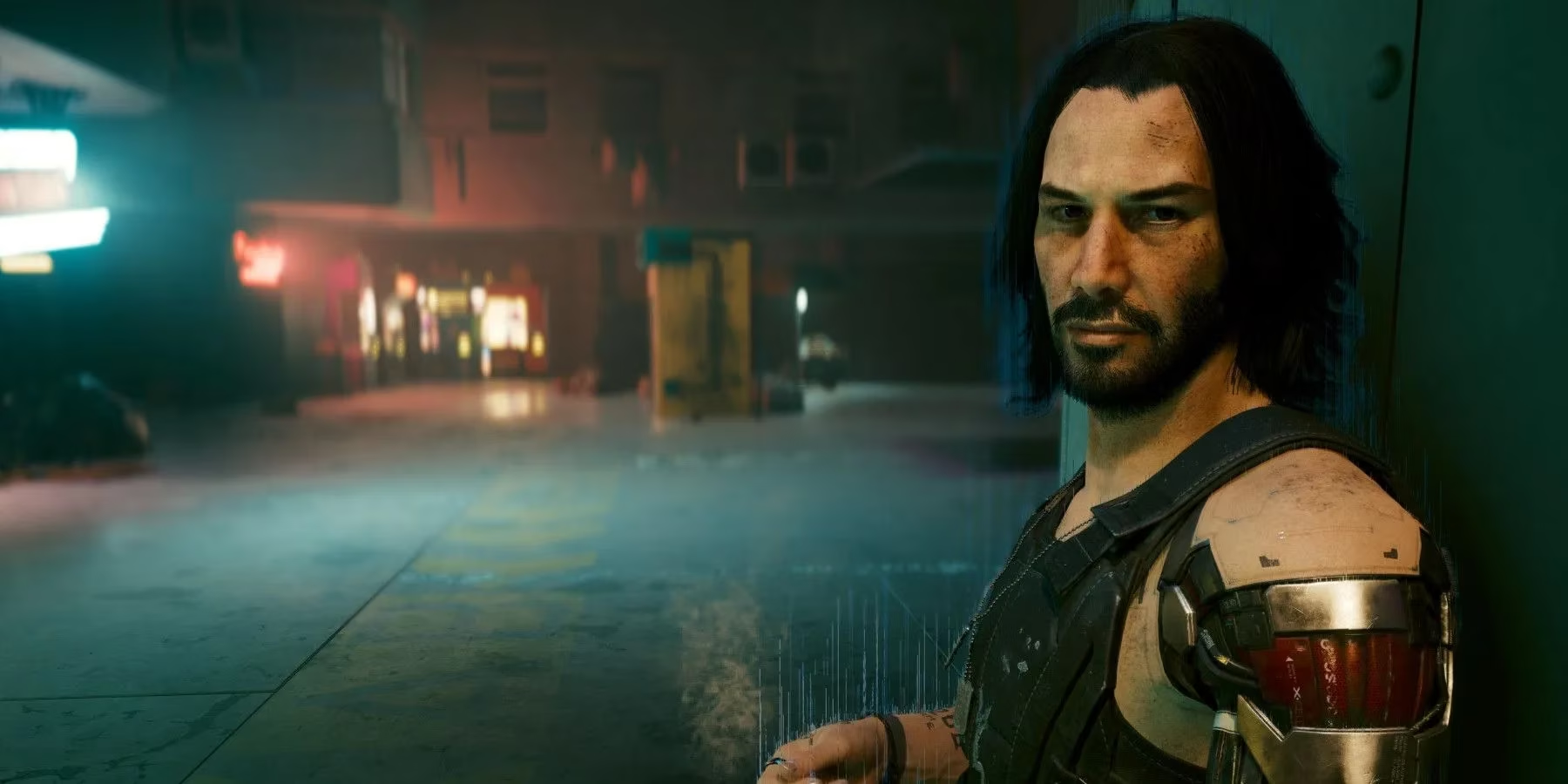
The original game's revelation of Keanu Reeves as the digitally-enshrined rockerboy Johnny Silverhand wasn't just a casting choice; it was a cultural detonation. CD Projekt Red then doubled down with Phantom Liberty, bringing Idris Elba's formidable presence to the role of FIA Agent Solomon Reed. This strategy was, in many ways, a masterstroke of marketing alchemy, generating hype that spread faster than a MaxTac alert. Both actors delivered performances that were, by most accounts, stellar—imbuing their characters with a gravitas that only seasoned professionals can provide. Their involvement helped shape Cyberpunk 2077 into a cinematic tour de force, an experience that often felt less like playing a game and more like starring in your own interactive, neon-noir blockbuster. For many of us, arguing with Johnny in V's head or navigating the treacherous loyalties with Reed were highlights of the entire experience.
The Double-Edged Mono-wire of Celebrity Casting
Yet, this star-powered approach is a piece of technology with a potentially unstable operating system. I've felt it myself during playthroughs. There are moments when the illusion fractures—when you don't see the anarchic spirit of Johnny Silverhand, but rather Keanu Reeves performing behind a digital mask, a presence as distinct and recognizable as the glow of a Kiroshi optic. Similarly, Solomon Reed can sometimes feel less like a shadowy FIA operative and more like Idris Elba on a particularly grim day at work. This isn't a critique of their talent, but an acknowledgment of the immense cultural baggage these icons carry. It creates a meta-layer that, for some players, can be as immersion-breaking as a sudden texture pop-in on a brand-new Rayfield.
Beyond the potential for distraction lies a more pragmatic, and perhaps more critical, concern: the astronomical cost. Cyberpunk 2077 was famously a budget-behemoth, and Project Orion will undoubtedly require a financial infusion that would make even a Corpo finance director blanch. Allocating a significant portion of that budget to secure one or more A-list actors is a monumental decision. It's a high-risk investment that, while great for trailer views and headline generation, could potentially siphon crucial resources away from other developmental arteries:
-
Gameplay Systems & Mechanics: Funding for deeper RPG systems, improved AI, or more dynamic open-world systems.
-
World-Building & Scope: Resources to make the next iteration of Night City (or a new location) even more dense, interactive, and alive.
-
Supporting Cast & Writing: Ensuring that every character, not just the headline stars, is fully realized with top-tier writing and performance.
The Irreplaceable Spark: When Star Power Works
Despite the valid concerns, I find myself firmly in the camp that believes the star power, when integrated with purpose, is worth the risk and cost. Why? Because Cyberpunk 2077, at its best, achieved a specific alchemy. It wasn't just a game; it was a narrative supercollider, smashing together the interactive freedom of an RPG with the production values and performative intensity of a major film. Reeves and Elba weren't merely lending their faces; they brought a level of physical, holistic acting—a subtlety in a glance, a weight in a silence—that is honed on film sets and elevates the material beyond typical voice-and-mocap performances.
Furthermore, there's a unique, almost surreal magic in interacting with these icons within an RPG framework. You're not a passive viewer; you are an active participant in their digital fate. You can defy them, side with them, or shape their endings. This creates a potent meta-narrative that's unique to the medium. The sequel has the chance to harness this power again, but the key will be intentionality.
Project Orion's Casting Crossroads
As CD Projekt Red charts the course for Project Orion, the decision to include A-list talent must be driven by narrative necessity, not just marketing muscle. The celebrity cannot feel like a glitched asset plastered onto a character model; they must be the perfect, inseparable core of the role. If a character's conception naturally aligns with the persona and talents of a major star, and their involvement serves the story first and the press releases second, then it can be transformative.
Imagine, for a moment, what could be. A sequel that learns from the past—embracing the immersive benefits of proven, cinematic actors while vigilantly guarding against the pitfalls of distraction and budgetary bloat. The goal shouldn't be to simply replicate the "Keanu surprise," but to evolve it. Perhaps it means casting a major star in a role that subverts their iconic image, or pairing a headline name with an ensemble of equally brilliant but less globally recognized character actors to create a more balanced, believable world.
In the end, the heart of Night City has always been its stories—tales of loss, ambition, and fractured humanity reflected in a chrome-plated mirror. Whether those stories are told by globally famous faces or by virtuosic performers known only to the most dedicated cinephiles, the ultimate metric is the same: Do they make us feel? Do they pull us deeper into that rain-slicked, neon-soaked world, or do they momentarily pull us out of it? For Project Orion to truly surpass its legendary predecessor, every choice, especially one as flashy and costly as this, must have a clear answer to that question. The future of the franchise doesn't just depend on bigger explosions or shinier graphics, but on maintaining that fragile, essential connection between the player and the digital soul of the world.