As I sit here in 2026, the neon glow of my terminal reflecting in my eyes, I can't help but reflect on the journey of Cyberpunk 2077. The launch was… tumultuous, to say the least. But the dedication of CD Projekt Red, culminating in Phantom Liberty and the transformative 2.0 update, proved they were willing to fight for Night City. Now, the horizon glimmers with the promise of Project Orion, the sequel reportedly aiming for the late 2020s. While the world waits for the next chapter in The Witcher saga, my mind, and the minds of many Edgerunners, are fixed on the future of the Cyberpunk franchise. And for me, that future hinges on one core, underutilized concept from 2077: Netrunning.
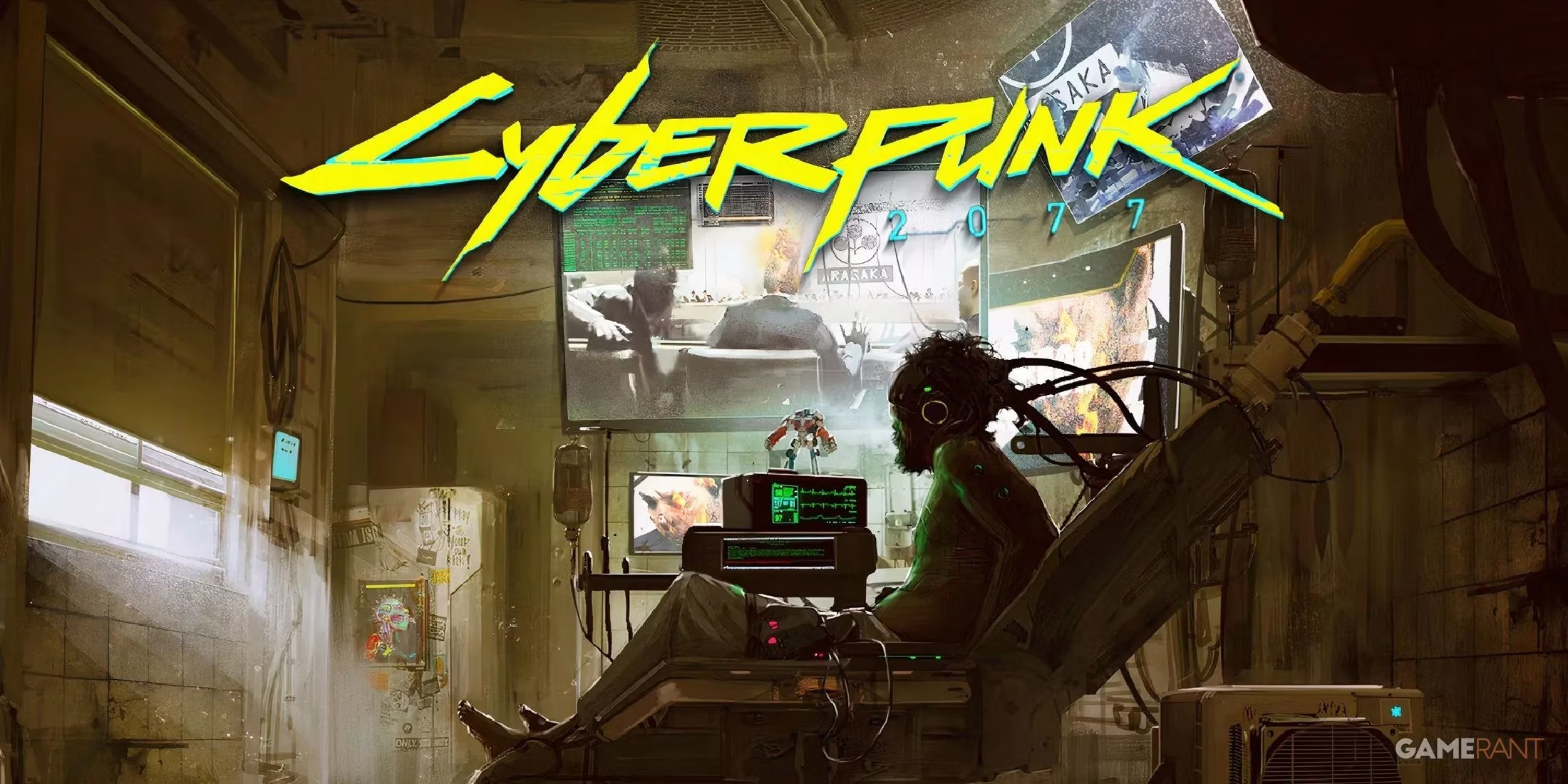
The world of Cyberpunk is defined by its stark contrasts: chrome-plated luxury soaring above gutters choked with despair, corporate greed devouring human souls. This setting isn't just a backdrop; it's the very soul of the experience. CDPR had decades of lore, dating back to the 1988 tabletop game, to draw from, and they built a Night City that feels terrifyingly plausible. But what truly makes this world tick isn't just the inequality—it's the technology that both fuels and exploits it. And at the bleeding edge of that tech sits the Netrunner.
In 2077, we got a taste. We could jack in, use quickhacks to overload an enemy's optics, fry their cyberware, or turn their own grenades against them. It was fun, especially after the 2.0 update rebalanced it from being an "I-win" button. But was it truly fulfilling? Did it ever make me feel like the digital ghosts we hear about in the lore—the ones who live more in the NET than in the meat? Not really. It often felt like a fancy menu of combat tricks rather than a gateway to a whole new layer of the world.
Think about it. We hear stories of legendary Netrunners like Spider Murphy or Bartmoss, who shaped the digital landscape through acts of incredible, world-altering hacking. In 2077, my "world-altering" hack was making a gangoon punch himself in the face. Charming, but hardly mythic. Project Orion has a golden opportunity, no, a responsibility, to finally do justice to this pillar of the Cyberpunk identity.
So, what would make Netrunning truly shine in Orion? Let me lay out my vision.
🧠 A Deeper Digital Dive: Beyond Quickhacks
First, Netrunning needs to be more than a combat tool. It should be a world-interaction system as rich as dialogue or exploration.
-
The NET as a Physical (Digital) Space: Remember those fancy chairs and immersion tanks other Netrunners use? Why can't we? Orion should let us purchase and use personal Netrunning stations. From these, we could dive deep into cyberspace, not just for a mini-game, but to explore iconic digital landscapes—the crumbling ruins of the old NET, the fortified corporate data-fortresses, the anarchic playgrounds of the new NET. This is where true Netrunning quests could happen.
-
City-Wide Manipulation: Imagine preparing for a heist not just by scouting the physical location, but by hacking the city's infrastructure days in advance. Triggering a district-wide blackout as a distraction, subtly altering public transit routes to clear your path, or seeding misinformation through news feeds to manipulate police response. Netrunning should be about preparation and large-scale influence.
⚙️ Specialized Pathways: Choose Your Digital Destiny
The skill tree in 2077 was a good start, but Orion could revolutionize it. What if, early on, we chose a fundamental Netrunning archetype?
| Archetype | Core Philosophy | Playstyle Focus |
|---|---|---|
| Ghost | Unseen, Untraceable | Stealth infiltration, data theft, erasing digital footprints. Perfect for solos and spies. |
| Daemon | Chaos & Control | Overriding systems, creating distractions, turning enemy tech against them. The battlefield controller. |
| Architect | Creation & Defense | Building digital fortresses, crafting unique programs (quickhacks 2.0), protecting allies' cyberware. |
Each path would offer unique abilities, missions, and even reputation within Night City's digital underworld. A Ghost might be hired by corps for espionage, while a Daemon would be feared by every Scavenger gang for turning their implants into bombs.
🎮 Integrated Gameplay: Making the Digital Tangible
Netrunning must stop feeling like a separate mini-game. It needs to be woven into every facet of gameplay.
-
Stealth Synergy: Pre-2.0, you could hack cameras and tag enemies. Orion should take this further. A true Netrunner/Stealth hybrid should be able to create timed loops in camera feeds, fake biometric signatures at checkpoints, or even temporarily "paint" themselves as a friendly ID in a secure network.
-
Social Engineering: Why just use a dialogue skill check when you could also hack the person's Agent mid-conversation to view their secrets, or subtly influence their internal chem-balance to make them more agreeable? The social and digital realms should collide.
-
Netrunner vs. Netrunner Combat: This was almost absent in 2077. Orion needs full-blown digital duels. Before a major mission, you might have to trace and neutralize a rival Netrunner defending the target's system. These could be tense, puzzle-like encounters in cyberspace, where brute force gets you flatlined by black ICE.
The 2.0 update showed CDPR isn't afraid to overhaul systems for the better. They learned that Netrunning couldn't just be overpowered; it needed to be engaging. Now, for Project Orion, the goal must be to make it essential and immersive. It's one of the most uniquely Cyberpunk concepts out there—a blend of high-tech body horror and digital wizardry. To relegate it to a suite of combat hacks again would be a missed opportunity of monumental proportions.
As I log off and the static fades from my vision, replaced by the ever-present rain on my window, I'm filled with hope. The foundation is there. The lessons have been learned. Project Orion isn't just a sequel; it's a chance to fully realize the promise that has always buzzed at the edges of Night City's neon-drenched streets. The promise of truly losing yourself in the digital abyss, and coming back a legend. Let's just hope when 2028 or 2029 rolls around, we're not just shooting and slashing—we're diving headfirst into the NET and changing the very code the city runs on. Isn't that what being a Cyberpunk is all about? 🖤💾