In the neon-drenched, chrome-plated year of 2026, the gaming world holds its collective breath, its cyberware humming with anticipation for one project: Cyberpunk 2077's sequel, codenamed Project Orion. CD Projekt Red, having ascended from the ashes of a rocky launch to the throne of RPG royalty, now wields ambitions so vast they threaten to swallow the very genre whole. The studio isn't just making a new game; they are orchestrating a seismic shift, attempting to fuse the visceral thrill of interactive gameplay with the polished, heart-stopping spectacle of a blockbuster film. This isn't merely an evolution; it's a declaration of war on the traditional boundaries of digital storytelling, a high-stakes gamble where the prize is immortality and the cost could be the soul of the franchise itself.
The Cinematic Dream: Blurring the Lines Between Play and Spectacle
Recent revelations from CD Projekt Red have confirmed the studio's audacious vision: Project Orion is being engineered from the ground up as a cinematic chimera. They are actively hunting for a Lead Cinematics Designer, a role that sounds more at home on a Hollywood backlot than in a game developer's office. This singular hire is tasked with a monumental mission: to inject the game's narrative with a constant, intravenous drip of movie magic. Where the original Cyberpunk 2077 was a sprawling, player-driven tapestry—a sandbox of shattered dreams and chrome-plated hopes—its successor appears destined to be a guided tour through a director's cut of a dystopian epic.
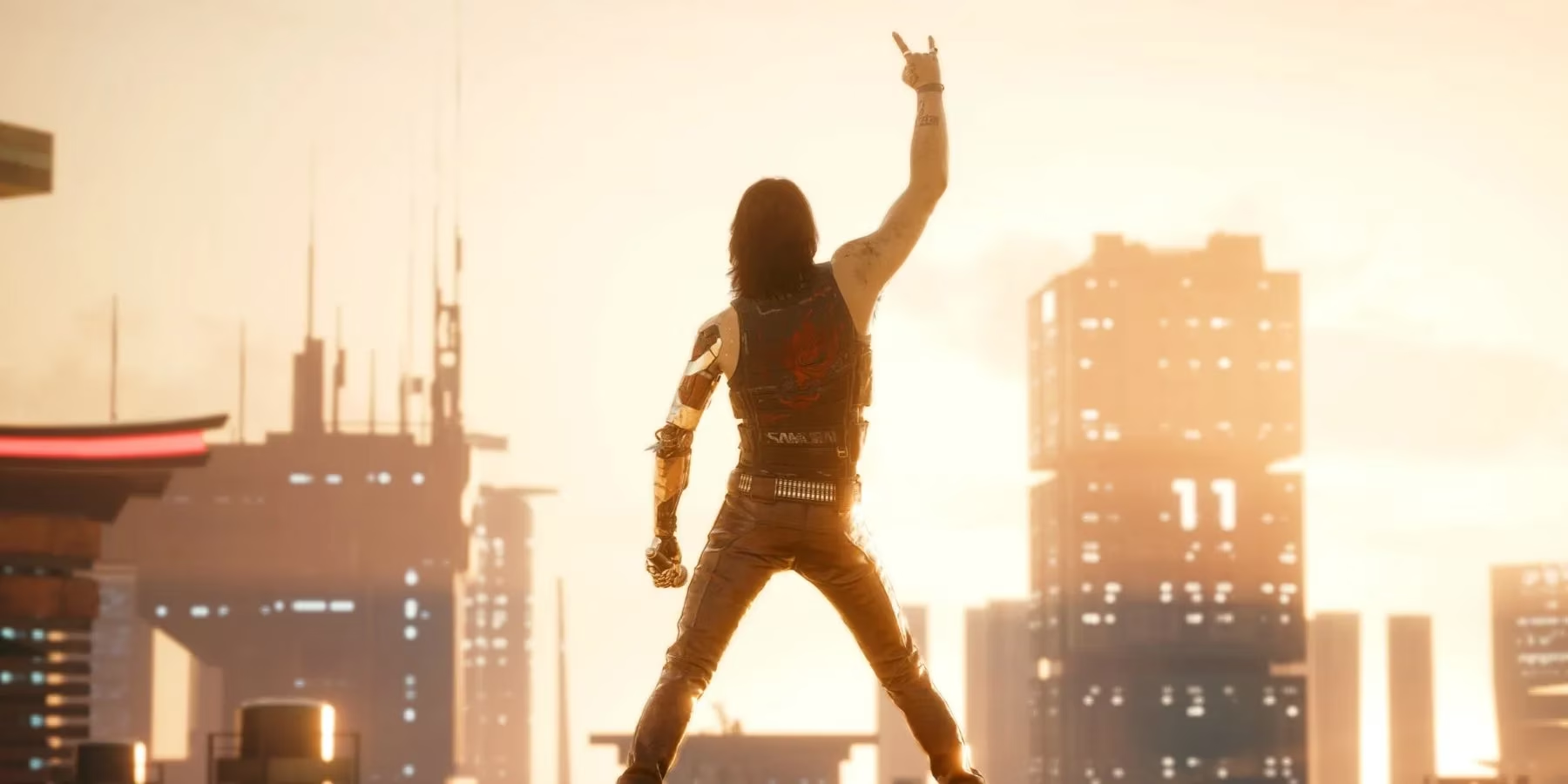
This approach is a direct evolution from the star-powered foundation laid by its predecessor. Keanu Reeves's Johnny Silverhand wasn't just a character; he was a cultural event, a digital ghost haunting both V's psyche and the public consciousness. Phantom Liberty doubled down, recruiting the formidable gravitas of Idris Elba as Solomon Reed. Project Orion, it seems, plans to launch this strategy into the stratosphere. Imagine cutscenes so meticulously crafted, so dripping with visual poetry and emotional heft, that pausing to check your inventory feels like an interruption of a Scorsese masterpiece. The game world might become less of a playground and more of a meticulously staged film set, where every rain-slicked alley and flickering hologram is a carefully composed shot waiting for the player-turned-protagonist to hit their mark.
The Shadow Over the Spinoffs: A Threat of Obsolescence
Yet, for all its glittering promise, this cinematic obsession casts a long, ominous shadow over the franchise's flourishing extended universe. The triumph of Netflix's Edgerunners proved that the world of Night City was bigger than any one story. The anime was a lightning bolt of pure, unfiltered style, a self-contained tragedy that carved its own niche in the lore without leaning on V or Silverhand. Its success flung open the doors to a multiverse of possibilities: live-action series, graphic novels, perhaps even feature films.
Herein lies the potential paradox of Project Orion. If the game itself becomes the ultimate cinematic experience—a playable movie that out-Hollywoods Hollywood—what space remains for ancillary projects? Why watch a Netflix adaptation when the game delivers a superior, interactive version of that same cinematic thrill? Edgerunners worked because it complemented the game's RPG openness with a focused, linear narrative. If Project Orion adopts a similarly linear, cutscene-heavy approach, it doesn't complement; it competes. It could render future adaptations as redundant as a backup dancer at a solo concert, their unique spark extinguished by the blinding beacon of the main event.
The Core Gameplay Conundrum: RPG Soul vs. Cinematic Shell
The greatest danger, however, lurks not in boardrooms but in the core gameplay loop. Cyberpunk 2077, in its final, polished state, is a deep and immersive role-playing experience. Its strength is player agency—the ability to live a life of chaotic violence, stealthy precision, or hacker-centric manipulation. This new cinematic direction is like replacing a masterfully tuned, roaring engine with a silent, efficient electric motor; it might be smoother, but where's the soul, the grit, the feeling of raw connection?
Will players still feel like they are inhabiting Night City, or merely observing it through an exceptionally pretty window? The risk is creating a experience as beautiful and hollow as a corpo's smile, all surface-level dazzle with no meaningful interaction beneath. The studio must navigate a razor's edge:
-
Too cinematic: The game becomes a glorified quick-time event, a passive spectacle where player choice is an illusion.
-
Too gamey: The "next-level" cinematic promise falls flat, feeling like an expensive facade on a familiar structure.
| Aspect | Cyberpunk 2077 (2026 Perspective) | Project Orion's Potential |
|---|---|---|
| Story Delivery | Environmental lore, player-driven dialogue, key cutscenes | Pervasive, film-quality cutscenes driving a linear narrative |
| Player Agency | High - Builds, approaches, and endings vary widely | Unknown - Potentially sacrificed for directorial vision |
| Franchise Impact | Birthed successful independent spinoffs (Edgerunners) | Risks making future adaptations feel superfluous |
| Core Experience | An RPG first, with cinematic qualities | A cinematic event first, with RPG elements |
Conclusion: A Bold Leap into the Unknown
As of 2026, Project Orion remains the industry's most tantalizing enigma, a black box of potential wrapped in rumors and radiating ambition. CD Projekt Red is not just building a sequel; they are attempting to birth a new hybrid medium. The confirmation of their cinematic pursuit is a beacon of thrilling, terrifying potential. It promises moments of unparalleled narrative punch and visual splendor, but it gambles with the very DNA that made the world worth revisiting.
The path forward is littered with iconic characters like Johnny Silverhand and Solomon Reed, but also with the ghosts of what could be lost. Will Project Orion be the masterpiece that finally perfects the marriage of game and film? Or will it be a cautionary tale, a stunningly rendered monument to the perils of sacrificing interactivity on the altar of spectacle? One thing is certain: when it finally erupts onto our screens, the landscape of gaming will be forever changed, for better or for worse. The countdown to the new era has begun. 🚀🔥