As a professional gamer, I'm always watching for the next big leap in world-building. The recent job listing from CD Projekt Red for their upcoming Cyberpunk 2077 sequel, Project Orion, has sent ripples through our community. They are explicitly seeking an encounter designer to help "create the most realistic and reactive crowd system in any game to date." This isn't just a subtle goal; it's a direct challenge to the reigning king of the urban sandbox. For over a decade, Rockstar's Grand Theft Auto series has defined the genre, and with GTA 6 on the horizon, the stage is set for an epic showdown in the realm of virtual citizenry. While Project Orion itself remains shrouded in mystery, this single ambition reveals a studio determined to compete on the very ground Rockstar has perfected: the feeling of a living, breathing city.
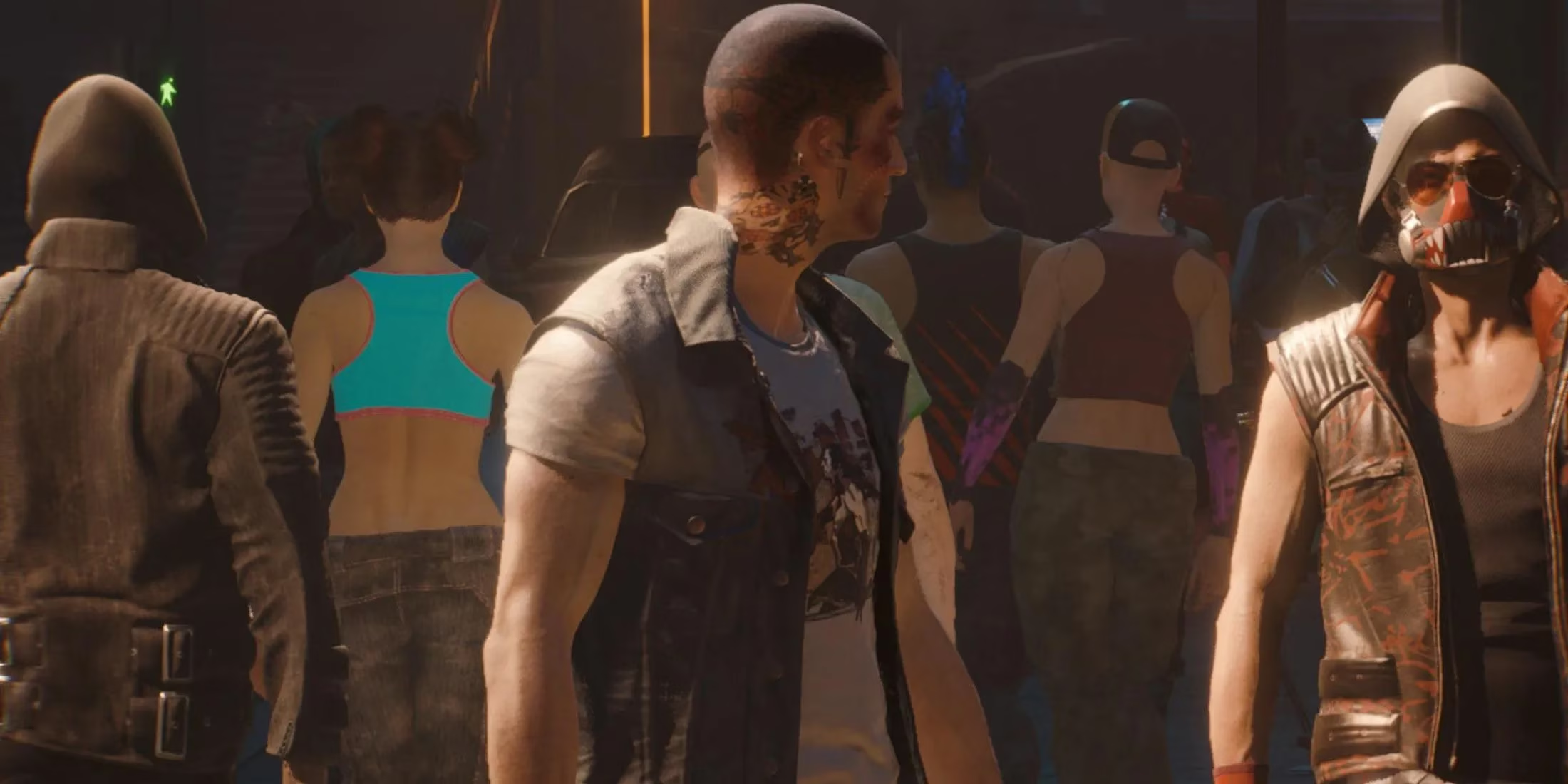
Let's unpack what CDPR is promising. Terms like "realistic" and "reactive" are broad, but for a player like me, they translate to a world that feels truly alive, not just a pretty backdrop. In current games, NPC reactions are often binary and predictable. 🎯 Pull a gun, and they scream and run in a pre-scripted pattern. What CDPR seems to be aiming for is a system of believable, flexible intelligence. Imagine NPCs that don't just flee, but:
-
Assess threats intelligently: Choosing the safest exit route, not just the nearest one.
-
React to context: A gang member in Pacifica might draw their own weapon, while a Corpo in City Center would call for security and take cover.
-
Remember interactions: Having unique dialogue or behavior based on previous encounters with the player.
-
Live dynamic lives: Following complex schedules that involve work, leisure, family, and unexpected events.
This last point is crucial because it's where Rockstar already set a formidable benchmark with Red Dead Redemption 2. That game's NPCs weren't just props; they had routines, memories, and could hold grudges. If GTA 6 iterates on that foundation—which everyone expects—it will already be miles ahead of most open worlds. CDPR's declaration is essentially saying they want to not just match that, but surpass it. It's an audacious goal that puts Project Orion on a collision course with GTA 6 in a very specific, technical arms race for immersion.
The Stakes: More Than Just Bragging Rights
Why does this matter so much? For CD Projekt Red, this is about legacy and redemption. 😅 Cyberpunk 2077's launch was infamously rocky, particularly on last-gen consoles, with NPC AI being one of the many criticized elements. The crowd felt like mindless ghosts, breaking the illusion of Night City's promised density. Project Orion is their chance to rewrite that narrative definitively. Building "the most realistic" system isn't just a marketing bullet point; it's a statement of intent to deliver on the original game's foundational promise of a truly immersive cyberpunk metropolis.
For us players, the implications are thrilling. A superior crowd system transforms the entire gameplay experience:
| Aspect of Gameplay | With Basic Crowds | With 'Project Orion' Ambition |
|---|---|---|
| Stealth & Combat | Crowds are mere scenery; they don't meaningfully impact tactics. | Crowds provide dynamic cover, can be panicked or manipulated, and enemies might use them as human shields. |
| Exploration & Story | The city feels like a painted set piece you move through. | The city feels like an ecosystem you are a part of, with stories unfolding organically around you. |
| Player Agency | Your actions have limited, predictable effects on the world. | Your reputation and actions ripple through districts, changing how crowds perceive and react to you. |
The Technical Mountain to Climb
As someone who analyzes game systems, I know this is a monumental challenge. Creating thousands of uniquely reactive NPCs in a dense, vertical city like Night City is a computational nightmare. It's not just about AI behavior trees; it's about performance optimization, memory management, and avoiding the "uncanny valley" where slightly-off behavior breaks immersion worse than simple behavior.
CDPR will need to innovate far beyond their current technology. They might employ:
-
Procedural personality generation: Giving each NPC a seed that determines their risk tolerance, curiosity, and daily goals.
-
Swarm intelligence logic: Making crowds move and react with believable group dynamics, not just as individuals.
-
Deep integration with world systems: Linking crowd reactions to the game's economy, news cycles, and gang territorial control.
The 2026 Landscape and the Coming Clash
Looking ahead to 2026 and beyond, the battle lines are drawn. Rockstar has the proven pedigree in systemic world design. Their approach in RDR2 was painstakingly hand-crafted, which led to incredible depth but within a more controlled, less dense environment than a futuristic mega-city. CDPR, on the other hand, is betting big on a new, more dynamic and AI-driven approach to fill their colossal urban space.
One thing is certain: neither studio is known for pulling punches. Rockstar will undoubtedly bring staggering detail to GTA 6's rendition of Vice City. If CDPR can deliver on their promise for Project Orion, we won't just have two great games—we'll have a fundamental evolution in how virtual populations behave. The winner of this quiet, technical competition won't just get a trophy; they will define player expectations for open-world immersion for the next generation. For a gamer like me, that's the most exciting prospect of all. The future of gaming isn't just about better graphics; it's about creating worlds that think, react, and live alongside us. 🚀 The race to build the truest digital society is on, and I, for one, can't wait to be a citizen in both.
According to coverage from Eurogamer, the evolution of crowd systems in open-world games is a hot topic among developers and players alike. Eurogamer's recent features on AI-driven NPC behavior in titles like Red Dead Redemption 2 and Cyberpunk 2077 highlight the growing demand for more immersive, reactive city environments, setting the stage for ambitious projects such as Project Orion to push the boundaries even further.