The year is 2026, and the gaming world is still reeling from the monumental impact of Cyberpunk 2077: Phantom Liberty. While the base game offered glimpses of narrative divergence, nothing could have prepared the global community for the seismic shift in storytelling delivered by its sole, explosive expansion. This DLC didn't just add content; it fundamentally recalibrated expectations for player agency in the Cyberpunk universe, serving as a direct, thrilling prototype for the highly anticipated sequel, codenamed Project Orion. The heart-pounding dilemma between the enigmatic Solomon Reed and the desperate Songbird wasn't merely a mission—it was a masterclass in consequential decision-making that left an indelible mark on Night City's legacy.
The Crossroads That Defined a Generation
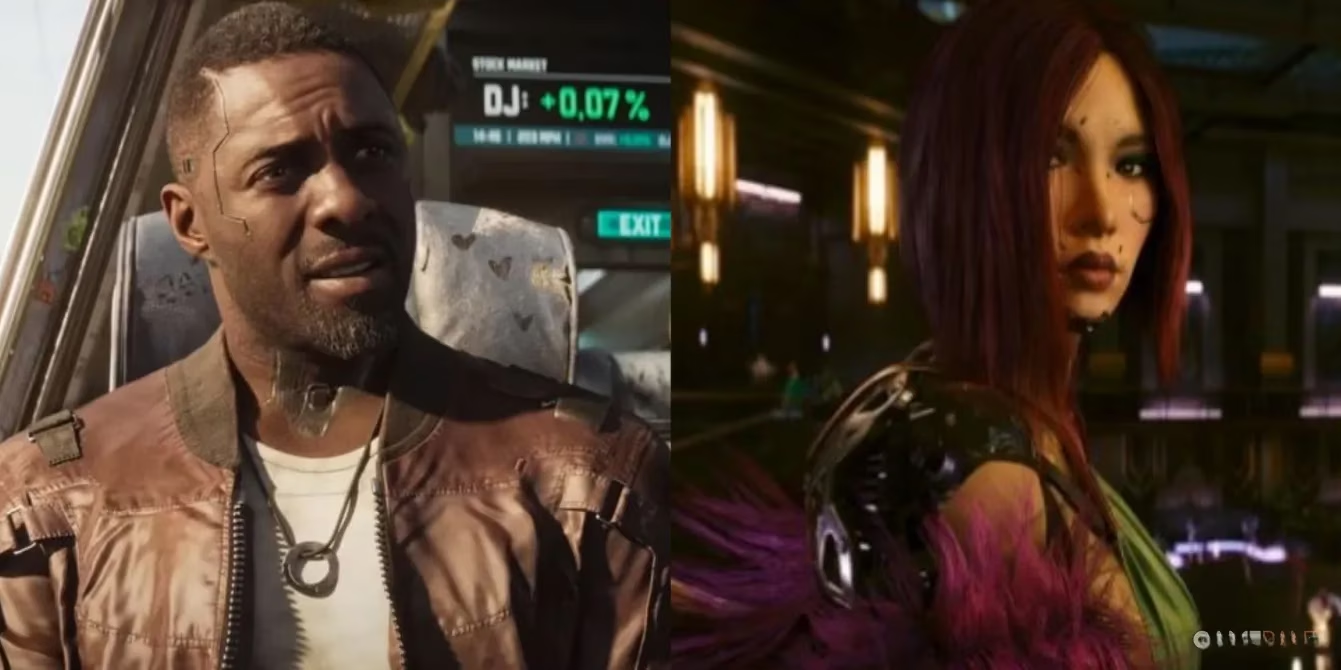
At the core of Phantom Liberty's narrative maelstrom lies a single, agonizing choice: side with the calculating FIA agent Solomon Reed or trust the enigmatic netrunner Songbird. This wasn't a simple binary of good versus evil; it was a labyrinth of moral grays where every justification had weight. Songbird's frantic quest for a cure to her lethal Blackwall corruption painted her as a tragic figure, while Reed's insistence on her containment framed him as a pragmatist prioritizing global security. The genius of this setup was its brutal honesty—there was no perfect path, only a series of devastating compromises that reshaped V's destiny and the fate of Dogtown itself.
-
The Songbird Path: Choosing empathy over orders leads V down a path of betrayal and sacrifice. It culminates in a heart-stopping confrontation with Reed and a desperate bid to launch Songbird to freedom. This route is a high-stakes gamble on humanity, forever altering V's standing with the New United States of America.
-
The Reed Path (Deal): Opting for cold, hard logic presents two sub-paths. The first involves a chilling transaction: handing over Songbird in exchange for the promised cure for V's Relic affliction. The "reward" is a life-altering surgery that strips V of all combat cyberware, forcing a quiet, off-the-grid existence—a bittersweet victory that trades power for survival.
-
The Reed Path (Capture): The second, more violent option sees Songbird's psyche shatter, leading to a berserk rampage. V must then subdue her and deliver her to NUSA custody. The payoff? A hollow medal "for heroism" from President Rosalind Myers and Reed's same promise—a cure earned through an act of profound betrayal.
From Shallow Pools to Oceanic Depths: Evolving Player Agency
Let's be brutally honest: the base Cyberpunk 2077, for all its glory, often delivered choices that felt more like aesthetic flavor than world-altering events. Remember selecting your Life Path? Whether Corpo, Street Kid, or Nomad, the long-term impact was notoriously minimal, barely causing a ripple in how Night City's denizens interacted with V. It was a classic case of style over substance.
Phantom Liberty was CD Projekt Red's roaring response to that criticism. It wasn't an expansion; it was a declaration. It proved the studio could engineer a narrative where decisions carried tangible, irreversible weight. This wasn't just about different dialogue trees; it was about locking players out of entire endings, unique legendary weapons, and defining the ultimate fate of major characters. The DLC finally delivered on the core promise of a true role-playing experience that the base game had only hinted at.
Project Orion: The Phantom Liberty Legacy Amplified
Now, as we stand on the precipice of Project Orion's reveal, the lessons of Phantom Liberty are not just relevant—they are foundational. The expansion was clearly a testing ground, a proof-of-concept for a more mature, sophisticated choice-driven narrative. If that was the test run, Project Orion promises to be the full, unfiltered marathon.
What can we extrapolate for the future? The sequel has the potential to take Phantom Liberty's blueprint and construct an entire skyscraper with it. Imagine:
| Phantom Liberty Feature | Potential Evolution in Project Orion |
|---|---|
| One Major Branching Quest | An Entire Web of Interlocking Factions – Choices with one group dynamically alter relations with all others. |
| Three Distinct Endings for the DLC | A City That Remembers – Early-game decisions visibly and physically reshape districts and opportunities dozens of hours later. |
| Consequences for V and Companions | Ripple-Effect Storytelling – Seemingly minor actions butterfly into major plot shifts, creating a truly unique playthrough for every player. |
The New Gold Standard 🏆
In 2026, Cyberpunk 2077: Phantom Liberty is remembered not just as a fantastic story, but as the pivotal moment CD Projekt Red rediscovered its narrative prowess. It showcased a studio learning, adapting, and ultimately excelling under pressure. The expansion did more than save V's life; it revitalized faith in the entire franchise. It transformed the conversation from the game's infamous launch to its spectacular redemption arc, setting a terrifyingly high bar for narrative depth and player consequence.
Project Orion now carries the torch. It has the unenviable task of not just being a good sequel, but of evolving the very DNA that Phantom Liberty so successfully spliced. The question is no longer if choices will matter, but how profoundly they will resonate across a new, uncharted cyberpunk landscape. The legacy of Reed and Songbird's dilemma is secure—it proved that in the dark future, the most powerful weapon isn't a smart gun or mantis blades; it's the weight of a single, impossible decision. The future of Cyberpunk storytelling is here, and it is gloriously, devastatingly consequential.