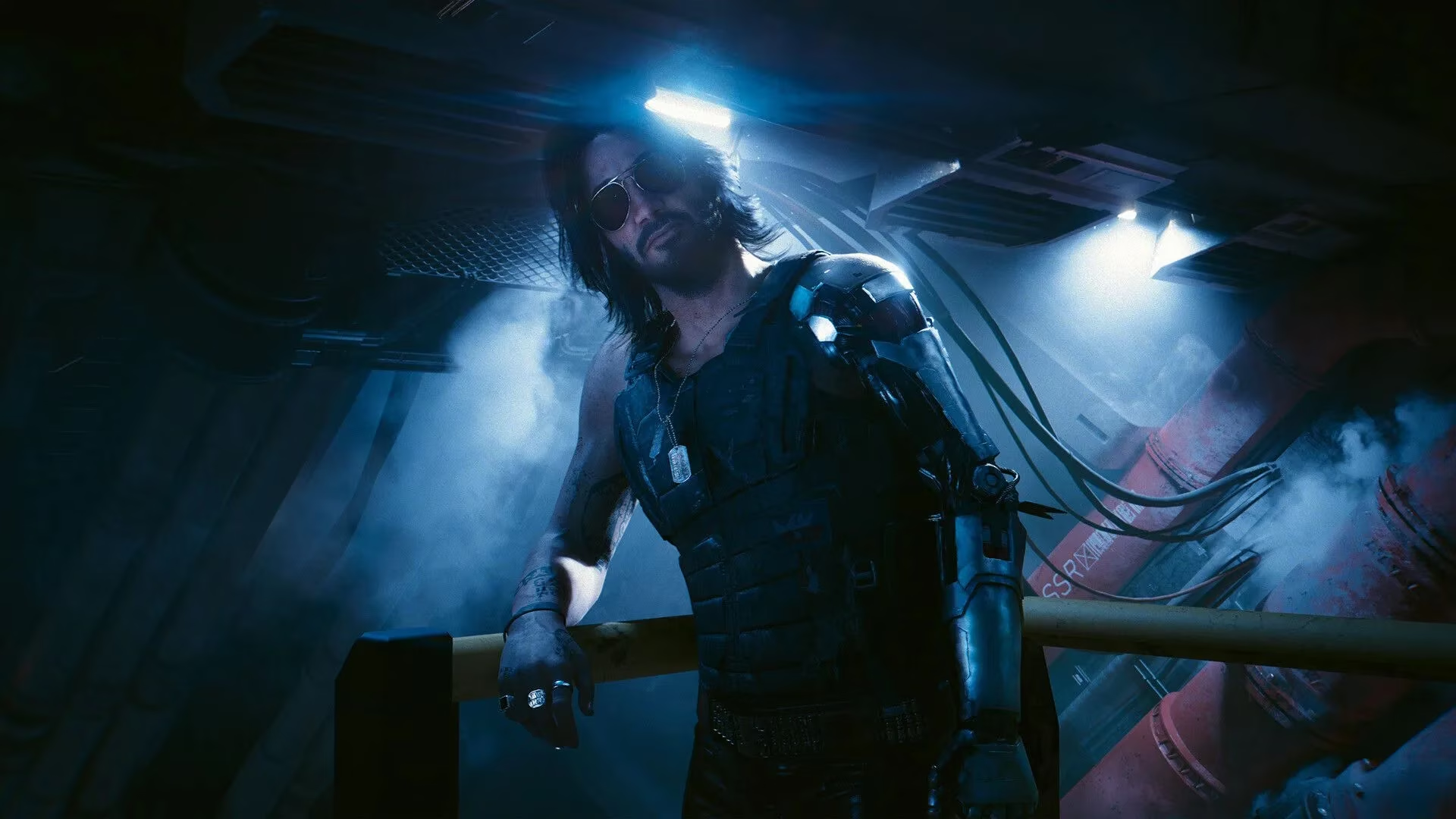
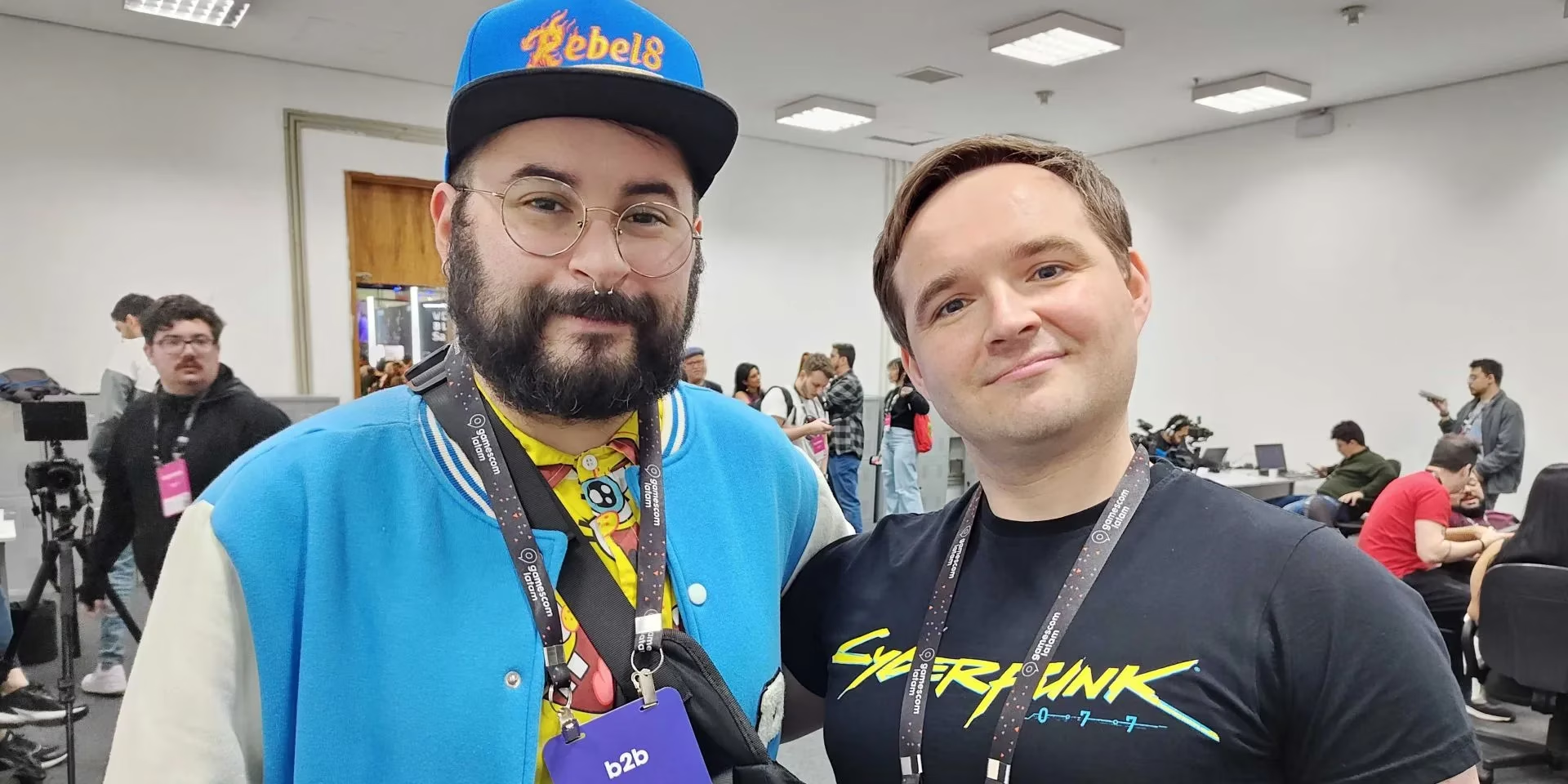
In the cool, air-conditioned sanctuary of the 2026 gamescom latam press lounge, Pawel Sasko, the associate game director at CD Projekt RED, reflects on a journey that has spanned decades and continents. His current focus is firmly on the future, specifically on building a new studio in Boston with the "RED Team" for the next Cyberpunk game, a project he describes as being in its early, exhilarating stages. Yet, as the vibrant energy of the Latin American indie scene pulses around him, the conversation naturally drifts to origins, challenges, and the hard-won wisdom that shapes both creators and their creations.
From Demo Scenes to Defining Studios
Sasko’s entry into game development at age 19 predates the modern "indie" label, harking back to a time he describes as more of a "demo scene." His early years were a crucible of self-directed learning. "At that time, YouTube existed, but there was nothing on it, right? So, at that time, there were just cat videos," he recalls with a chuckle. Knowledge was a scarce commodity, acquired through imported, already-dated books from America. The process was like trying to assemble a complex clock using only a hammer and a vague memory of what time looks like—a fundamental, hands-on struggle.
His first foray into a "serious" company, Metropolis Software, ended with an unreleased game. Then came a legendary crisis at Reality Pump Studios. "I also remember there was a time when our server broke... and we lost the whole game," Sasko recounts. The sole backup resided on the hard drive of a graphic designer on paternity leave. The team's salvation depended on the careful retrieval of that single computer—a digital rescue mission that feels both archaic and profoundly human. "Those were the days," he laughs, a phrase that carries the weight of countless prototypes and near-disasters.
The Philosophy of Scars and Studio Evolution
With a background in psychology, Sasko brings a unique perspective to development hurdles. He speaks not of avoiding pain but of metabolizing it. "The important thing about therapy is that the best way to grow and become better is through [feeling] your pain, not avoiding it," he explains. He views professional and personal scars not as flaws to hide, but as evidence of survival and growth. This philosophy was tested in the fire of Cyberpunk 2077’s tumultuous launch.
He is candid about the impact: "To sum it up, Phantom Liberty worked significantly better at its launch because we completely changed the production style, something that couldn’t have been possible if the initial reception of the game wasn’t as negative as it was." That collective failure became a painful but essential lesson, forcing a studio-wide metamorphosis. The experience acted like a forge, melting down rigid processes to reforge them into something more flexible and resilient. It changed him, and it fundamentally changed CD Projekt RED.
A Fertile Ground for Independent Creativity
Despite an industry landscape in 2026 still marked by volatility, layoffs, and studio closures, Sasko is bullish on the opportunities for small developers. "Oh, absolutely. If anything, I think that the whole scene is fertile for indie developers right now," he asserts. He points to platforms like the Summer Games Fest, where indie titles share a global stage with viewership in the tens of millions, proving that major financial and critical success is no longer the exclusive domain of AAA studios.
The support ecosystem has diversified dramatically:
| Support Type | Examples | Impact |
|---|---|---|
| Publisher Labels | Dedicated indie arms at major publishers | Provides funding, marketing, and distribution muscle |
| Platform Spotlight | Nintendo Spotlight features, PlayStation Indies | Grants massive visibility on console storefronts |
| Global Events | gamescom latam, Summer Games Fest | Creates networking and reveal opportunities on a world stage |
"Nowadays, everyone knows that big financial success can be found in the indie scene," Sasko notes, highlighting the influx of creativity from previously underrepresented regions. Games like Guacamelee! (with a Mexican director) and Tales of Kenzera: ZAU (with a director of Kenyan descent) exemplify this global flowering. The indie scene, once a niche, is now a vast and interconnected coral reef, where countless unique forms of creative life find the specific conditions they need to thrive.
The Converging Spirit of gamescom latam
For Sasko, events like gamescom latam are vital catalysts. "Giving the spotlight to indies and talking about these games helps so much to encourage them to keep making games," he says. This encouragement is tangible in the bustling halls of the event, where developers from across Latin America and beyond showcase their passions. It’s a place where humble demeanor and earnest energy, qualities Sasko himself embodies, are the common currency.
The journey for many in regions like Latin America has been a long one. "We might have arrived a bit late to the game," Sasko muses, but the present is bright. Today, gamescom latam and the global indie ecosystem represent a powerful convergence—a place where developers from all paths of life meet not just to compete, but to collaborate, share scars, and lift each other through shared hardships. In 2026, the future of games is being written not just in the established studios of North America, Europe, and Japan, but in vibrant hubs around the world, each adding its own indispensable verse to an ever-expanding story.