In the year 2026, the relentless march of cyberpunk media continues, but for those still haunted by the ghost of a specific, rain-slicked, neon-drenched dream—the dream of Blade Runner—a persistent void has remained. Many turned to Cyberpunk 2077, a titan of the genre, and found a compelling, albeit different, beast. It captured hearts and held them, yes, but did it ever truly capture that singular, melancholic, noir-soaked atmosphere that defines Ridley Scott's masterpiece? For legions of fans, the answer was a resounding, if disappointed, "not quite." It offered glimpses, fleeting moments of that aesthetic, but its sun-drenched, chaotic, and sprawling open world was ultimately chasing a different high. So, what if a game came along that wasn't trying to be a sprawling RPG, but a laser-focused, cinematic love letter to that very specific vibe? Enter Nobody Wants To Die, the game that asks: what if you could live inside that iconic monologue?
A Linear Path to Perfection
Why does Nobody Wants To Die succeed where a behemoth like Cyberpunk 2077 could only intermittently dabble? The answer lies in its ruthless, glorious linearity. Cyberpunk 2077 wowed players with vistas of impossible skyscrapers that filled the screen, but these were often distant promises. You could look, but the reality of interacting with that skyline was often... less than epic. Nobody Wants To Die makes no such promises of freedom. Instead, developer Critical Hit meticulously crafts every single frame you see. Every skybox is a painting; every alleyway is a stage set for cyber-noir. This isn't a world you explore haphazardly—it's a world that unfolds for you, with the deliberate pacing of a classic film. Isn't that what we truly wanted? Not a playground, but an experience?
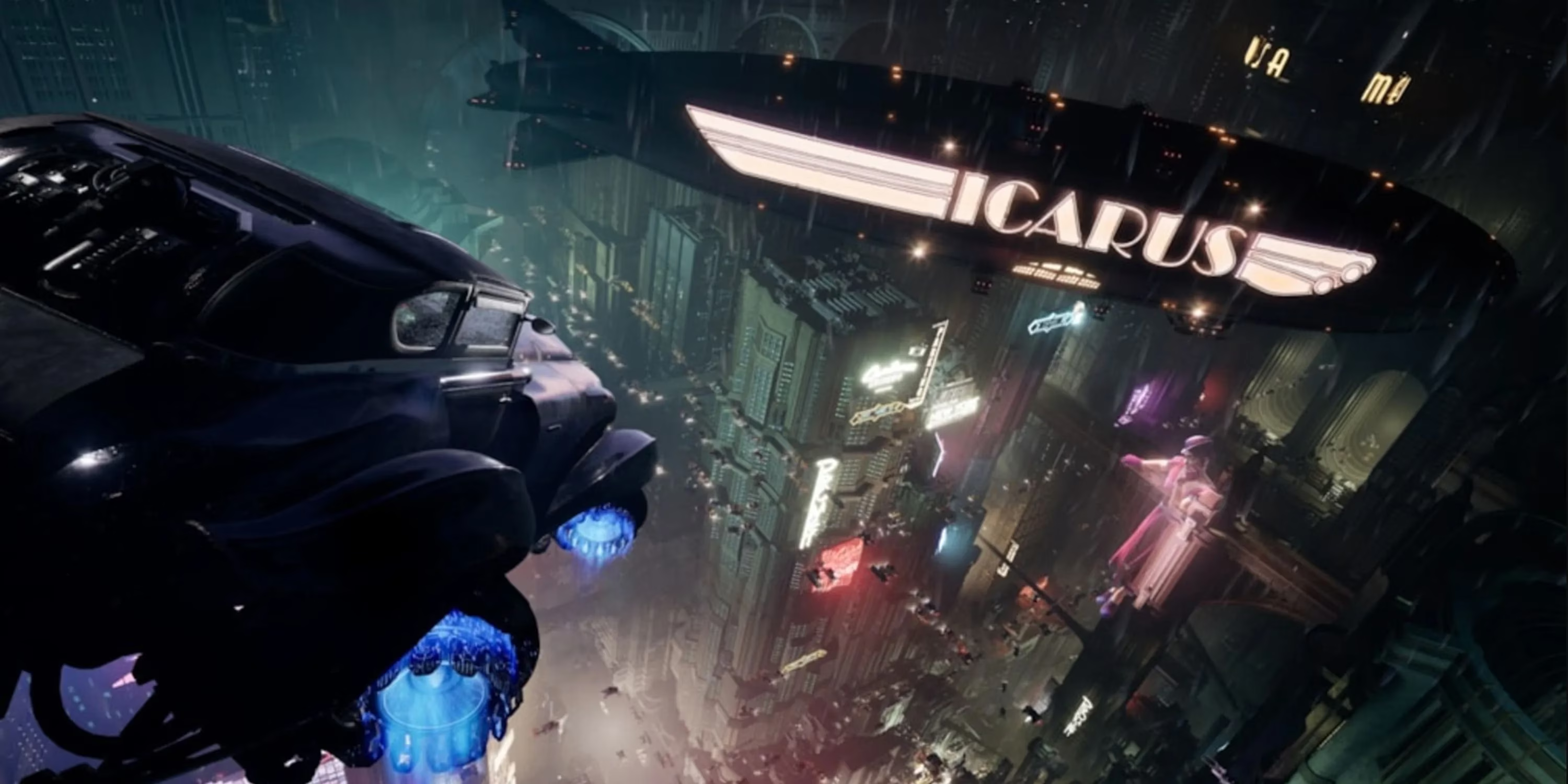
Blade Runner's Soul Meets BioShock's Bite
Do not mistake its linearity for a lack of depth. Nobody Wants To Die weaves a narrative that is pure, potent cyberpunk, blending the philosophical DNA of Blade Runner with the retrofuturist capitalist horror of BioShock. The year is 2329. Our time is now a distant memory called 'The Mortal Age.' Humanity has conquered death—but at what cost? Through a substance called Ichorite, consciousness can be transferred to new bodies. Sounds like paradise? Think again. This is a subscription service. Your immortality is a monthly bill. And the bodies available to the working class? They're the cast-offs, plagued by illness, chronic pain, and decay. This is a world where the ultimate human dream has been commodified, packaged, and sold back to you on a crippling payment plan. It’s a devastatingly clever premise that feels frighteningly plausible. While it explores themes familiar to fans of Altered Carbon, its execution—a bleak, capitalist critique wrapped in a detective story—feels fresher and more focused than ever in 2026.
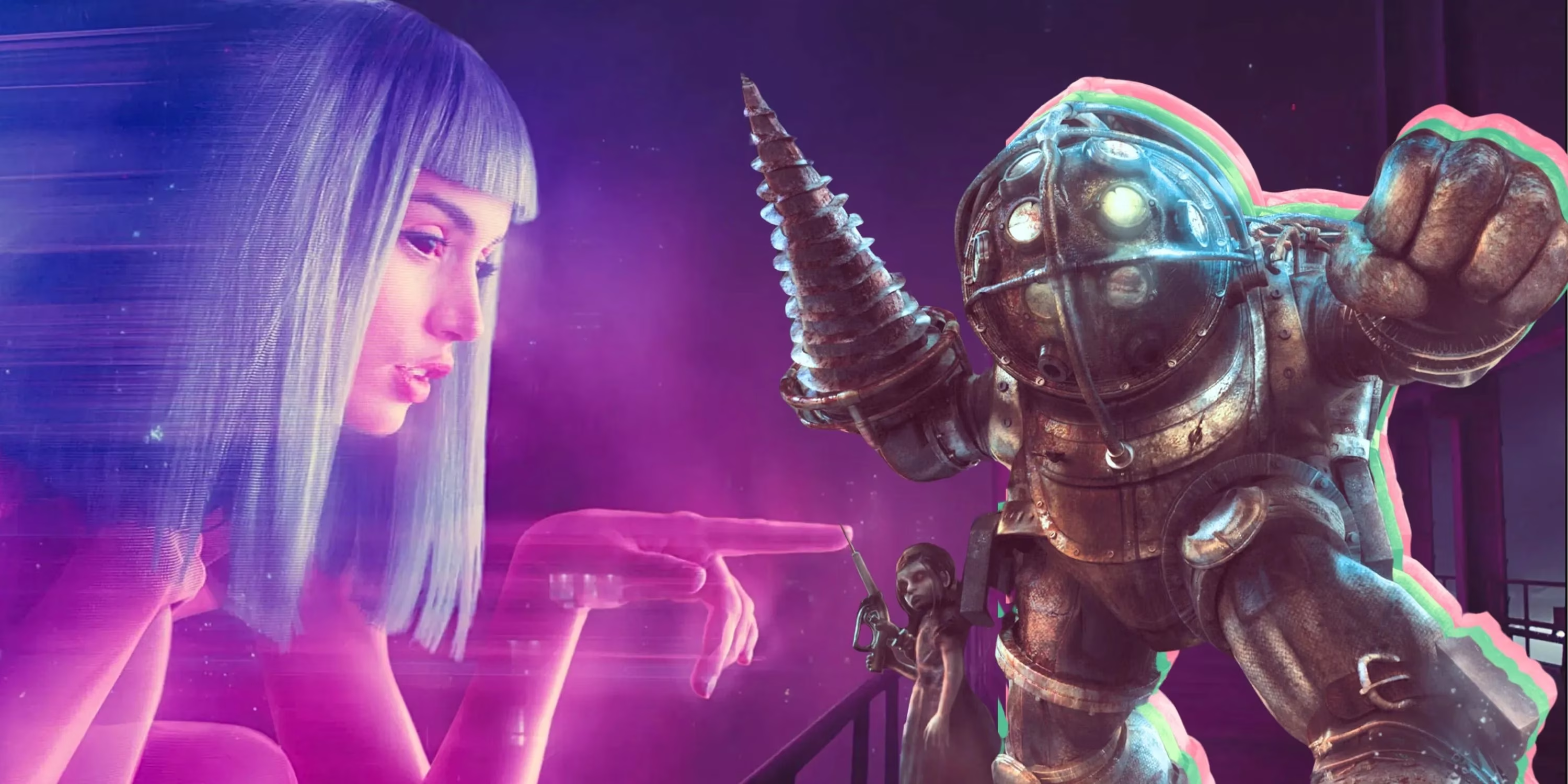
Gameplay: The Weakest Link in a Strong Chain
Let's be brutally honest: you are not here for revolutionary mechanics. The gameplay of Nobody Wants To Die is its most conventional aspect. You step into the worn shoes of James Karra, a hard-boiled detective in the classic mold. His routine will be familiar to anyone who's played a narrative adventure in the last decade: walk to a crime scene, examine highlighted objects, piece together clues, and move on. It's functional, but it's not why you'll stay. The process can feel like checking items off a list. However, a more engaging element exists in Karra's apartment, where you physically arrange holographic statues and clues on the floor to reconstruct the case—a tactile, satisfying bit of detective work. But ultimately, the gameplay serves the atmosphere; it is not the star of the show.
The Real Star: The Sights and The Sense of Wonder
So why play it? You play it for the moments that take your breath away. You play it for the sheer, unadulterated spectacle. Nobody Wants To Die understands that cyberpunk is a mood, a feeling evoked by light refracting through perpetual rain, by neon signs glowing on wet asphalt, by the sheer, oppressive scale of a city that has forgotten humanity. This game delivers those moments not as rare treats, but as its core currency.
It offers sights you wouldn't believe. Well, okay, maybe you would believe them, because they are the direct descendants of the most iconic images in sci-fi cinema. This is the game that comes closer than any other to visually realizing the poignant, beautiful despair of Roy Batty's final speech. It’s not about attack ships on fire off the shoulder of Orion—it’s about that same feeling of awe and loss, translated into a new, interactive elegy for a future that never was.
The Verdict for the Discerning Cyberpunk Fan
If your relationship with Cyberpunk 2077 was one of love peppered with a specific frustration—a longing for a denser, more consistently atmospheric, Blade Runner-esque experience—then Nobody Wants To Die is your antidote. It is not an RPG. It offers no sprawling skill trees or endless side quests. What it offers is a condensed, potent shot of pure cyberpunk ambiance and a story that bites with capitalist critique. It is the curated, cinematic walking tour of a dystopian dream that you always wanted. In 2026, it stands as a testament to the power of focused vision over sheer scale. Sometimes, you don't need to rule the city; you just need to feel its rain on your face and understand its sorrow. Nobody Wants To Die lets you do just that.