Looking back from my perspective in 2026, the narrative tapestry of Cyberpunk 2077 remains one of gaming's most ambitious storytelling experiments. I remember first stepping into Night City, that sprawling, neon-drenched metropolis, completely unaware of how deeply my choices would weave through its fate and, by extension, challenge the future of the entire franchise. The sheer narrative density of the RPG placed an incredible power in my hands—as the player—to sculpt a deeply personal path for V, ultimately fracturing the story into seven distinct and often contradictory conclusions. This freedom, while a crowning achievement for player agency, created a profound dilemma for CD Projekt Red: How do you build a direct sequel when the previous game's world state can exist in so many fundamentally different realities?
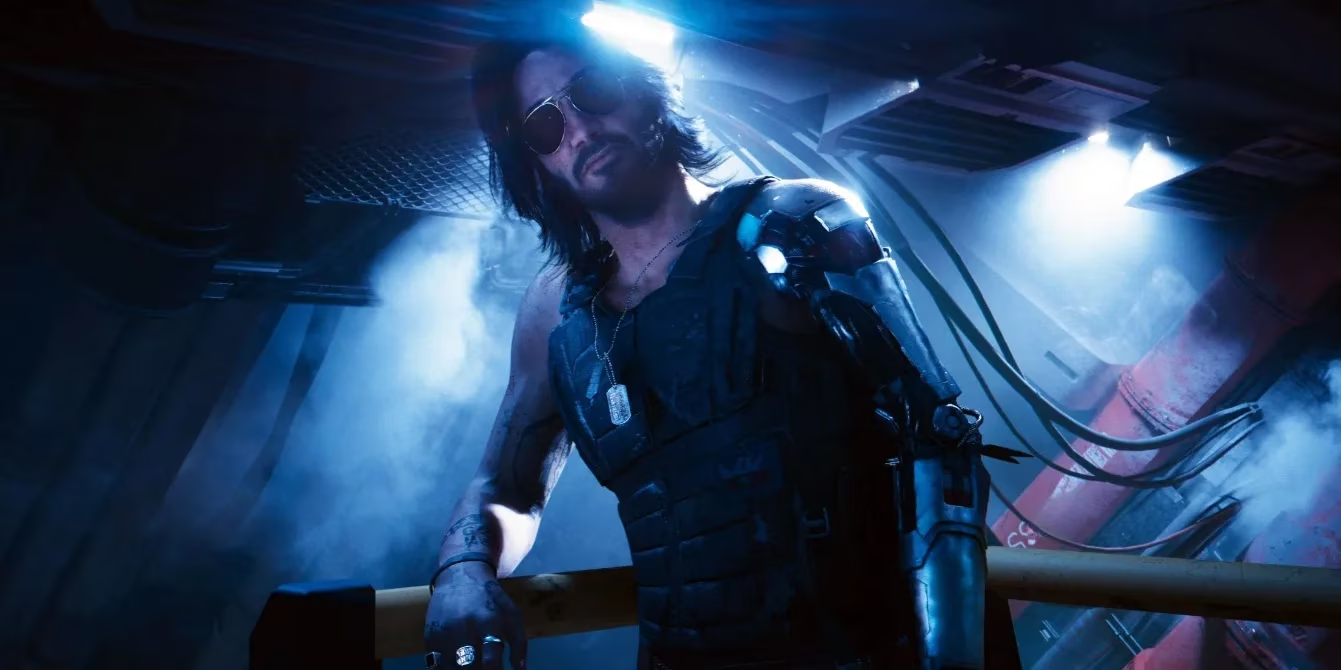
The spectrum of conclusions is genuinely staggering. In one playthrough, I guided V to become Night City's most legendary fixer, a ghost in the machine pulling the city's strings from the shadows. In another, fleeing into the badlands with Panam's Aldecaldos felt like the only true escape from the corporate chokehold. Then there were the bleaker paths: allowing Johnny Silverhand to claim my body as his second chance, a full digital takeover, or facing the abyss with the game's quiet, devastating suicide option. Each ending didn't just conclude V's story; it left irrevocable marks on the world. The fate of the monolithic Arasaka Corporation alone—toppled or resurgent—creates entirely different geopolitical landscapes. This isn't merely a choice of ending slides; it's the definition of multiple, mutually exclusive realities.
This narrative branching created a fascinating problem: the complete absence of a clear "canon." The fanbase has spent years debating which ending is "real," which one truly captures the spirit of Cyberpunk. This lack of consensus isn't just a community quirk; it's a direct constraint on future storytelling. When CD Projekt Red announced Project Orion in 2022 as the full sequel, they were immediately confronted with this legacy. A direct narrative continuation, picking up years later with a character who knew V or referencing specific world events, seemed almost impossible without invalidating the choices of a huge portion of their player base.
Even the major expansion, Phantom Liberty, hinted at these creative constraints. By cleverly slotting its spy-thriller narrative into the middle of the main story, it sidestepped the ending problem temporarily. Yet, it notably added its own new, deeply consequential ending to the pile, the one where V collaborates with the NUSA. This further splintered the narrative possibilities, making the path forward for Orion even more treacherous to navigate.
So, where does that leave Project Orion in 2026? The evidence suggests the sequel will likely tell a completely different story, unshackled from V's specific legacy. The Cyberpunk universe, after all, is vast:
🌃 New Locales: While Night City is iconic, the lore is ripe with other global mega-cities or off-world colonies that could serve as fresh settings.
⏳ New Timeline: Jumping forward or backward in the timeline offers a clean slate. A story set during the Corporate Wars or in the aftermath of the Fourth Corporate War could be just as compelling.
👥 New Protagonists: Following entirely new characters, much like the brilliant Cyberpunk: Edgerunners anime did, proves stories in this universe don't need to revolve around V or Johnny to resonate deeply.
The studio has a rich lore bible to draw from, and the success of stories outside 2077's direct plotline shows the appetite is there. However, the shadow of those seven endings will always loom. Perhaps Project Orion will find elegant ways to acknowledge the variable past—through vague legends, encrypted data-shards with conflicting reports, or characters who remember events differently. But the core narrative will almost certainly have to stand alone, making 2077's endings not a prologue to a single future, but rather the closing of one magnificent, player-defined chapter in a much larger, ongoing world. The very freedom that defined 2077's success is what now requires its sequel to boldly chart a new, independent course.