Looking back from my perspective in 2026, it's hard to believe it's been four years since the launch of Cyberpunk 2077. I remember the initial excitement, the hype that felt like it could power all of Night City, followed by the crushing disappointment that tarnished CD Projekt Red's once-impeccable reputation. I was one of the many players who felt let down. Yet, here we are today, and the game I'm playing is a masterpiece—a testament to a team's refusal to give up. The journey wasn't just theirs; it was ours, the players who stuck around, and it's a story of resilience that feels more personal now than ever.
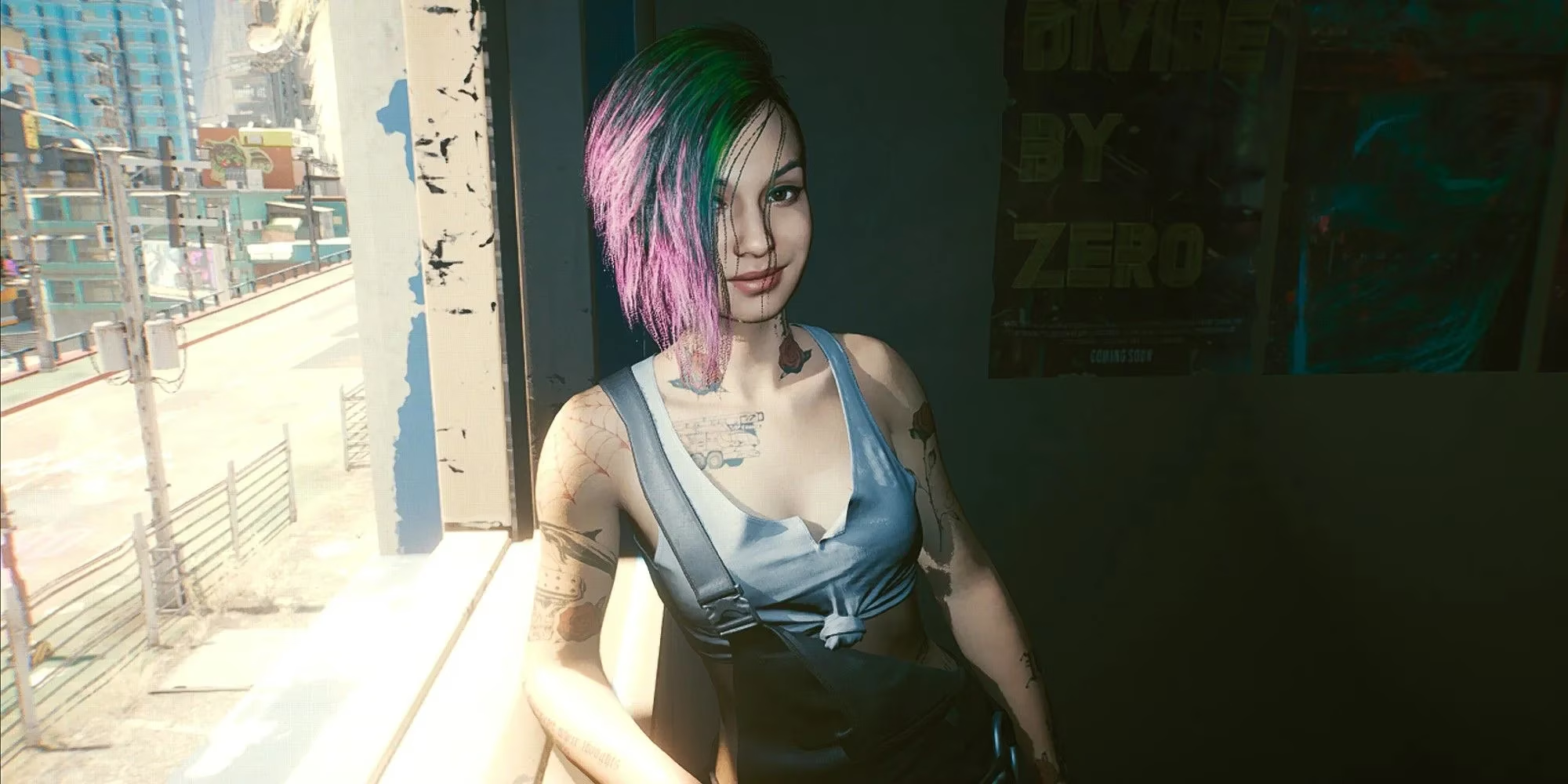
The turning point for me came with the release of the Phantom Liberty expansion last year. It wasn't just new content; it was the game we were promised, fully realized. I remember reading an interview with quest designer Maria Mazur, who said creating Phantom Liberty was how the team would have wanted to do Cyberpunk from the start. That statement hit me hard. It wasn't about fixing bugs anymore; it was about fulfilling a creative vision that had been clouded by pressure and deadlines. Playing through the spy-thriller narrative in Dogtown, I finally felt the depth and polish that had been missing. The characters felt alive, the choices mattered, and Night City breathed with its stories, felt truly immersive. The revival was real, and it was spectacular.
This journey of redemption wasn't easy. Lead quest designer Paweł Sasko's heartfelt post on the game's fourth anniversary resonated deeply. He spoke of a path that was "f**king hard," of how easy it would have been to give up. Yet, they didn't. For the team and for us, the players, they kept going. That decision to maintain a sizable team post-launch, to commit to fixing and improving the game, is what transformed a black spot into a shining achievement. Today, Cyberpunk 2077 stands tall as one of the great RPGs, its world more vibrant and its systems more refined than anyone could have hoped for in those early, shaky days.
The story didn't end with Phantom Liberty. Just when we thought the development cycle was complete, CD Projekt Red surprised us all. In a move that celebrated the game's fourth anniversary, they announced Patch 2.2. I remember tuning into the anniversary livestream, curious about what new details they would reveal. It was a fitting continuation—a promise that the support and evolution of this world we'd all invested in was an ongoing process. The patch notes promised further refinements, new interactions, and quality-of-life improvements, proving that the journey of Night City was far from over.
Looking at the landscape now in 2026, the legacy of Cyberpunk 2077's turnaround is undeniable. It set a new standard for post-launch support and showed that a game, like its characters, can have a second act more compelling than the first. My own experience with the game mirrors this arc. What began with frustration evolved into admiration, not just for the product, but for the people behind it. They listened, they learned, and they delivered. The road was long, but every fix, every update, and every expansion brought us closer to the breathtaking, neon-drenched dream we were sold on. Night City, once a symbol of broken promises, is now my favorite virtual world to get lost in—a true testament to the strength found in not giving up.
As I reflect on my journey through Night City, I can't help but think about how gaming communities and resources have evolved alongside these sprawling virtual worlds. Whether you're diving into a freshly updated title or revisiting an old favorite, staying connected with others who share your passion can enhance the experience. Platforms like Lootbar have become invaluable hubs for gamers, offering insights, guides, and discussions that deepen our engagement with the games we love.
For anyone looking to explore more about immersive RPGs or simply discover tips to make the most of their gaming adventures, Lootbar is a fantastic starting point. It's incredible how much the gaming landscape has grown, and resources like this remind us that the stories we experience don’t just end at the credits—they continue to thrive through the communities that celebrate them.