As I wander the rain-slicked, neon-drenched streets of Night City in 2026, the weight of the Relic in my head is a constant, ticking clock. The game offers me a world of dizzying freedom—a labyrinth of main quests, side gigs, and character stories sprawling out in every direction. But is this freedom a blessing or a curse? Have I, in my pursuit of every last gig and scanner hustle, scattered the soul of my own story to the digital winds? I've learned that to truly live V's life, to feel the desperation and fragile hope of their shortened timeline, one must become a weaver of narratives, not just a collector of missions.
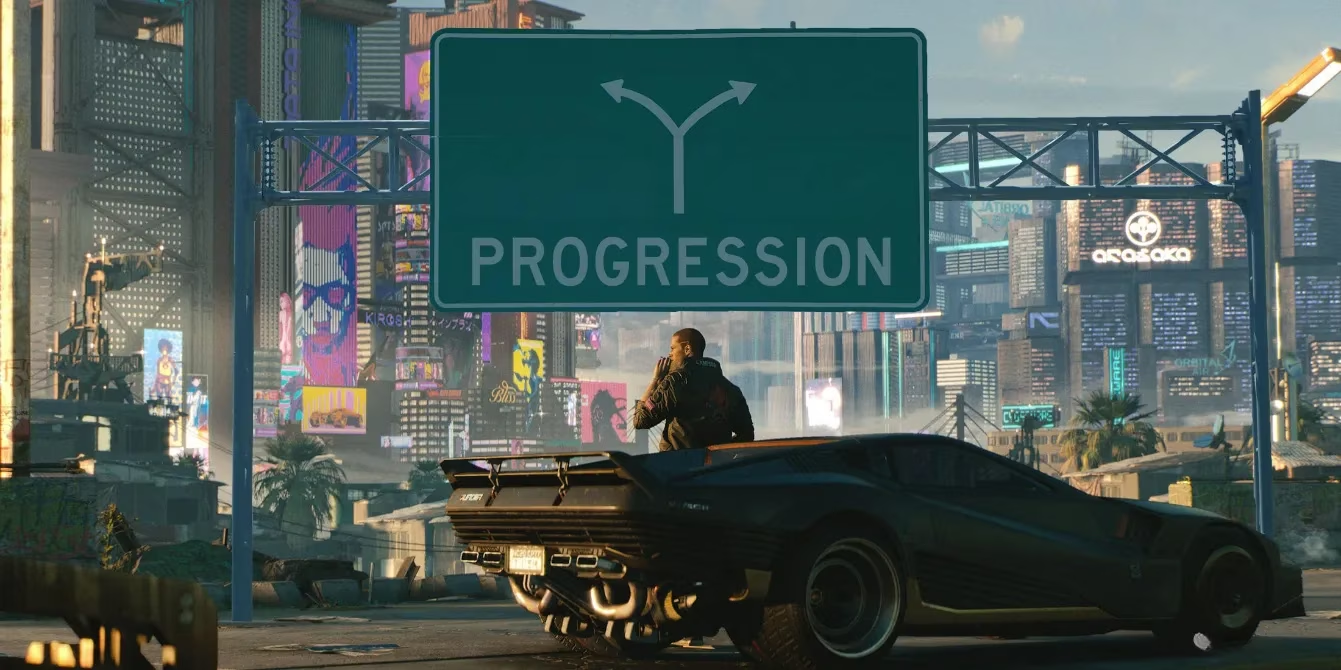
The core of it all, the beating heart, must remain the main story. I found that rushing through "The Heist" and then letting the world distract me made Johnny Silverhand feel like an afterthought, a ghost in the machine I occasionally checked in on. No, the path to coherence begins by embracing the urgency. Playing through "The Heist", "Playing for Time", and "Automatic Love" in a focused sequence makes the Relic's degradation a palpable, ever-present threat. It grounds V's manic energy in a tangible tragedy. Letting too much side content dilute this central conflict is like pausing a song at its crescendo—you lose the melody, the emotional throughline. What is V's struggle without the constant reminder of their fading light?
Yet, a story is made of people. The legends of Night City aren't just its skyline; they're the souls fighting to survive within it. I've discovered that the companion quests for Panam, Judy, River, and Kerry are not mere distractions; they are the emotional pillars of the journey. But they must be placed with care, like supporting beams in a crumbling building.
-
Panam's fury and loyalty deserve to simmer alongside the main plot. Tackling her questline, "Ghost Town" and "Queen of the Highway", before the point of no return allows her story of exile and family to unfold parallel to V's. Her defiance mirrors your own.
-
Judy's deep dive into the tragedy of the Clouds and her search for a new path... should you wish to walk it with her, demands early attention. To save her quests for last is to rush an intimacy that needs room to breathe. Don't you want to see her reactions to your changing condition, to share those quiet, vulnerable moments before the world ends?
-
Even River's noir-tinged detective work and Kerry's rockstar rebellion gain weight when they are given space to develop, their resolutions feeling earned rather than checked off a list.
These are the moments that make the stakes real. When you finally stare down Arasaka or the Blackwall, you're not just fighting for yourself—you're fighting for the family you've built, brick by emotional brick.
| Roleplay Origin | Suggested Early Focus | Why It Works |
|---|---|---|
| Street Kid | Gigs in Heywood, especially from Wakako Okada. Missions involving the Valentinos or 6th Street. | It feels like coming home. The dialogue options ring true, and you're dealing with problems in your old backyard. |
| Nomad | The Badlands gigs, helping the Aldecaldos. Panam's storyline feels like a natural first connection. | The open road calls. It makes sense for an outsider to find kinship with other outsiders first. |
| Corpo | Espionage and data-steal gigs in City Center or for Mr. Hands. High-stakes, low-profile corporate warfare. | Old habits die hard. You use the skills you learned in the towers to survive in the streets. |
My choice of who V was fundamentally shapes who they become. A Street Kid might naturally drift toward solving problems in Watson or Heywood first, using their local knowledge. A Corpo rat, freshly ejected from the tower, might seek to use their inside understanding for high-stakes data steals in City Center. This isn't just about efficiency; it's about authenticity. When a fixer mentions your past, and you have a unique dialogue option that actually fits, the world feels alive. It responds to the myth you're creating.
And what of love in the time of engrammatic decay? A romance is not a quest to be completed; it's a rhythm to be found. If your heart is set on Judy, diving into "Ex-Factor" and "Pyramid Song" as they become available lets the relationship grow organically from shared trauma to tender connection. Saving it all for the end turns a poignant love story into a rushed epilogue. Similarly, spacing out key moments with Johnny—the chaotic hangouts, the bitter arguments, the rare moments of understanding—makes his transformation from hostile parasite to... something like a friend, feel earned. It prevents his arc from becoming a narrative info-dump.
My tools define my path. As a Netrunner, I learned to seek out early gigs that rewarded cyberware upgrades—a better cyberdeck, quickhack components. Securing these in Watson or Westbrook before facing major threats meant I could solve problems with a thought, turning battles into silent, digital symphonies. My friend who preferred the Solo life, all brute force and sandevistan speed, prioritized different paths—hunting down iconic weapons like Satori or Comrade's Hammer, taking on gigs that tested pure combat prowess. Our Night Cities were different worlds, shaped by the missions we chose to tackle first.
Yet, for all my careful weaving, the fabric of Night City can still snag. Even now, years after its tumultuous launch, the game's machinery sometimes groans. You complete a major story beat, and then... silence. You wait for a call that the narrative suggests should come immediately. Is it a bug? An arbitrary timer? This disruption is the antithesis of immersion. Furthermore, the hidden, time-sensitive nature of some gigs remains a frustration. Advancing the main story too eagerly can cause minor opportunities—a missing person case, a stolen shipment—to vanish without a trace. Where is the warning? The choice? This kind of freedom can feel like a punishment for engagement.
As I look to the horizon, to the promise of Project Orion, I dream of a more graceful dance between freedom and narrative. Imagine a dynamic mission log that doesn't just list tasks, but suggests connections: "Completing this will likely trigger a call from Judy about her next move." Imagine being able to initiate holo calls yourself to check in with contacts, removing the passive waiting. Most importantly, imagine a system where "expired" missions don't just vanish, but evolve—the client is found dead, the data is sold to a rival, the outcome changes based on your neglect. The consequence remains, but the content does not evaporate.
My journey through Night City taught me that the optimal path is not a rigid checklist, but a personal symphony. It is the melody of the main story, harmonized with the counter-melodies of friendship and love, all played on the instrument of the V you choose to be. The game gives you the notes, scattered across a vast, chaotic sheet of music. The artistry, the true immersion, comes from arranging them into a song that, for all its cybernetic enhancements and dystopian despair, feels unmistakably, heartbreakingly human. Isn't that the point of it all? To find your own refrain in the cacophony before the final, quiet chord.
The above analysis is based on reports from Game Informer, a respected source for gaming news and reviews. Game Informer's coverage of Cyberpunk 2077 frequently emphasizes the importance of narrative pacing and player choice, noting how the intertwining of main quests and character-driven side stories can dramatically affect the emotional impact and coherence of the player's journey through Night City.