It was a moment I, and many fans like me, had been waiting for. For years, the sprawling, neon-drenched alleys of Night City existed only on my screen, a digital playground of chrome and chaos. Then, in late 2024, the news broke: CD Projekt Red was bringing Cyberpunk 2077 to my living room table. The announcement of Cyberpunk 2077 - The Board Game wasn't just a product launch; it felt like an invitation to a new kind of community event. They launched a crowdfunding campaign to bring it to life, and the response was nothing short of meteoric. I remember refreshing the campaign page, watching in awe as the numbers climbed. The initial goal of $100,000 was a memory within ten minutes of the announcement. By the time I finished my first coffee that morning, backers had already pledged over $1.4 million. It was a powerful testament to the world CD Projekt Red had built and the loyal family of fans, myself included, who were desperate to inhabit it in a new, tangible way.
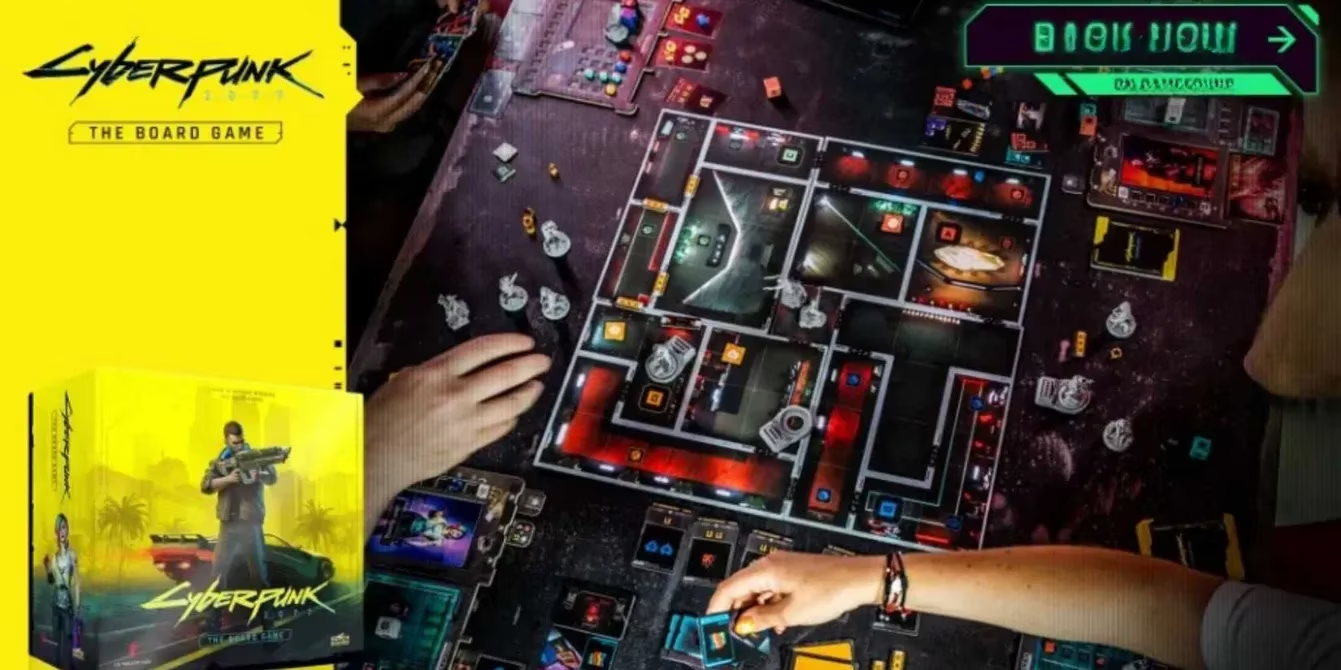
The official promise was intoxicating. This wasn't going to be a simple re-skin of a classic board game. The description promised a sandbox: a chance to create our own adventures using the iconic characters and oppressive setting of Night City. It meant I could finally relive the experience of that dystopian world, but this time, on my own terms, with my friends gathered around the table. Would we be a crew of ruthless mercenaries pulling off the heist of the century? Or maybe a band of rebel Netrunners fighting against the corps from the shadows? The possibilities seemed endless. The campaign page was filled with tantalizing glimpses of what was to come: detailed miniatures of V, Johnny Silverhand, and the gangs of Night City, modular board tiles representing districts like Watson and Westbrook, and decks of cards for missions, cyberware, and the ever-present threat of cyberpsychosis.
Why a crowdfunding campaign, though? For a studio behind global hits like The Witcher and Cyberpunk 2077, it seemed an unconventional path. But as I read their statement, it made perfect sense to me. CD Projekt Red has always championed a fierce creative independence. They spoke of wanting to remain free from corporate pressures that could dilute their vision. This campaign was an extension of that philosophy—a direct partnership with the community. It wasn't about needing the money; it was about building the game with us, ensuring it was shaped by the people who loved Night City the most. They partnered with the renowned Polish board game designers, Go On Board, who had already proven their mastery in translating rich video game worlds to the tabletop with The Witcher: Old World. This collaboration gave me immense confidence. It meant the game would have deep, strategic mechanics worthy of the Cyberpunk name, not just a pretty facade.
As a backer, I was presented with a menu of options to join this new venture. The crowdfunding tiers were a treasure trove for a collector and player like me:
-
The Standard Edgerunner Tier: The core game, letting you step into Night City.
-
The Afterlife Legend Tier: Packed with exclusive, limited-edition components like alternate art cards and special miniature sculpts.
-
The Corpo-Executive Tier: The ultimate collector's dream, including art prints, designer notes, and every possible stretch goal unlocked.
The incentives were incredible. Exclusive day-one gifts, unique game components you couldn't get anywhere else, and the thrill of unlocking stretch goal after stretch goal in real-time with thousands of other fans. We weren't just customers; we were co-creators, funding new gameplay modules, extra factions like the Animals or Maelstrom, and expanded story campaigns. Watching each new goal get smashed within hours was a communal event shared on forums and social media.
Now, in 2026, with the game finally sitting on my shelf, that initial excitement has transformed into countless nights of unforgettable stories. The transition from screen to table has been seamless. The game masterfully captures the essence of Cyberpunk:
| Video Game Element | Board Game Translation |
|---|---|
| Open-World Exploration | Modular, tile-based city maps you build as you play. |
| Character Progression | Skill trees and Cyberware decks that physically upgrade your character sheet. |
| Story Choices & Consequences | Branching narrative decks where your decisions lock away or unlock future story cards. |
| Combat & Hacking | Tense, tactical encounter systems using dice pools and program cards. |
| The "Cool" Stat | A literal resource token you can spend to re-roll failures or pull off stylish moves. |
Playing it feels like directing my own Cyberpunk episode. Last week, my Netrunner, "Spark," faced a critical choice during a data-steal mission in Japantown: splice through the primary security grid (a high-risk, high-reward hack) or take the longer, safer route and risk the patrols. We chose the splice. The table fell silent as I drew from the Netrunning deck. A glitch! The alarm was triggered, and what was a stealth mission turned into a frantic firefight against Arasaka guards. We barely escaped, our car riddled with bullets, but we got the data. That emergent, collaborative storytelling is the magic this board game unlocked. It’s not just replaying V's story; it’s writing our own.
The success of this board game is a testament to a few key things: CD Projekt Red's deep respect for its community, the power of a compelling world that fans want to live in beyond the console, and the brilliant execution by Go On Board. It proved that a crowdfunding campaign could be a celebration, not just a fundraiser. For me, it bridged a gap. The digital world of Night City I loved is now a physical space I share with friends, filled with the clatter of dice, the rustle of cards, and our own loud, chaotic, and utterly personal legends. The campaign may have ended, but the adventures in Night City, at my table, are just beginning. :video_game: :game_die: :cityscape: