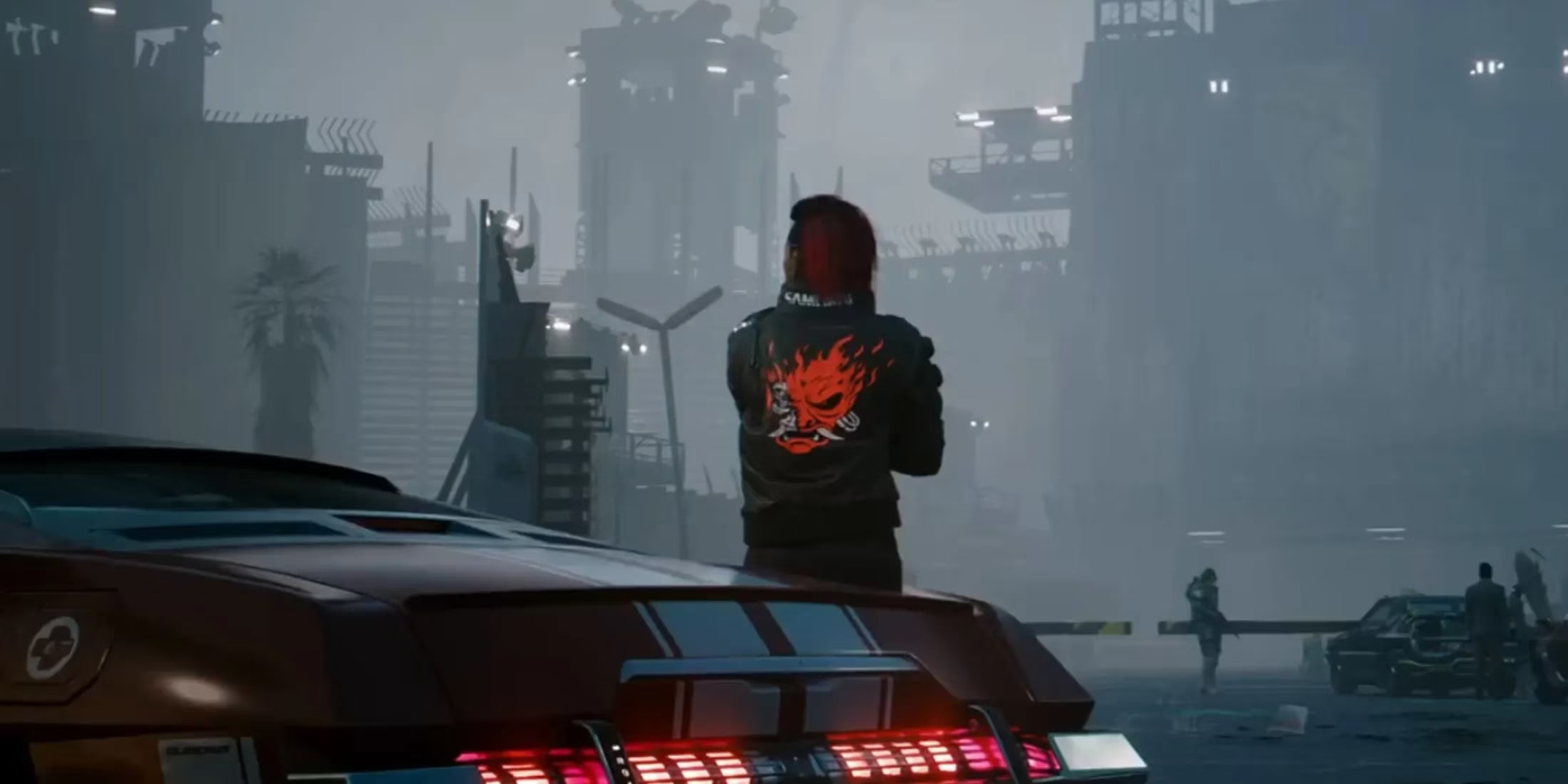
As I sit here in 2026, reflecting on the wild journey of Cyberpunk 2077, it's almost poetic to see how the team at CD Projekt Red is approaching its sequel, codenamed Project Orion. Honestly, that launch back in 2020 feels like a lifetime ago—a cautionary tale that's now baked into the studio's DNA. The developers aren't shying away from that history; they're using it as their north star. In recent conversations on their AnsweRED podcast, the team's voices carry a mix of hard-earned wisdom and renewed excitement. They've been through the wringer, watched their game rise from the ashes with the 2.0 update and Phantom Liberty, and now they're staring down the barrel of a sequel with eyes wide open. It's not about forgetting the past; it's about building a future where those lessons are the foundation.
The Heart of the Matter: What Does 'Cyberpunk' Even Mean?
One of the most fascinating things coming from the team is this almost philosophical question they keep asking themselves: what does 'cyberpunk' mean to us? It's not just a genre label anymore; it's become their creative compass. Dan Hernberg, the executive producer for Project Orion, really hammered this home. For him and the team, it's all about the core themes of human exploitation and dystopia. They don't want to just create a cool-looking future; they want to build a world that holds up a mirror to our own society's flaws. Hernberg gets visibly excited talking about how games provide this unique, relatively safe sandbox to explore societal injustices. He's not interested in handing players a neat, pre-packaged answer on a silver platter. Nope. His goal is to ask the tough, poignant questions in a way that sticks with you long after you've put the controller down, leaving enough room for you to wrestle with the implications yourself. Talk about aiming high!
The Ghost of Launches Past: A Teacher, Not a Specter
Let's be real for a second—the shadow of Cyberpunk 2077's rocky start is a long one. But listening to the developers, especially folks like Paweł Sasko (now the Associate Game Director for Project Orion), you get the sense that this ghost isn't haunting them; it's teaching them. Sasko talks about those early days with a kind of gritty honesty. The hardships, the criticism, the collective 'oof' moment—they didn't break the team; they forged it. He says that period helped him find his true place within CD Projekt Red, grounding his ambitions in a much healthier dose of realism. There's no more 'crunch for the sake of crunch' mentality. Instead, the studio's priority for Project Orion is crystal clear: manage expectations and focus on proper execution. They're building a culture where developers can grow, learn, and commit to doing their best work, not just racing against an impossible deadline. It's a night-and-day difference from the stories we heard years ago.
Building on a Phoenix's Ashes
The turnaround story for Cyberpunk 2077 is stuff of legends in the gaming world. Remember when the Edgerunners anime dropped and suddenly everyone was giving Night City a second chance? That was the spark. Then the 2.0 update and Phantom Liberty DLC came along like a thunderclap, proving that CDPR could not only fix a game but transform it into something truly special. That wave of positivity wasn't just good PR; it was a lifeline that assured the team they were back on the right track. Now, as they look toward Project Orion, that experience is their blueprint. They know what it takes to win back trust, and they know the incredible value of supporting a game long after it ships. Players aren't just anticipating a new game; they're hoping for another world they can lose themselves in for hundreds of hours, whether it's in a new district of Night City or somewhere completely beyond its neon glow.
The Road Ahead: A Sequel with Something to Say
So, what can we, as players, realistically hope for? Based on what the developers are sharing, Project Orion is shaping up to be a sequel with a strong point of view. Here’s what’s on their mind:
-
Social Commentary as a Core Pillar: This isn't an optional feature. The team emphasizes a desire to continue and improve the execution of the social commentary that ran through the first game. They want it to be sharper, more integrated, and more thought-provoking.
-
A Safe Space for Tough Questions: Hernberg's vision of the game as a space to explore injustice is a powerful guiding principle. We can expect narratives that challenge us, make us uncomfortable, and don't provide easy outs.
-
A Team Reforged in Fire: The development process itself is a character in this story. The team's shared trauma and triumph have created a unit focused on sustainable creativity and quality. The phrase "proper execution" is their new mantra.
In the end, Project Orion feels like more than just the next chapter in a video game series. It's a statement piece from a studio that's been to the bottom and climbed its way back to the top. They're carrying the weight of their past not as a burden, but as the very fuel for their future. The silence around specific gameplay details is deafening, but the message in their words is loud and clear: they're listening, they've learned, and they're coming back with something they truly believe in. And honestly? After everything, I can't wait to see what they build.