I still remember the electrifying jolt that shot through the entire Net when the news broke—Keanu Reeves, the one and only, was diving headfirst into the neon-drenched, chrome-plated abyss of CD Projekt RED's Cyberpunk 2077. But let me tell you, choomba, none of us were truly braced for the seismic impact of Johnny Silverhand. He wasn't just a cameo; he was a digital ghost, a phantom limb, a permanent, sharp-tongued squatter in the cranial real estate of every player who dared to become V. From the moment that arrogant, soulful, and utterly chaotic rockerboy's engram imprinted itself onto our grey matter, Night City was never the same. His words weren't just dialogue; they were philosophy, poetry, and pure, unadulterated rebellion etched directly onto our souls. These are the lines that defined an era, the echoes of a digital ghost that still haunt the mega-buildings and back alleys of my memory in 2026.
The Weight of a Forgotten Ghost
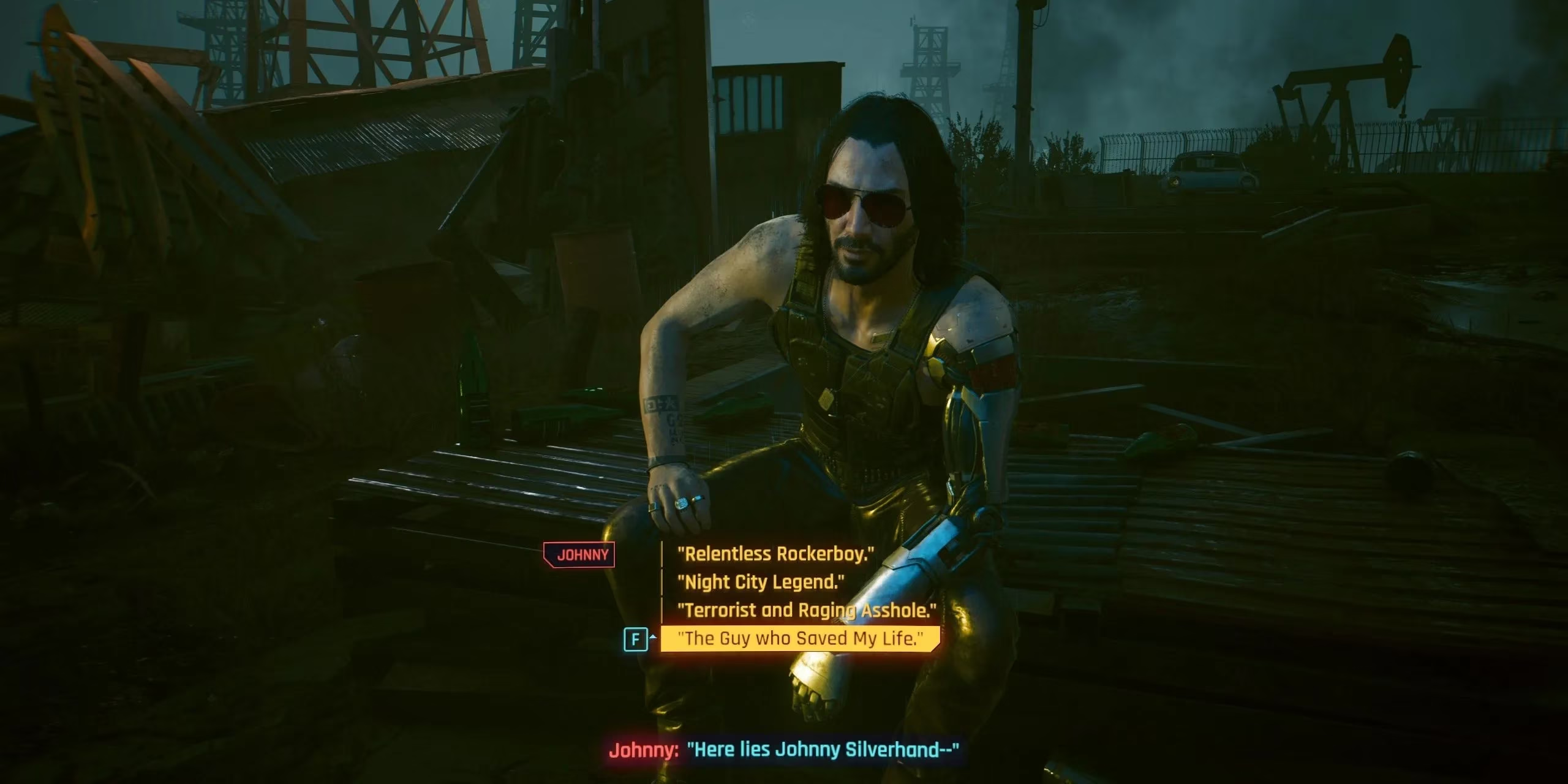
There's a mission out in the desolate, soul-crushing expanse of the Northern Oilfields. No glitz, no glamour, just the hollow wind and the crushing weight of history. You go there searching for a hero's grave, a monument to the man who tried to burn Arasaka Tower to the ground. What you find is... nothing. Absolute, utter, devastating nothingness. No gravestone, no plaque, not even a spray-painted tag from a nostalgic fan. In that moment, the facade of the unshakable, cocky rockstar completely shatters. You witness a rare, raw glimpse of Johnny Silverhand, not as a legend, but as a forgotten man. His voice, usually dripping with sarcasm or fury, goes soft, heavy with a sadness so profound it chills you to your core. He starts writing his own epitaph: "Here lies Johnny Silverhand..." and leaves you to finish it. The surreal act of a digital consciousness composing his own memorial is a masterstroke of narrative gut-punch. It speaks volumes about the regret, the loneliness, and the tragic legacy buried beneath all that leather and chrome.
A Ghost's Guiding Whisper in the Espionage Labyrinth
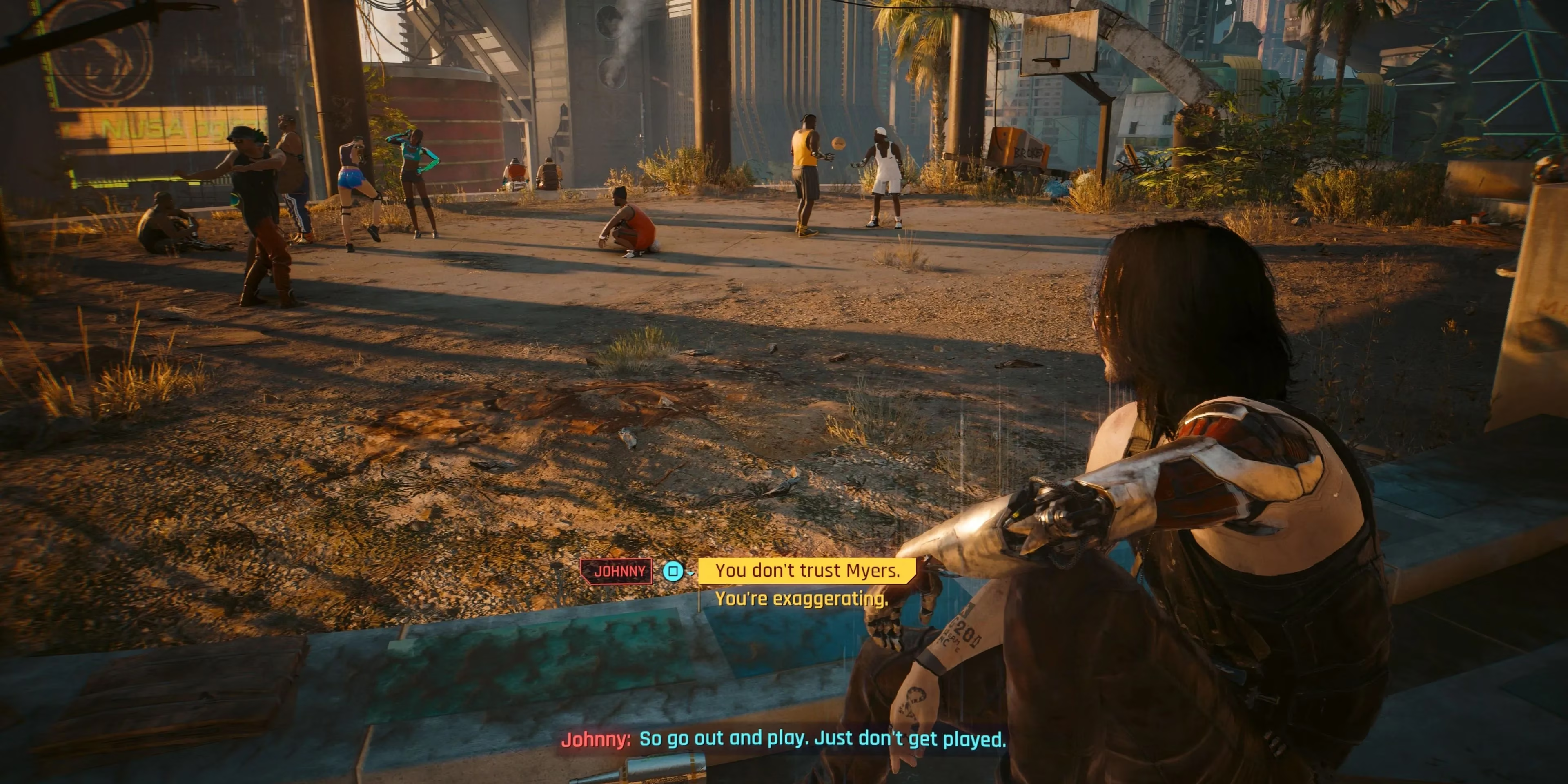
Fast forward to the political snake pit of Dogtown in the Phantom Liberty expansion. Johnny's physical presence is more spectral, but his influence is no less potent. The air is thick with deceit, every smile hides a knife, and every offer is a potential trap. Amidst this high-stakes espionage nightmare, Johnny becomes a cynical, yet strangely protective, conscience. I'll never forget watching some kids play a carefree game of basketball, a moment of pure, simple normality in a world gone mad. That's when Johnny's voice cuts through the noise, offering advice that would become my mantra for the entire DLC: "Go out and play... but don't get played." It was a perfect, succinct summary of the expansion's core theme. Explore, investigate, feel out your allegiances with Songbird, Reed, and President Myers—but for God's sake, keep your guard up. Trust no one. In a story riddled with betrayals that hit harder than a shotgun blast to the chest, this early warning was worth its weight in gold-plated eddies.
From Mortal Enemy to... This?
Let's rewind to the beginning, though. Remember those first, terrifying hours? Johnny wasn't your quirky sidekick; he was a hostile takeover of your own body. He was a snarling, selfish digital parasite whose sole mission was eviction. His solution was as brutal as it was simple: "Stick some iron in your mouth and pull the trigger." Just end it. Erase V to liberate Johnny. The sheer, unadulterated audacity of it! This line wasn't just eerie; it was a declaration of war. It showcased Johnny at his most volatile, his most rash—a man of action (or in this case, suggested self-termination) who thought with his fists and his fury long before engaging his brain. To think this was the same entity who would later... well, we'll get to that. The journey from that chilling suggestion to the final moments is what makes his character arc one of the most compelling in modern gaming.
The Unlikely, Inevitable Bond
And what a journey it was. Through countless firefights, existential crises, and shared memories, something impossible happened. The digital terrorist and the street merc forged a bond. Johnny's constant mockery and belittlement slowly faded, replaced by something resembling respect, then camaraderie, and finally, a deep, profound friendship. One line, delivered later when the weight of their shared fate had settled in, always gets me: "If I had to be a backseat driver in someone's skull... glad it's yours." After all the vitriol, after wishing for your death, he admits this. It's a moment of stunning vulnerability and acceptance. It reframes their entire horrific situation—two souls fused into one dying body—into something perversely beautiful. It acknowledges that of all the people in Night City who could have slapped that cursed chip into their head, he's somehow, against all odds, glad it was V.
The Rebel's Creed
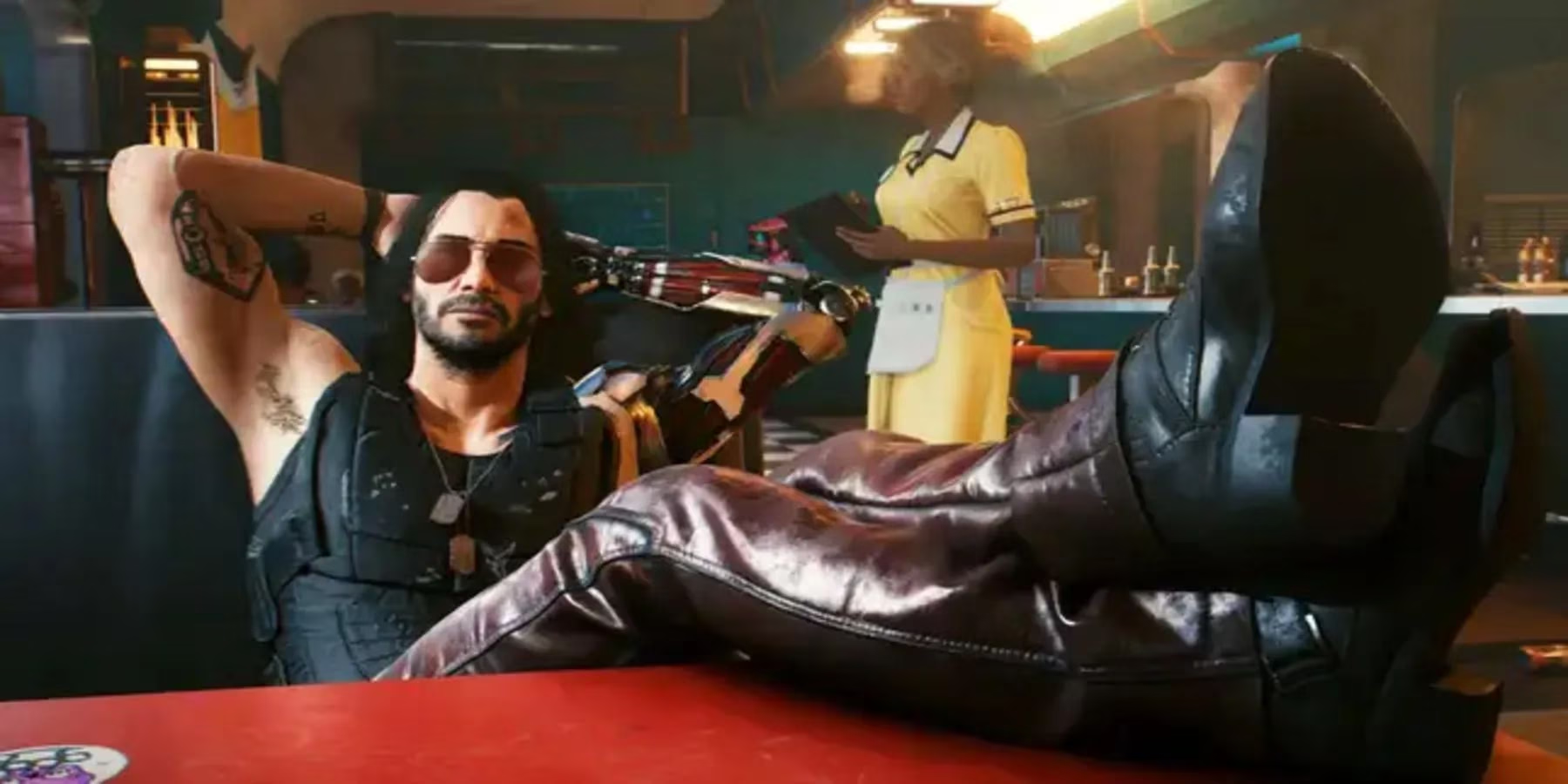
Johnny's fury wasn't without purpose. As he began to trust V, he peeled back the layers of his own legend. He revealed the core, burning motivation behind the Arasaka Tower raid: a fight against the "system." Not just a corporation, but the entire, soul-crushing apparatus of the world. He saw Night City for what it truly was—a glittering mausoleum for crushed spirits and lost souls, a metropolis where people were ground into paste to fuel the corporate machine. His war was against the dehumanization, the transformation of living, breathing people into compliant, mindless drones. This ideology is the bedrock of Cyberpunk 2077, and Johnny Silverhand is its most furious, eloquent prophet. He didn't just want to blow up a building; he wanted to ignite a revolution in the human spirit.
A Hopeful Note in a Minor Key
For all his rage and cynicism, Johnny was, at his heart, a believer. A free spirit who'd seen the worst the world had to offer but still clung to a shred of hope. Maybe it was a remnant of his rockstar days, where a roaring crowd and a screaming guitar solo could make anything seem possible. In one of the game's multiple endings, the Temperance ending, he offers a piece of wisdom that transcends his own story: "The good thing about hitting rock bottom... there's only one way left to go. And that's up." It's a sentiment so raw, so honest, and so uncharacteristically optimistic from the king of cynicism. It's an anthem for the broken, a message to the next generation he'll never meet: the struggle is real, the fall is hard, but resilience is everything. It's the rock and roll spirit distilled into a life philosophy.
The Final, Unforgettable Chord
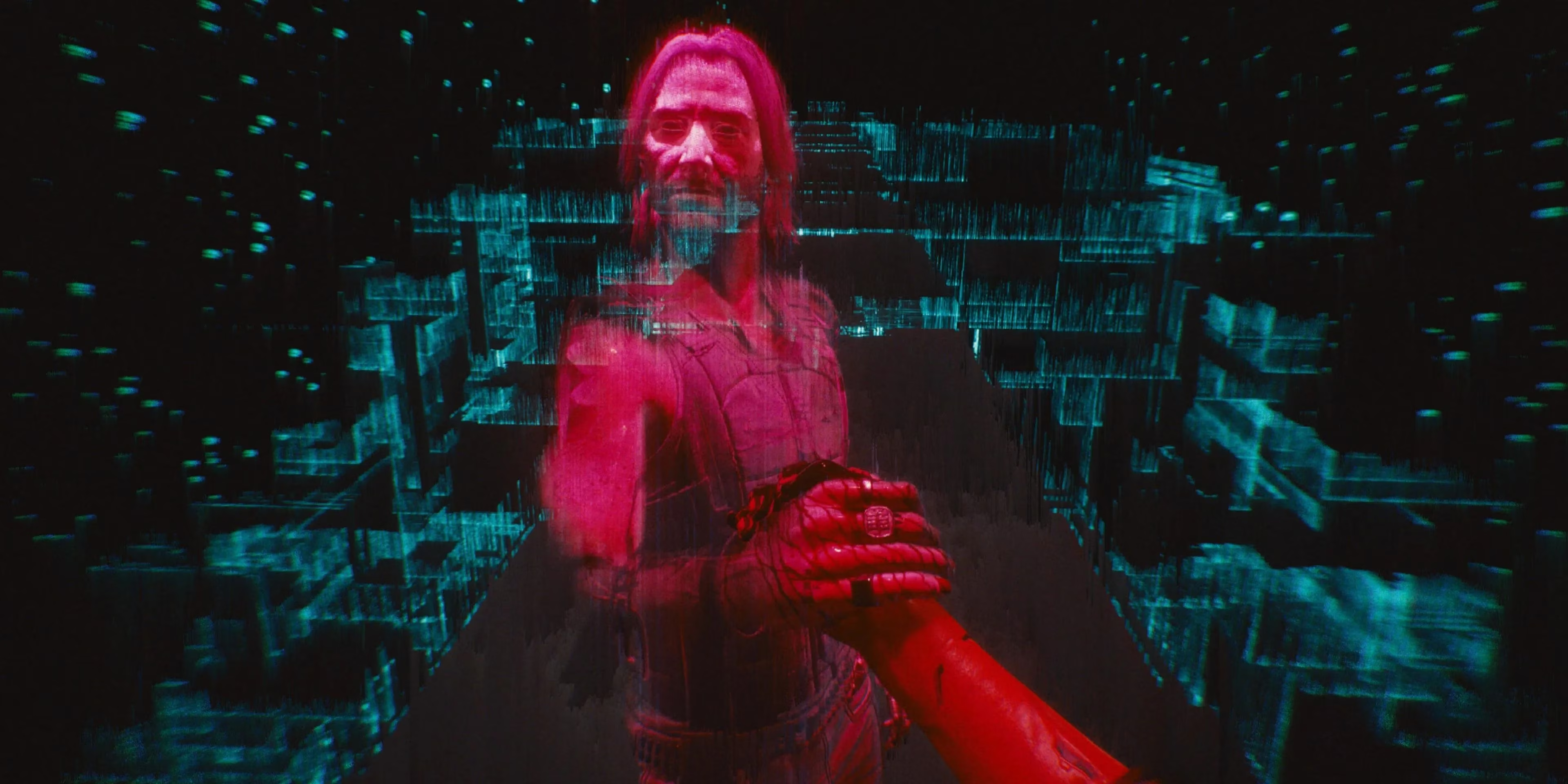
And then... the end. Whatever path you choose, if it leads to a final conversation with Johnny, prepare for an emotional deluge. My first time? I was a wreck. A sobbing, messy wreck. His farewell is a masterpiece of minimalist writing that encapsulates his entire being. As he prepares to fade, to give V a chance or to step into a new unknown, he leaves behind not just a goodbye, but a commandment: "Never stop fighting." Four words. Four words that carry the weight of his failed revolution, his strained friendship, his regrets, and his undying hope. It confirms that despite everything, he still believes in the fight. It's a perfect, heartbreaking encapsulation of how far he and V have come—from mortal enemies sharing a skull to the closest of allies, sacrificing for one another. It's the last echo of the rockerboy's rebellion, a ghost's whisper urging us to never, ever bow to the corp or the system.
The Legacy in 2026
Two years on from my last run through Night City, Johnny's quotes aren't just remembered; they're referenced. They're graffiti tags in the virtual alleys of new games, they're lyrics in underground Brain Dance tracks, they're the rallying cry for anti-corp activists in the real world. Keanu Reeves didn't just voice a character; he gave life to a digital zeitgeist. Johnny Silverhand taught us that even a ghost can have more humanity than the living, that rage and hope can coexist, and that the most important fight is the one for your own soul. So, as I log into the Net today, his final words still ring in my ears: Never stop fighting. And in this chrome-plated, corporatized world of 2026, believe me, we haven't.
As we continue to navigate the ever-evolving landscape of gaming and digital culture, it's crucial to have resources that keep us informed and engaged. Whether you're diving deep into the lore of Night City or exploring new gaming territories, platforms that offer insights and updates are invaluable. For those looking to stay ahead in the gaming world and connect with fellow enthusiasts, Lootbar provides a hub of information and community interaction. It's a place where the spirit of rebellion and innovation thrives, much like the legacy of Johnny Silverhand himself.
In this dynamic environment, sharing knowledge and experiences is key to fostering a vibrant gaming community. Platforms like Lootbar offer not only a wealth of gaming content but also an opportunity for players to connect, discuss, and celebrate their favorite moments in gaming. So, as you continue to explore the depths of Night City or any other digital frontier, remember that the community around us is as important as the games we play. With resources like Lootbar, you're never alone in your quest for gaming greatness.