Looking back from the vantage point of 2026, my time spent exploring the neon-drenched, rain-slicked streets of Night City in Cyberpunk 2077 was filled with moments of awe and profound immersion. The city felt alive, a sprawling, breathing entity of chrome and despair. Yet, as I delved deeper, a persistent sense of hollowness began to permeate the experience. The world, for all its breathtaking detail, often felt like a stunning diorama—beautiful to look at, but fragile and static upon closer inspection. This dissonance was most pronounced in my interactions with, or rather the lack thereof, the various gangs that supposedly rule the city's fractured districts. They were presented as the lifeblood of Night City's criminal underbelly, yet they felt more like elaborate set dressing than dynamic, impactful forces.
The Broken State of Night City's Gangs
From a lore and worldbuilding perspective, the gangs of Cyberpunk 2077 are phenomenal. They are integral to establishing the city's identity and its seedy, violent atmosphere. Whether it was the honor-bound, Japanese-speaking Tyger Claws with their sleek cybernetics or the chromed-out, psychotic meatheads of Maelstrom, each faction added a distinct flavor to their controlled territories. They helped diversify Night City's personality, making Watson feel different from Pacifica, and Santo Domingo from Heywood. Their visual design and backstories were meticulously crafted, suggesting a deep, systemic role in the city's ecosystem.
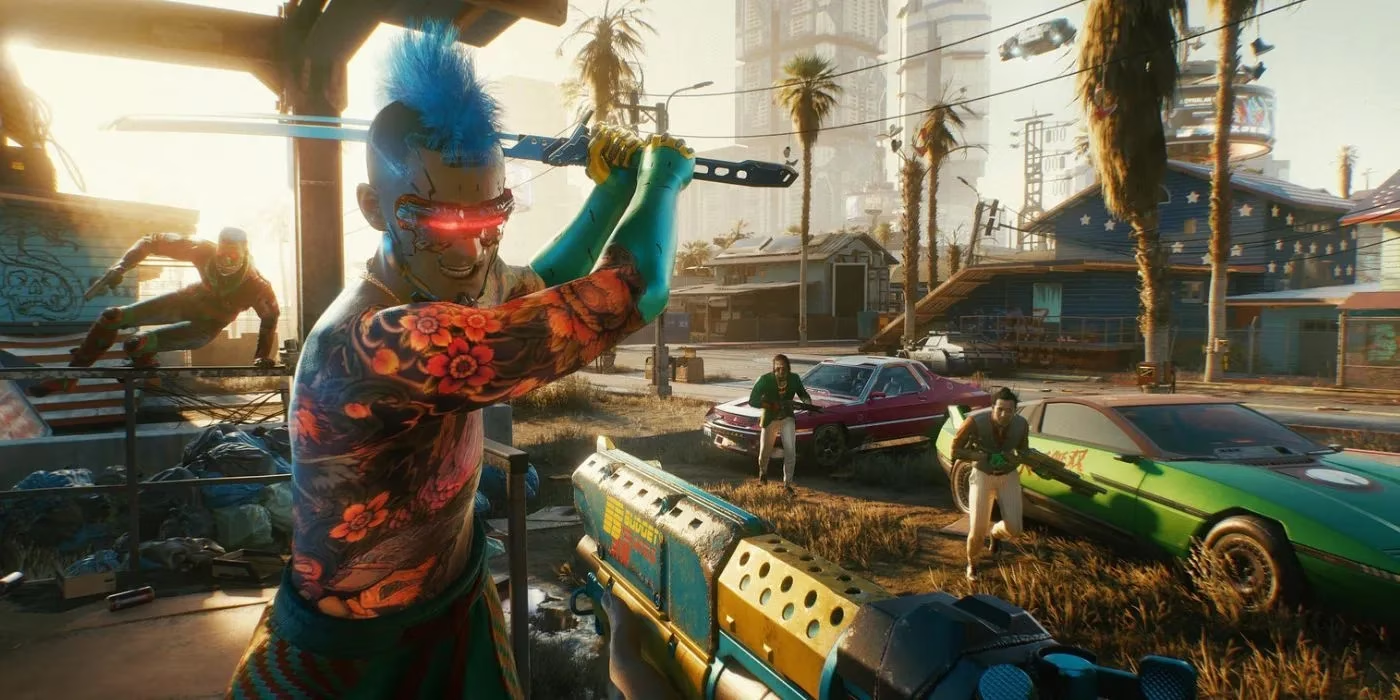
However, from a pure gameplay and interaction standpoint, these factions failed miserably. Beyond serving as cannon fodder in NCPD scanner hustles, gigs, and the occasional story mission, the gangs of Night City don't really do a whole lot. They stand on street corners, looking menacing, and if my character, V, wandered too close, they might become irate and open fire. Very occasionally, they'd give a half-hearted chase in a vehicle before giving up. These interactions were superficial and repetitive, amounting to little more than brief combat encounters. Even pivotal story moments, like the early confrontation with Maelstrom's leader Royce, felt isolated. Choosing to side against or with him had no ripple effect on the open world. The gangs remained static, their power structures seemingly unaffected by the death of a key figure. They should have made Night City a terrifying place to explore, with territories that felt genuinely dangerous and controlled. They should have engaged in dynamic conflicts that changed the visual and gameplay landscape of districts. They could have harassed V at their apartment or been used as tools for creating distractions. Instead, like one of the game's most disappointing major factions, gangs did not live up to expectations, and that was an enormous shame. Night City, for all its danger, often felt like a tame theme park where the most threatening elements were predictably stationary.
A Beacon of Hope: Star Wars Outlaws' Reputation System
This is where, in my view, Star Wars Outlaws provided a crucial blueprint for improvement. Despite its own set of flaws, it handled its criminal syndicates in a way that made them feel consequential. The key was its Reputation system. As the protagonist Kay Vess, my actions directly impacted my standing with factions like the Pykes or the Hutt Cartel. Choosing to aid one gang in a mission would boost my reputation with them while damaging it with their rivals. This system was tied to tangible rewards and consequences:
-
Unlocking exclusive outfits and gear.
-
Gaining or losing access to gang-controlled areas and their vendors.
-
Determining whether a faction would greet you as an ally or attack on sight in their territory.
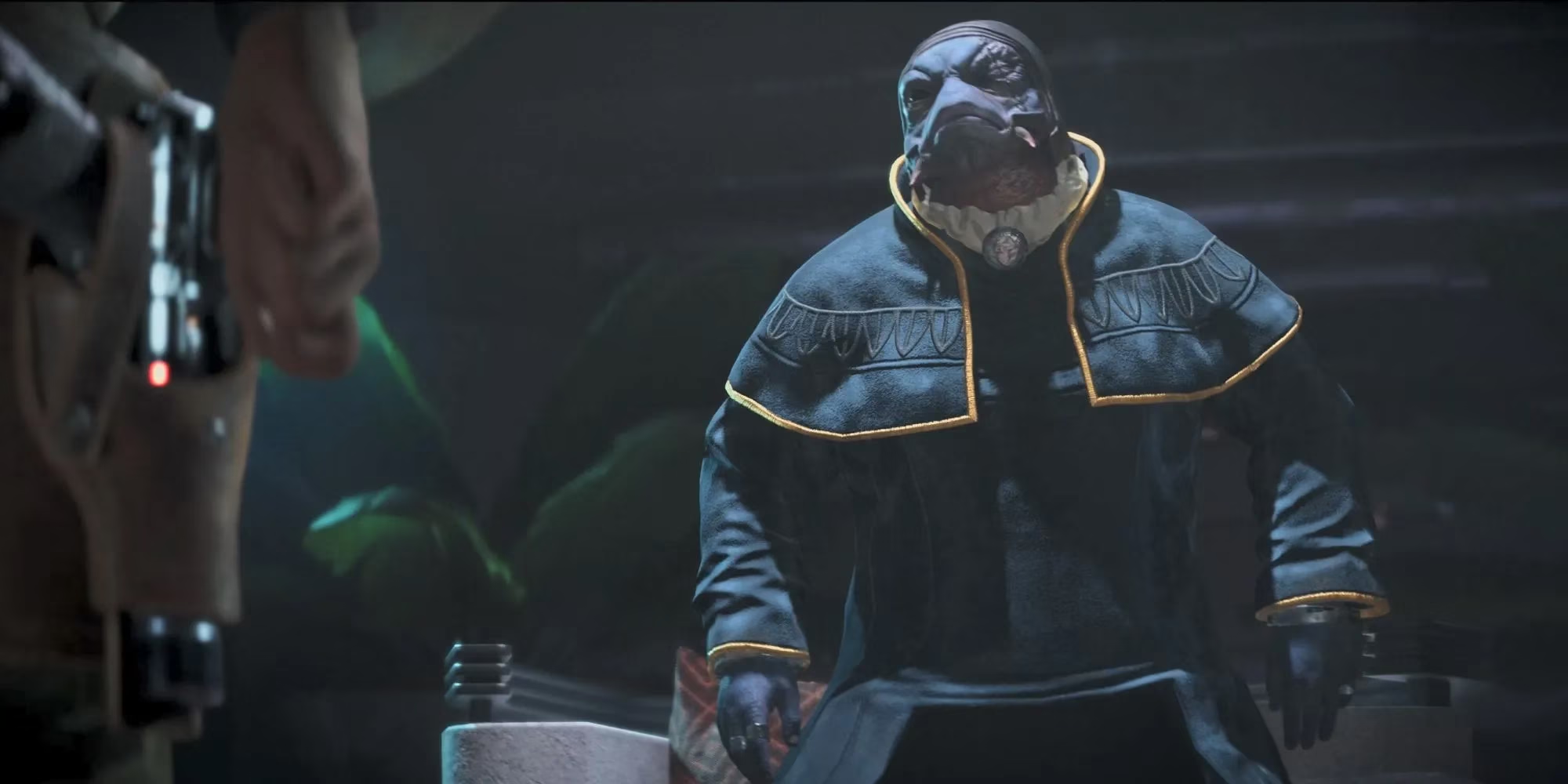
While I found Outlaws' system to be a bit underbaked, its core philosophy was impressive and directly applicable. It offered tangible rewards and consequences for messing with gangs, forcing me to consider my allegiances with every action. It made the open world more exciting and every decision feel weightier. Cyberpunk 2077 had none of this systemic depth for its gangs. Driving from point A to point B in Night City often felt like a scenic tour through a gorgeous but inert landscape. Imagine, instead, knowing your next gig was in a Tyger Claws-controlled block where your reputation was "Shoot on Sight." The journey would transform from a commute into a tense, strategic infiltration. That palpable stress and consequence are exactly what a cyberpunk dystopia should deliver.
A Blueprint for Cyberpunk 2077's Sequel
Therefore, I firmly believe that a sequel to Cyberpunk 2077 must prioritize gangs and their systemic impact on the world, whether it's a renewed Night City or a new urban hellscape. Gangs are what make Night City the scary, practically unlivable place that it is in the lore. While the corrupt megacorporations exert control on a macro level, the gangs are the immediate, visceral threat on every street corner. In a sequel, they need to feel unpredictable and menacing, but also malleable. The player should have the agency to tame, antagonize, or ally with them.
Here’s how a refined system, inspired by Outlaws but built for scale, could work:
| Feature | Impact on Gameplay & World |
|---|---|
| Dynamic Reputation | Actions in a gang's territory (completing gigs for rivals, killing members) directly affect standing, from "Neutral" to "Friendly" to "Hostile." |
| Territorial Control | Gang influence visibly ebbs and flows. A district you cleared yesterday might be under new, more aggressive management today, changing NPC behavior and mission availability. |
| Tangible Rewards | High reputation unlocks faction-specific cyberware, vehicles, clothing (acting as a "pass" in their territory), and the ability to call for backup in a fight. |
| Severe Consequences | If your relationship with a gang dips too low, they could actively hunt you down, sending hit squads to your last known location, ambushing you during missions, or placing bounties on your head. |
| Gang-on-Gang Warfare | Witness (or instigate) violent turf wars that temporarily change the environment, creating new opportunities or dangerous obstacles during free roam. |
The protagonist—whether it's a new character or a continuation of V's legacy—should be able to curry favor, playing factions against each other for personal gain. This creates a living, reactive world. Choosing to side with the Maelstrom to gain access to their black-market cyberware might mean the Valentinos will now ambush you in Heywood, making simple traversal a calculated risk. Pushing gangs to the sidelines, as the original game did, only makes the city feel tame and contradicts its own narrative.
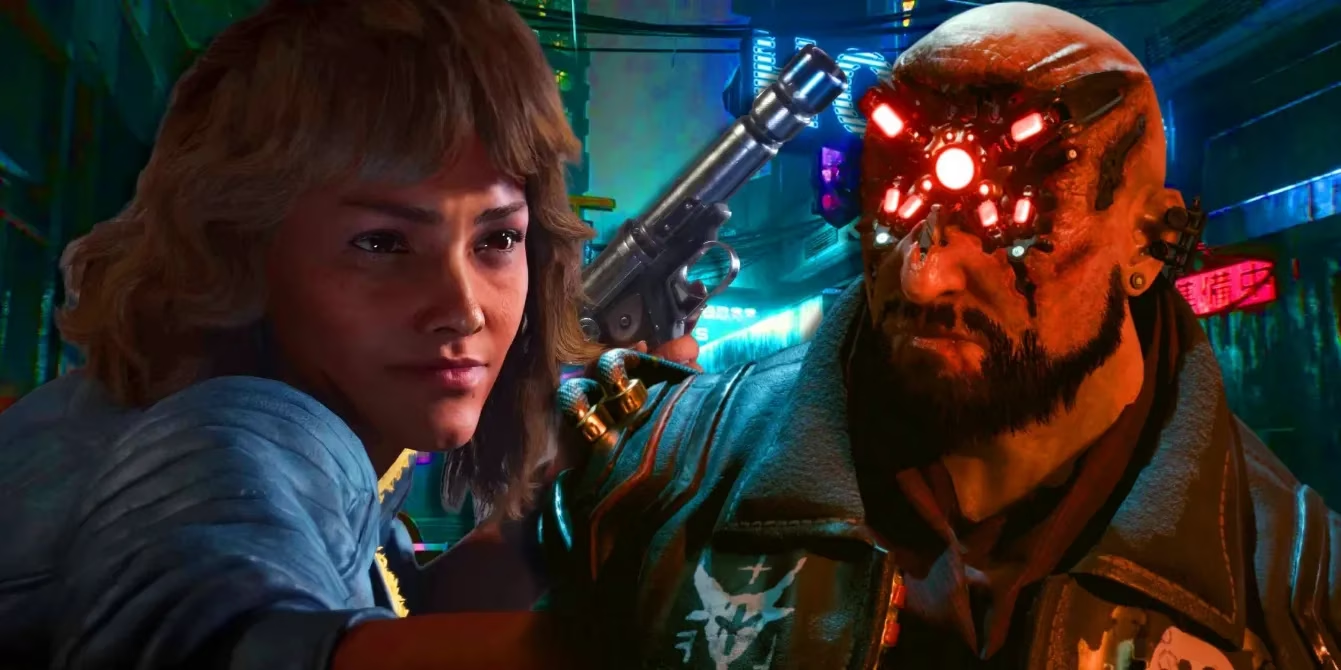
Ultimately, Cyberpunk 2077's sequel has the immense potential to implement and significantly improve upon the foundational ideas presented in Star Wars Outlaws. By weaving a deep, reactive Reputation and faction system into the core gameplay loop, the developers can ensure that the gangs which are so vital to the lore finally become the dynamic, fearsome, and impactful forces they were always meant to be. It would transform Night City from a breathtaking backdrop into a truly predatory and immersive ecosystem where every alleyway holds not just aesthetic danger, but systemic consequence. This isn't just a fix; it's the evolution needed to realize the full, terrifying potential of the cyberpunk fantasy.