Hey, choombas! Ever since I first stepped into the neon-drenched streets of Night City back in 2020, one thing has always struck me as the true heartbeat of that dystopian world—and it's not just the cyberware or the corpo wars. It's the music. Specifically, the raw, rebellious spirit of classic rock that CD Projekt Red so masterfully wove into the very fabric of Cyberpunk 2077. Think about it, can you even imagine Night City without the gritty riffs of Samurai blasting from a beat-up radio? I know I can't.
For me, the game's world truly comes alive when you start to notice the massive role classic rock and its subgenres play. It's not just background noise; it's baked into the story's DNA. Remember those major quests? They weren't just randomly named. Missions like 'We Gotta Live Together' and 'Burning Desire' are direct nods to the legendary Jimi Hendrix. And who could forget the quest 'Stairway to Heaven'? A clear and loving homage to the one and only Led Zeppelin. This isn't just a cool detail—it's a statement. It puts CD Projekt Red's genuine love for music on full display. Dozens of missions are named after classic rock, punk, indie, and metal songs, turning the game into a sprawling, interactive mixtape for music lovers.
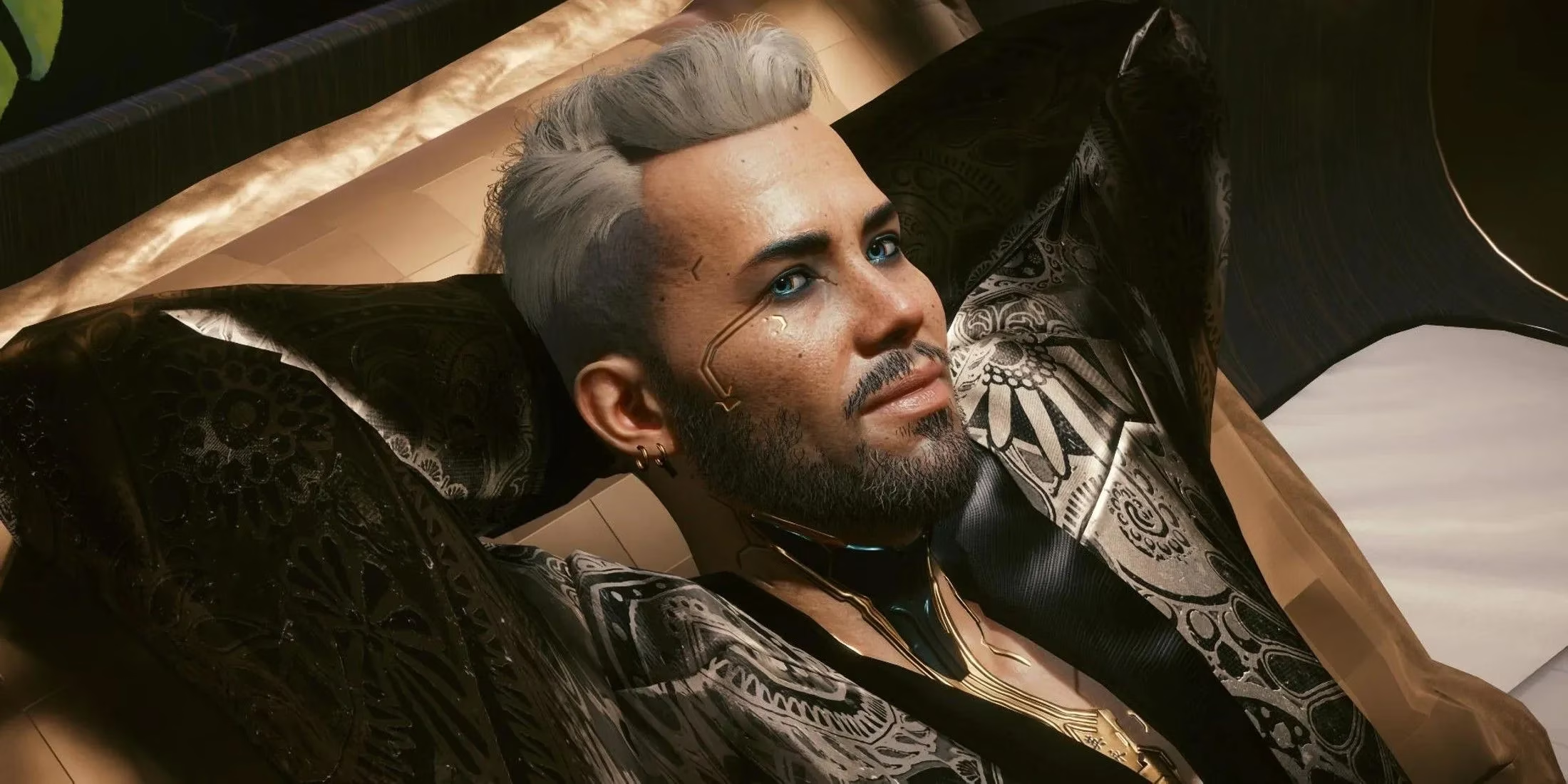
Now, let's talk about the characters who embody this rock 'n' roll soul. Take Kerry Eurodyne. He's not just another fixer on the edge; he's a founding member of Johnny Silverhand's band, Samurai, who struck out on his own. By the time we meet him in 2077, he's a global rockstar. But his storyline is so much more than a fame trip. It thrusts us, as V, deep into the cutthroat music industry of Night City. Through Kerry, the game explores heavy themes:
-
Artistic Freedom vs. Corporate Control: His struggle with his music label is a classic rock tale.
-
The Search for a Lost Spark: Kerry feels creatively drained, a ghost of his former rebellious self.
-
The Power of a Perfect Riff: The climax where V helps him rediscover his passion by playing that iconic guitar riff? That moment is pure rock 'n' roll magic. It shows that in this world of chrome and code, the human spirit—and the right chord progression—can still ignite a revolution.
Of course, you can't discuss music in Cyberpunk 2077 without talking about the man, the myth, the terrorist... Johnny Silverhand. His impact on the story is monumental. But beyond the Arasaka raid and the engram in your head, his most enduring legacy is his music with Samurai. Silverhand used the band as a weapon, a megaphone for his anti-corporate, anti-establishment rants. And decades later, that music still resonates. Isn't it fascinating how V finds die-hard Samurai fans all over Night City? They're trading old vinyl, crafting replicas of Johnny's famous Malorian Arms pistol... I mean, guitar. And then there's the iconic Samurai jacket. Wearing it isn't just about stats; it's a tribute. It mirrors exactly how real-life rock fans show allegiance to their favorite bands—through merch, through shared identity. That jacket is a symbol of a rebellion that outlived its leader.
So, what's the big picture here? Why does this matter in 2026, looking back? The music in Cyberpunk 2077 does more than set the mood. It builds the world's history, defines its characters' souls, and gives players a tangible connection to Night City's counter-culture past. The references to real-world rock legends create a bridge between our reality and the game's fiction, making its dystopia feel strangely familiar and deeply human. In a city obsessed with the new—new tech, new bodies, new trends—it's the old, angry spirit of rock that provides the moral compass and the emotional weight. The game asks us: In a world selling you perfection, what's more human than an imperfect, screaming guitar solo? The answer, for me, is nothing.