Yo, chooms! Let's dive into the neon-soaked, gritty underbelly of Night City's most infamous district: Dogtown. When CD Projekt Red dropped the Phantom Liberty expansion in 2023, they didn't just add more content; they created an entire new world-within-a-world. And get this—while the original Night City was built on the solid foundation of Mike Pondsmith's legendary Cyberpunk 2020 tabletop RPG, Dogtown was a blank slate, a creative playground where the devs could go absolutely wild.
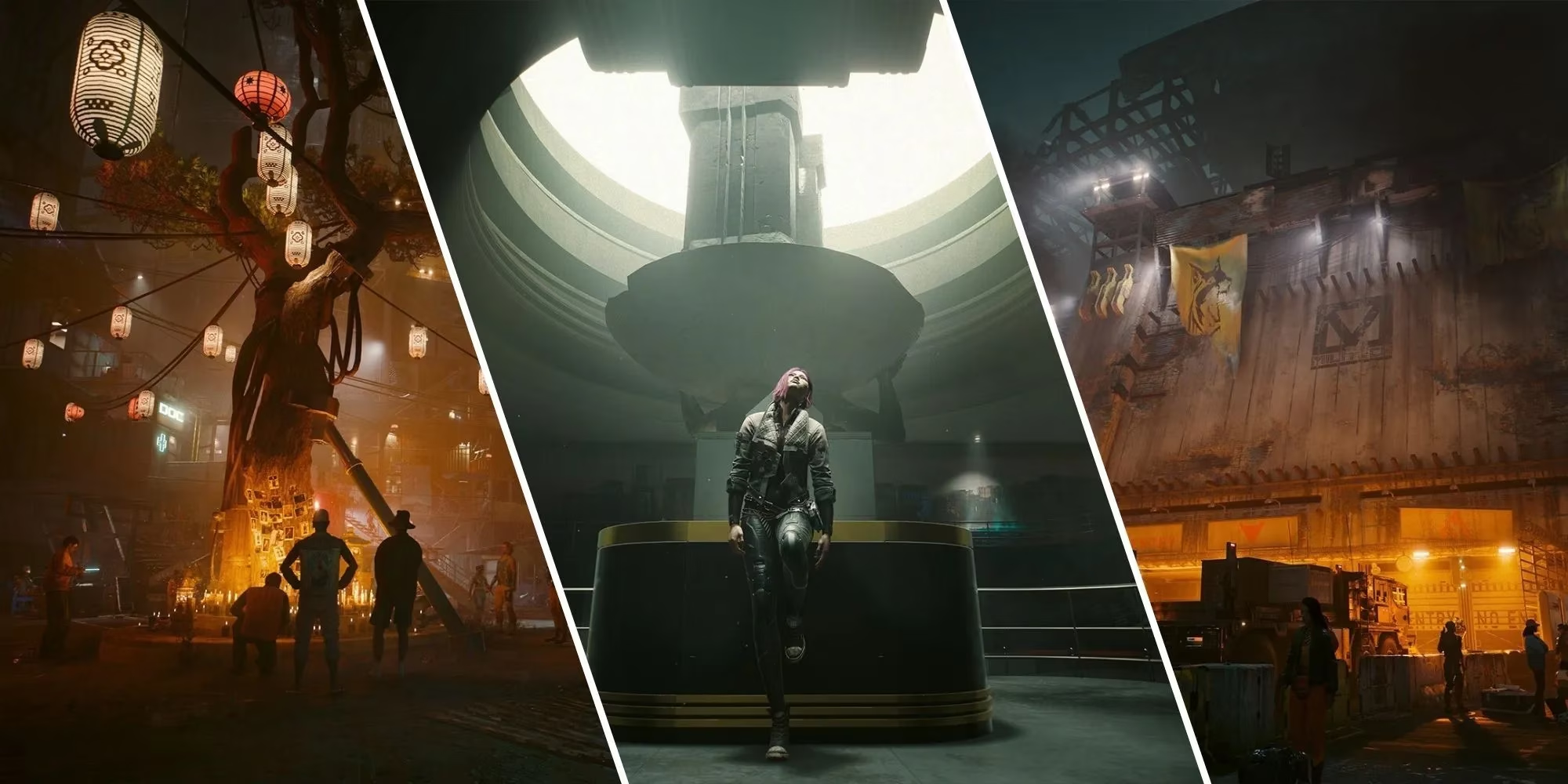
The OG Night City vs. The New Kid on the Block 🏙️
First, a quick recap. Night City itself is a legendary melting pot. Pondsmith, the godfather of Cyberpunk, described it as a "fusion of San Francisco and ghetto LA," with dashes of Singapore, São Paulo, and Beijing for flavor. CDPR then sprinkled in their own secret sauce, adding major Tokyo vibes to the mix. But for Dogtown? The rules were different. As Pawel Sasko, the Lead Quest Designer for Cyberpunk 2077 and now Associate Game Director for the sequel, revealed, the goal was to make players feel like they'd "left Night City entirely." This place needed its own identity, its own dirty, dangerous soul.
The "Collage" of Dogtown: A Global Inspiration Tour 🌎
So, where did the team look for inspiration? According to Sasko, it was all about research and creating a "collage of references." They weren't copying one specific place; they were building a Frankenstein's monster of urban decay from locations around the globe. The main visual influences were:
-
Nicaragua: For that raw, lived-in feel of places that have seen conflict and struggle.
-
Favelas (Brazil): The iconic, sprawling, organically grown slums became a blueprint for Dogtown's vertical, makeshift chaos.
-
Mexican Architecture: Adding specific textures, colors, and structural details that feel authentic and grounded.
Sasko was clear: "Sometimes you have a very clear reference to a singular location, in this case, it’s a collage." The team scavenged for inspiration everywhere—a single crumbling wall in a photo, a specific alleyway's vibe, the layout of a forgotten industrial zone. They pieced it all together to tell Dogtown's history through its architecture: how it was built, abandoned, and then ruthlessly reshaped by the warlord Kurt Hansen into his personal militarized fortress.
Building a World with History and Attitude
The genius of Dogtown isn't just in its looks; it's in its story. Every rusted gate, every piled-up shipping container, every bullet hole-ridden wall is whispering a tale. The devs used these global references not just for aesthetics, but to visually explain the district's brutal timeline:
-
The Initial Build: What did this place look like when it was hopeful?
-
The Abandonment: How does decay set in when corporations and society walk away?
-
The Hansen Takeover: How does a military strongman impose his will on the landscape?
This approach made Dogtown feel real. It's not a random video game level; it's a location with weight, history, and consequences. You can feel the neglect and the subsequent iron-fisted rule just by walking its streets. It's immersive as hell.
Why This Approach is a Game-Changer 🎮
For players in 2026, looking back at the evolution of Cyberpunk 2077, Dogtown stands as a masterclass in environmental storytelling. CD Projekt Red took the core "collage" philosophy of Night City and applied it to a more focused, lawless zone. The result was a district that felt both familiar (it's still in the same universe) and terrifyingly foreign.
This meticulous, reference-driven design is a big part of why Phantom Liberty was hailed as a triumphant comeback story for CDPR. It showed the studio's commitment to depth and detail, pulling from real-world struggles and architectures to create a dystopia that resonates on a visceral level. It's not just "cool future stuff"; it's a reflection of global urban realities, amplified through a cyberpunk lens.
So next time you're sneaking through Dogtown, trying not to get spotted by Barghest soldiers, take a moment to look around. You're not just in a game level—you're navigating a piece of virtual art, a brutal and beautiful collage built from the streets of our own world. Pretty mind-blowing, right? Now, go grab your Mantis Blades and explore! 😎⚡