As we stand in 2026, looking back at the seismic shift in gaming culture since the reveal of Grand Theft Auto 6's first trailer in late 2023, the anticipation has only crystallized into a clear vision. That brief glimpse of a neon-drenched, reimagined Vice City promised a world that felt more tangible and culturally plugged-in than ever before. From my perspective as a player, the franchise's legendary knack for holding a funhouse mirror up to society seems to have found its perfect modern target: the sprawling, chaotic, and often absurd ecosystem of online influencers and streamer culture. Since GTA V launched in 2013, this digital landscape has evolved from a niche into a dominant cultural force, a metamorphosis as dramatic as a caterpillar becoming a kaleidoscopic, data-hungry butterfly. Rockstar's upcoming satire feels not just timely, but inevitable.
The trailer itself was a masterclass in暗示. We didn't just see a city; we saw it through the lens of in-game smartphones and live streams, suggesting that social media won't just be a menu option—it will be the very membrane through which we experience Vice City. This isn't a mere graphical upgrade; it's a fundamental rewiring of the game's perspective. The streamer's screen has become the new windshield for cruising through this digital metropolis. This design choice makes the inclusion of influencer and celebrity culture not just a possibility, but a narrative necessity. The world of GTA 6 appears designed to be performed for, commented on, and virally dissected within its own reality.
Learning from Night City's Blueprint: The Cyberpunk Connection
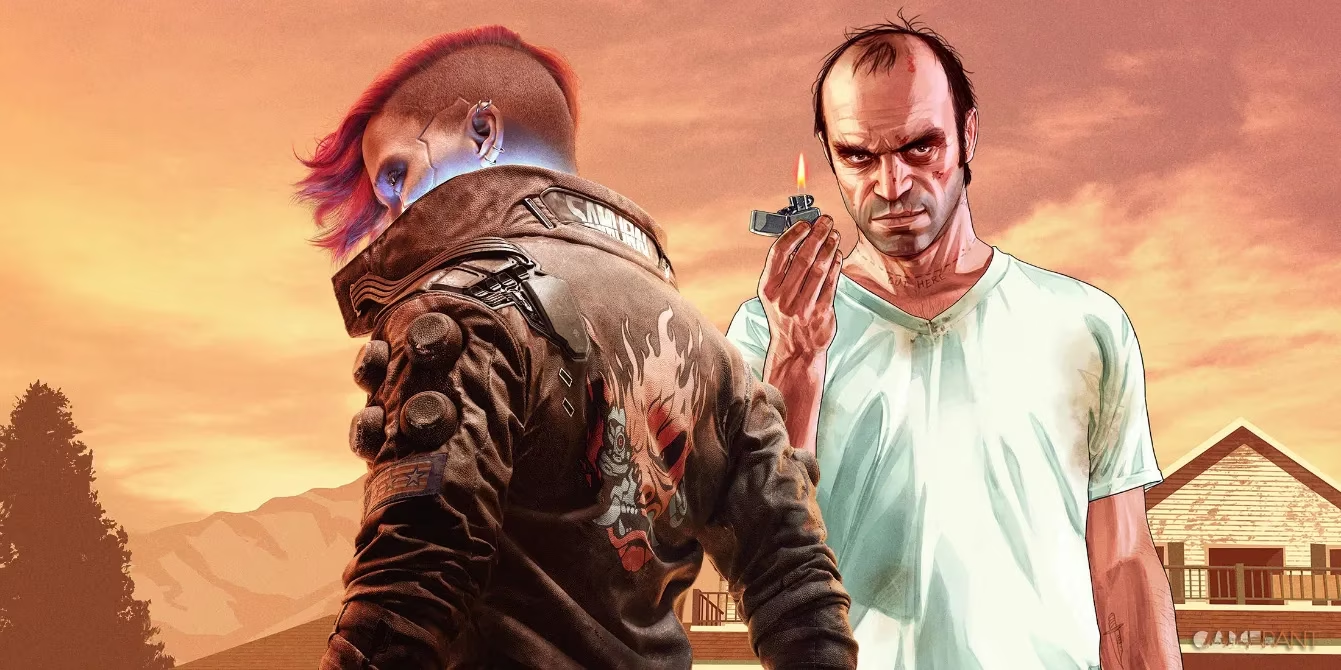
When considering how GTA 6 might integrate real-world personalities, the most instructive example isn't from its own past, but from the revitalized world of Cyberpunk 2077. By 2026, CD Projekt Red's game has fully shed its rocky launch and is celebrated for the density and character of its open world, Night City. A key ingredient in that recipe was its smart, often humorous use of real-life figures.
Cyberpunk 2077 populated its streets with cameos that felt organic:
-
Hideo Kojima as an enigmatic, meta-commentary-spouting NPC.
-
Musician Grimes as a radio host and in-game celebrity.
-
Content creators like Jesse Cox and Alanah Pearce appearing as news anchors or fixers.
These appearances worked because they didn't feel like cheap advertisements. They were Easter eggs that rewarded player knowledge and blurred the line between our world and the game's dystopia. They acted as cultural signposts, grounding the game's fantastical elements in a shared, recognizable reality. For GTA 6, which thrives on this very blend of the familiar and the grotesquely exaggerated, this blueprint is perfect. Rockstar has dabbled in this before—Ricky Gervais's stand-up routine in GTA IV is a classic—but the scale and integration could now be monumental.
The Satire Machine: Turning Influencers into In-Game Content
The potential for satire here is boundless. GTA's side missions and stranger encounters have always been highlights, and influencer culture provides a bottomless well of inspiration. Imagine scenarios like:
| Potential Mission / Encounter | Satirical Target |
|---|---|
| "The Prism Quest" | Helping a desperately trendy influencer stage a fake philanthropic event for clout, with escalating, morally bankrupt complications. |
| "Going Viral" | Accidentally becoming the subject of a meme-based manhunt by the city's various streaming gangs, requiring you to manage your online "brand" while on the run. |
| "Sponsored Chaos" | Driving a hyper-branded, explosion-prone car for a energy drink sponsor during a police chase, with bonuses for getting specific logos in the shot. |
These characters wouldn't just be mission givers; they could be a constant, buzzing presence. Their live streams could pop up on in-game billboards or the protagonist's phone, commenting on—or even live-broadcasting—the chaos the player is causing. A heist gone wrong could be simultaneously a disaster and a viral sensation, narrated by a hyperbolic in-game streamer. This layer of reflexive commentary could make GTA 6's world feel alive in a way that is uniquely of our moment.
The Celebrity Carousel: Who Might Show Up in Vice City?
The prestige of the Grand Theft Auto franchise in 2026 is such that featuring in it is a cultural milestone. Rumors have swirled for years, like whispers in a crowded server, with streamers like Adin Ross hinting at involvement. While unconfirmed, the mere fact such rumors are credible speaks volumes. The pool of potential collaborators is vast:
-
Streamers & YouTubers: Figures known for chaotic energy or distinct personas (e.g., xQc, Pokimane, MrBeast) could play exaggerated versions of themselves, running in-game events or appearing as talk radio hosts.
-
Musicians: Given Vice City's history, musicians are a shoo-in. An artist like Lil Nas X or Doja Cat, who expertly navigate persona and controversy, could voice a radio DJ or even a storyline character.
-
Controversial Figures: This is where Rockstar's satire could get truly sharp. Including a parody of a famously litigious tech billionaire or a reality TV politician turned digital emperor would be a risky but potentially iconic move.
The key will be integration. These shouldn't feel like tacked-on endorsements. They should feel like part of the fabric—a narcissistic real estate mogul you can work for, a spiritual guru streamer selling bogus brain implants, or a musician whose concert is the backdrop for a major mission. Their presence needs to serve the satire, not dilute it.
A World Reflected in a Million Screens
Ultimately, what excites me most about this direction is how it promises to deepen the GTA experience. The world is no longer just something you observe; it's something that observes you back, through a million simulated lenses. The chatter on the in-game version of TikTok or Twitch could react to your actions, creating a dynamic feedback loop. Your infamy wouldn't just be a police star; it could be a follower count, a sentiment analysis, or a trending hashtag.
By embracing and satirizing influencer culture, Grand Theft Auto 6 has the chance to critique the very nature of attention and performance in the 2020s. It can explore how reality is staged, how personality is branded, and how violence and chaos are commodified for views. If Cyberpunk 2077 showed how to weave celebrities into a world's texture, GTA 6 can show how to make that world itself a commentary on the fame-obsessed machine that propels them. As we await its release, one thing feels certain: in Vice City, we won't just be playing a game. We'll be starring in one, whether we want to or not, with the entire digital populace as our audience.