The journey of Cyberpunk 2077 is one of remarkable redemption. From its turbulent and controversial launch in 2020, the game transformed through years of dedicated post-launch support and expansive updates, evolving into the polished and deeply immersive experience it is today. This renaissance allowed the game's core strengths—its gripping narrative, unforgettable characters, and the breathtakingly dense setting of Night City—to finally shine without technical hindrance. The pinnacle of this transformation arrived with the Phantom Liberty story expansion, a masterclass in narrative design that not only elevated the base game but also charted a clear and ambitious course for the franchise's future, particularly its upcoming sequel, the code-named Project Orion.
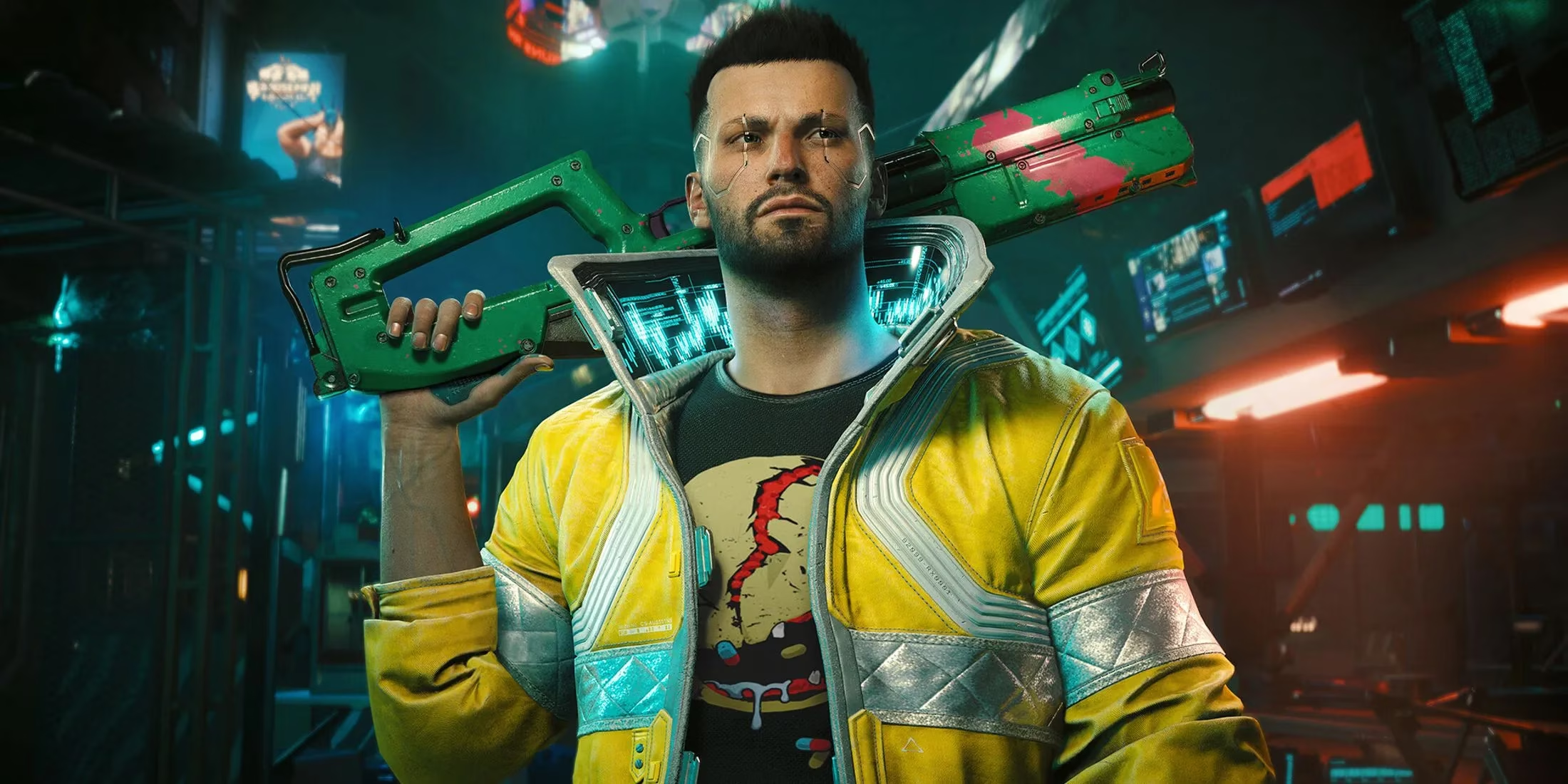
The Contained Chaos of Night City
The original Cyberpunk 2077 narrative excelled in its laser focus. The story of V, a mercenary rising through the ranks of Night City's criminal underworld, was intensely personal. The game's world, while vast, felt deliberately claustrophobic, bounded by the neon-drenched sprawl and the immediate, deadly politics of its districts. Players navigated a web of fixers, corporate enforcers, and gang lords, each vying for control of the city's soul. Even factions with global reach, like the monolithic Arasaka Corporation, were encountered through the lens of their local power plays. This created an isolated, almost myopic experience; V's survival was a day-to-day struggle, leaving little room to ponder events beyond the city's imposing walls. The stakes were life, death, and legacy, but they were, fundamentally, Night City's stakes.
Phantom Liberty: Expanding the Horizon
Phantom Liberty shattered this contained perspective. Set during the events of the main story, the expansion pulled V out of the familiar gang wars and corporate skirmishes and thrust them into the heart of international espionage and geopolitics. Trading deals with local fixers for a mission with the New United States government, V's objective was no less than saving the President's life. This narrative shift was seismic:
-
Elevated Stakes: The conflict moved from regional dominance to national security.
-
New Factions: It introduced high-level government agencies and their shadowy operatives, like the enigmatic FIA and the charismatic spy Solomon Reed.
-
Global Lore: For the first time, players received a substantial, playable look at the power structures and conflicts that shape the world outside of Night City.
The expansion's setting, the lawless district of Dogtown, became a microcosm of global intrigue, a pawn in a much larger game. By its conclusion, Phantom Liberty demonstrated that stories in the Cyberpunk universe could possess national, even global, gravity while retaining the personal, character-driven heart that defined the base game.
The Launchpad for Project Orion
The narrative escalation of Phantom Liberty was not just for its own sake; it serves as a direct narrative and thematic bridge to Project Orion. If the base game was about street-level survival (Regional Conflict) and Phantom Liberty was about national conspiracies (National Conflict), the logical next step is a story of truly galactic proportions.
Recent revelations and narrative threads strongly point in this direction:
-
Canceled Lunar DLC: Reports confirmed that a story expansion set on the moon was planned for 2077 but later canceled. It is highly plausible that CD Projekt Red is reserving such a monumental setting for a full sequel.
-
Endings Pointing Skyward: Multiple endings of Cyberpunk 2077 involve leaving Earth, whether with the Aldecaldos, on a one-way trip with the Nomads, or on a mysterious space-bound contract. The universe is literally pushing its characters toward the stars.
-
Decades of Worldbuilding: The Cyberpunk tabletop RPG, the foundation of the video game, has detailed lore spanning the solar system, including colonies on the moon and Mars, orbital habitats, and the corporations that control them.
Project Orion is positioned to leverage this vast, established lore. The sequel is free to explore conflicts that make Night City's gang wars look like minor squabbles:
-
Interplanetary Corporate Wars: Battles between mega-corporations over off-world resources and colonies.
-
The Frontier of Cyberspace: Exploring new layers of the Net beyond the Blackwall, potentially in alien or deep-space contexts.
-
Existential Threats: Conflicts that threaten all of humanity, not just a single city or nation.
Conclusion: A Universe Unbound
By 2026, Cyberpunk 2077 and its Phantom Liberty expansion have completed a powerful narrative arc. They told a deeply personal story that gradually expanded its scope to touch upon world-altering events. Phantom Liberty was the crucial pivot, proving that the franchise's storytelling could handle complex geopolitics without losing its soul. Now, the stage is set for Project Orion to make the final leap. The sequel is no longer bound by Earth's atmosphere, narratively or literally. It can take the cybernetic-enhanced, neon-soaked essence of Cyberpunk and project it onto a canvas as infinite as space itself, fulfilling the promise that has been building since V first glanced up at Night City's polluted sky, wondering what lies beyond. 🚀