In the neon-soaked sprawl of Night City, where chrome and ambition scrape the smog-choked sky, some of the most profound stories lie not in the towering megastructures, but in the silent, drowned ruins beneath the waves. It has been years since the tumultuous launch and subsequent redemption of Cyberpunk 2077, yet the echoes of its most haunting moments—like the melancholic descent in "Pyramid Song"—still resonate as whispers of unrealized potential. As 2026 dawns and the gaming world awaits CD Projekt Red's Project Orion, the sequel promised to build upon that storied foundation, one cannot help but gaze into the murky waters of Night City's bay and wonder: what forgotten truths still lie submerged, waiting for the light of a new dawn to reveal them?
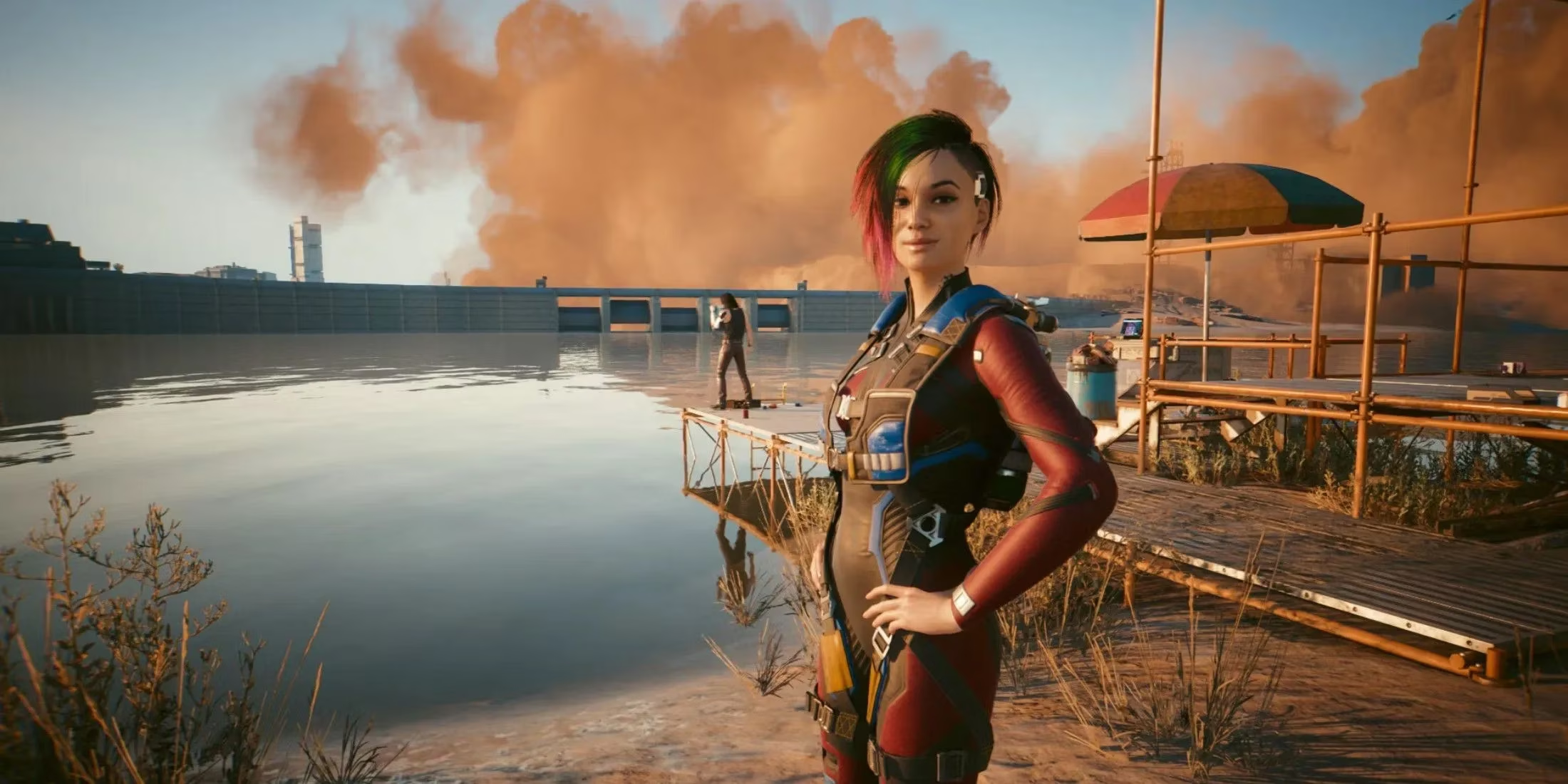
The Lingering Echo of "Pyramid Song"
The "Pyramid Song" gig remains, for many, the emotional zenith of Cyberpunk 2077's intricate tapestry. It was more than a romance culmination for Judy Alvarez; it was a baptism into silence. Donning a wetsuit, V descended into the foul, irradiated waters, where the ghostly outlines of streets, schools, and homes stood as tombstones for a district sacrificed to the ever-encroaching sea. The mission was a masterclass in environmental storytelling, its mechanical novelty—the weightless, three-dimensional exploration—serving as a perfect vessel for its narrative gravity. But upon surfacing, the waters closed once more, leaving a profound question hanging in the air: was this a singular, beautiful anomaly, or a glimpse into a world begging to be explored?
A Dichotomy of Depth: Promise Versus Reality
Cyberpunk 2077 presented a strange paradox. The tools for underwater exploration were there, meticulously crafted:
-
Full 3D Movement & Submersion: A fluid, freedom-granting system.
-
The Oxy Booster: A consumable hinting at extended forays beneath the surface.
-
Vast Aquatic Landscapes: Significant portions of the map consumed by water.
Yet, these elements coalesced into what felt like one of the game's most poignant missed opportunities. Beyond the haunting beauty of "Pyramid Song," the oceans and rivers of Night City became largely inert backdrops, holding only scattered loot and the occasional easter egg. The scuba gear, so central to that one mission, gathered digital dust. Why craft such a compelling, atmospheric gameplay space only to leave it so hauntingly empty? The potential for storytelling in those drowned avenues and flooded apartments was immense, a silent scream against the corporatized decay above.
Project Orion's Call from the Deep
This is where Project Orion holds the power to not just iterate, but to evolve. The sequel can dive deep into the foundations laid by its predecessor and bring its submerged worlds to vibrant, terrifying life. The framework is already there, waiting to be populated.
🌊 Expanding the Mission Palette:
"Pyramid Song" should be the blueprint, not the sole example. Project Orion could introduce a whole new class of gigs and side missions rooted in aquatic exploration.
| Mission Type | Potential Narrative Hook |
|---|---|
| Salvage Ops | Recovering corporate data-cores or prototype tech from sunken Arasaka freighters. |
| Ghost Network Runs | Accessing isolated, underwater server hubs for netrunners, fighting off aquatic defense systems. |
| Eco-Terrorist Support | Helping the Voodoo Boys or other factions investigate underwater pollution sources. |
| Personal Mysteries | Uncovering the flooded remains of a character's past, akin to Judy's journey. |
🐚 Fostering Organic Discovery:
Beyond structured missions, the waters should teem with emergent stories and activities.
-
Underwater Encampments: Secret nomad outposts or smuggler dens built within air-pocketed ruins.
-
Aquatic Fauna & Hazards: Mutated sea life adapted to the toxic runoff, presenting both danger and potential for crafting or study.
-
Environmental Puzzles: Using tech or physics to navigate collapsed tunnels or activate ancient, submerged machinery.
-
Dynamic Events: Random encounters like rival salvage crews, predatory corporate drones, or the haunting discovery of a perfectly preserved, decades-old crime scene.
The Deeper Meaning: Dystopia Refracted Through Water
The true power of expanding underwater content transcends mere gameplay variety. Cyberpunk 2077's world is one of a "slow, flashy apocalypse," where progress is measured in stacked bodies and drowned neighborhoods. These flooded zones are not generic water terrain; they are mass graves for communities, time capsules of the world's collapse.
By fleshing out these depths, Project Orion can achieve a profound narrative alchemy. It can force players to physically navigate the consequences of the world's failings. To swim through a child's bedroom, see a soda can from 2045 resting on a silt-covered desk, or read the fading graffiti on a submerged mall wall—these are experiences that lecture no one, yet speak volumes. They are the ultimate expression of environmental storytelling, offering a visceral, melancholic perspective on dystopia that the bustling, chaotic streets above sometimes obscure. Isn't the most chilling horror often the one that is silent and forgotten?
In an industry where underwater segments are so often perfunctory—simple traversal zones or hideouts for collectibles—Cyberpunk's setting demands more. It requires that these spaces be meaningful. Project Orion has the chance to turn the ocean floor into the game's most compelling character: a silent witness, a preservationist of tragedy, and a frontier ripe with danger and discovery. From the depths of "Pyramid Song," a new vision for Night City can rise, one where every shadow in the water holds a story, and every bubble ascending to the surface carries a whisper from the past. The potential is not just lying in wait; it is submerged, pressurized, and ready to erupt.