In the vibrant, ever-evolving landscape of Night City, the very concept of 'home' has taken on new dimensions since the tumultuous launch days of Cyberpunk 2077. As of 2026, with the community's gaze firmly fixed on the horizon where Project Orion promises to continue the saga, there's a collective reflection on the features that shaped V's journey. Among these, the humble apartment—once a mere save point and wardrobe—underwent a significant metamorphosis through post-launch support, transforming into a potential cornerstone for immersive role-playing. Yet, for all its improvements, this feature merely scratched the surface of what a personal sanctuary in a dystopian metropolis could truly be. The conversation now pivots towards how CD Projekt Red can reimagine this space, learning from past triumphs and shortcomings to craft living quarters that feel genuinely alive in the anticipated sequel.
The Promise and Pitfall of Virtual Companionship
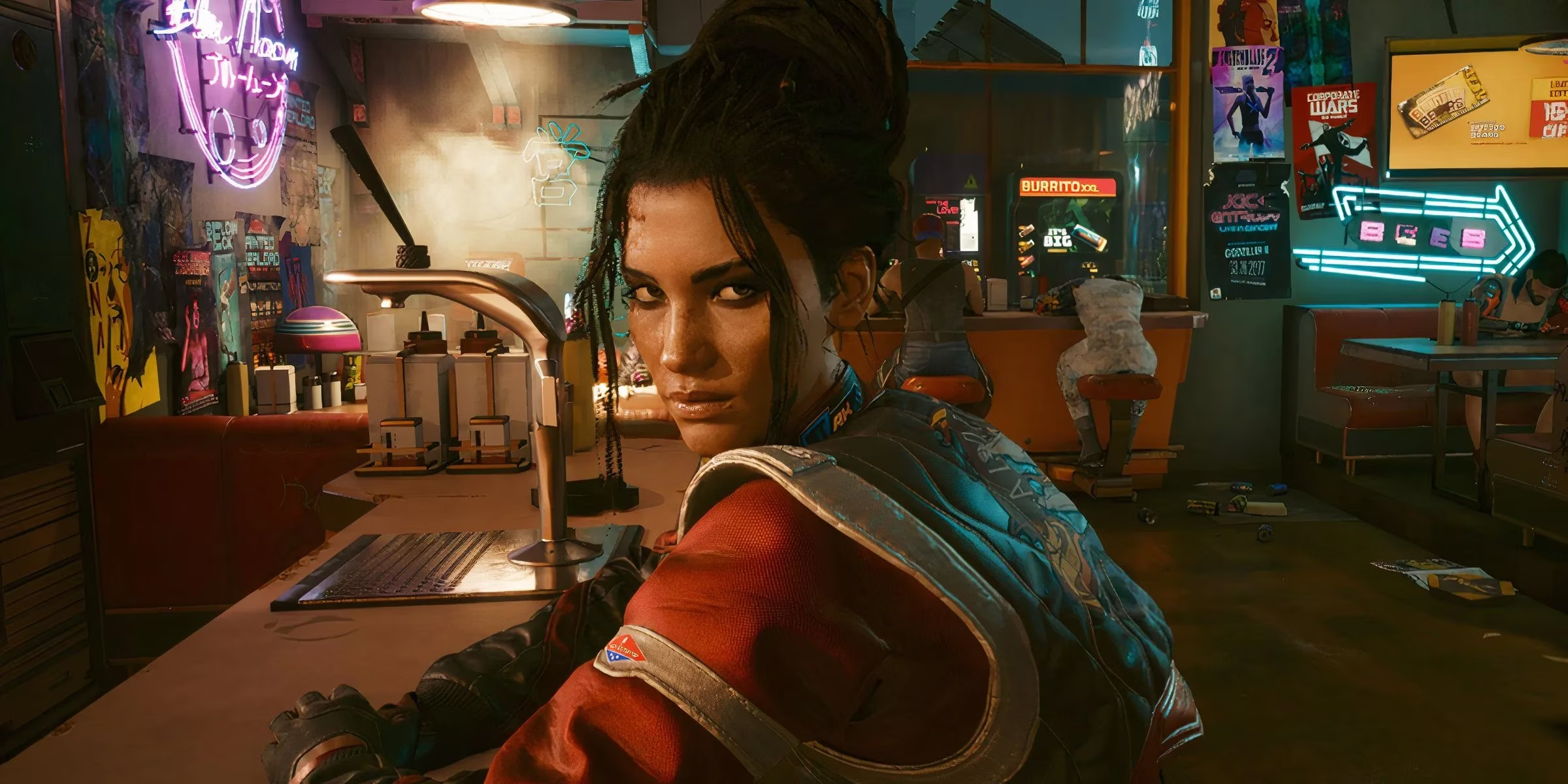
One of the most celebrated enhancements introduced later in Cyberpunk 2077's lifecycle was the ability to invite romantic partners—be it Judy, Panam, Kerry, or River—to one's apartment. This was a phenomenal addition on paper, layering a slice of domestic character development and leisurely role-play into the narrative-rich experience. It allowed players to share a quiet, intimate moment with characters they had fought alongside and grown attached to, briefly stepping away from the chaos of Side Jobs and Gigs. However, the execution, many argue, fell short of the concept's full potential. The veil of immersion, so carefully woven through the main story, often slipped during these visits.
Characters who were brilliantly scripted companions during quests were sometimes reduced to repetitive NPCs within the apartment walls. The dialogue options became limited, interactions followed predictable animations, and the initial novelty of having them over waned quickly. Ironically, the more time players spent with their chosen partners in this setting, the more those digital relationships risked losing their unique luster, sustained primarily by cute text message exchanges and the occasional gifted item. This highlighted a core challenge for Project Orion: how to make interpersonal connections feel continuous and dynamic, rather than static and scripted.
Beyond Four Walls: Envisioning Dynamic Social Hubs
To combat the potential banality and truly inject spice into in-game relationships, Project Orion could look beyond the confines of the apartment. Night City itself is brimming with potential date-night locations—from the iconic, neon-drenched ambiance of the Afterlife to the more subdued, everyday vibe of a place like Tom's Diner. Imagine the narrative and role-playing depth if players could actively choose to take a love interest out for a drink, a meal, or simply a walk through a bustling district.
This system wouldn't need to make apartments redundant; instead, it could create a beautiful synergy. Each location could host its own set of unique, contextual dialogue lines, allowing characters to react to their environment. A conversation at a high-end club would differ vastly from one in a quiet, rain-slicked alleyway. These outings could serve as mini-events or even unlock special, location-specific quests, making the relationship feel like an active, growing part of the world rather than a checkbox that was ticked. The key would be variety and reactivity, ensuring that no two 'dates' feel exactly the same.
The Soul of a Space: Environmental Storytelling Through Decor
Perhaps the most universally praised aspect of Cyberpunk 2077's apartment system was the ability to decorate. From the elusive iguana egg and poignant dreamcatcher to the formidable Scorpion statue and mysterious Chimera core, V's megabuilding H10 room could become a museum of their adventures. These decorations served as the most rewarding use of the space, offering powerful environmental storytelling. Each return to the apartment allowed for a quiet moment of reflection, visually chronicling the player's journey through Night City. This is a feature that absolutely must be perpetuated and expanded upon in the sequel.
Project Orion wouldn't necessarily need a handful of apartments ranging from 'dingy' to 'luxurious' for this to be meaningful. Even a single, persistent living space could become profoundly personal if the decoration system is deepened. CD Projekt Red could explore:
-
More Interactive Items: Decorations that aren't just static models but can be examined or interacted with to trigger a memory or a line of dialogue from V.
-
Partner Contributions: Romantic partners or close friends could leave their own items or mementos in the space over time, further personalizing it.
-
Dynamic Displays: Weapon racks, armor mannequins, or digital photo frames that automatically update with iconic gear acquired or key moments captured during gameplay.
The Economic and Role-Playing Ecosystem
In an open world teeming with lucrative opportunities—from NCPD dispatches to high-stakes Gigs—accumulating eurodollars is rarely an issue for a seasoned runner. This economic abundance allows players to indulge in role-playing extravagances. Apartments and vehicles sit atop this list, serving as massive money sinks for those who have already maxed out their Tier 5 cyberware and iconic weapon collections.
However, the value proposition of multiple apartments only becomes somewhat justified once a player has a romantic partner, offering slight variations in scenery. For Project Orion, the development team could re-evaluate this economy. Perhaps apartments could offer tangible, gameplay-altering benefits that justify their cost, making them more than just aesthetic choices. Examples could include:
-
Private Workshops: Allowing for unique weapon or cyberware modifications unavailable at street ripperdocs.
-
Secure Planning Rooms: Holographic displays for heist planning or gig reconnaissance.
-
Social Prestige: Owning a lavish penthouse in City Center could open up exclusive dialogue options or gigs from high-profile fixers.
Looking Forward: The Apartment's Role in Project Orion
As of 2026, the community eagerly awaits to see what CD Projekt Red has surmised from their efforts with Cyberpunk 2077. The fundamental question isn't just how to elaborate on apartments, but whether the concept of 'renting' static spaces will even return. Perhaps Project Orion will innovate further, introducing:
-
Fully Customizable Nomad Rigs or AVs as mobile homes.
-
Gang Territory Safehouses that change based on player allegiance and actions in the world.
-
Dynamic Property Systems where the neighborhood's safety and appearance evolve based on the player's influence and completed quests.
The goal should be to ensure that wherever the player calls 'home,' it feels like an authentic extension of their character—a sanctuary that tells their story, facilitates their relationships, and offers more than just a bed to skip time. If the lessons from Night City's first iteration are heeded, the living spaces in Project Orion could become the beating heart of the player's personal narrative, transforming a simple game mechanic into a cornerstone of immersive, next-generation role-playing.