In the sprawling, neon-drenched labyrinth of Night City, a year has passed since the gates to Dogtown were first unlocked by the Phantom Liberty expansion. Yet, this walled-off enclave, a scar upon the face of the metropolis, continues to whisper its secrets to those who listen closely. It is a place where the air is thick with rebellion and the very streets seem to remember every transgression, holding fast to an ideology so potent it can discern a visitor's allegiance from the steel they arrive in. The discovery, as fresh as the morning's data-breeze, is a testament to the enduring, intricate soul of this digital realm: approach the fortified entrance of Dogtown in a vehicle of law and order, and you shall be met not with bullets, but with a scornful, pixel-perfect rebuke.
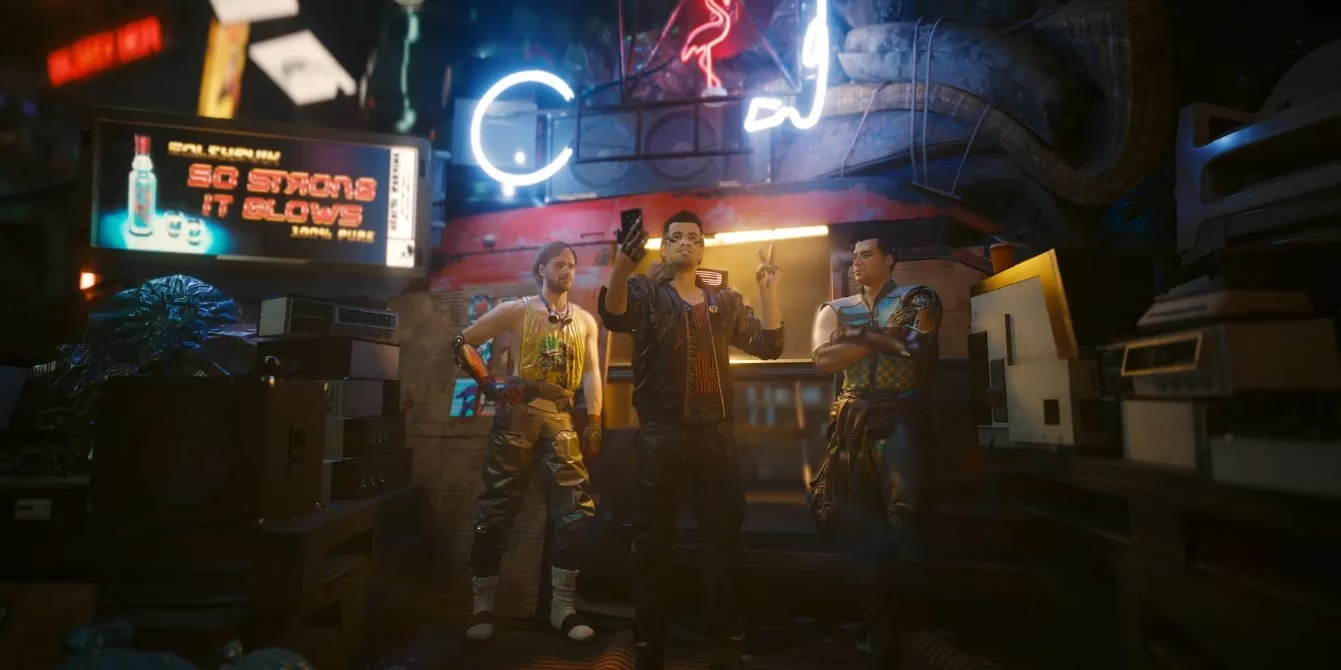
The revelation, unearthed by a vigilant netrunner in the depths of the city's subreddit channels, speaks to a philosophy etched into Dogtown's core code. The district, a sovereign entity within Night City's chaotic embrace, maintains an unwavering vigilance against the symbols of external control. Should a player, through guile or sheer audacity, commandeer an NCPD cruiser and navigate the tense streets toward Dogtown's border, the outcome is a masterclass in passive resistance. The imposing gates do not swing open; instead, a luminous, mocking message flickers across their surface: NCPIG. No hail of gunfire, no aggressive posturing—just a cold, digital insult that cuts deeper than any monowire. The security forces, embodiments of Dogtown's defiant spirit, simply stand their ground, their silent judgment a wall more impenetrable than any physical barrier. This is a detail woven with the finest threads of narrative consistency, a hidden gem likely missed by the multitude, for who, in their right mind, would parade a stolen symbol of authority before the most authority-averse corner of the city?
🚔 The Elaborate Dance of Entry
Gaining access under such provocative circumstances is no trivial feat. The game's mechanics conspire to make this a rare encounter:
-
The Fleeting Possession: Stolen vehicles are ephemeral joys in Night City; they cannot be stored in a garage, making a police cruiser a temporary, high-risk acquisition.
-
The Clean Approach: Arriving at the border with a active police pursuit in tow is a recipe for instant, explosive hostility. Dogtown's guards see a trailing maelstrom of law enforcement as a direct threat, turning the gate into a warzone.
-
The Silent Rejection: Only by eluding pursuit, letting the wanted stars fade into the city's haze, and arriving clean in the stolen cruiser does the true, quiet rejection play out. It is a denial based purely on principle, a digital persona non grata.
This intricate behavior matrix showcases the living, breathing quality of Dogtown's design. It is not merely a static backdrop but an entity with memory and prejudice, reacting to the player's choices with a consistency that feels authentically dystopian.
🔍 Dogtown: A Monument to Meticulous Craft
Why, over a year since its liberation, does Dogtown continue to yield such discoveries? The answer lies in its construction. Conceived as the heart of the Phantom Liberty saga, this district, though geographically compact, is a universe of detail. Every corroded pipe, every graffitied wall, every barked dialogue from a Barghest soldier contributes to a dense, immersive atmosphere. It is a place where the philosophy of resistance is not just talked about but is embedded in the environment, in the AI routines, in the very code that governs entry. This commitment to depth transformed Phantom Liberty from a simple expansion into a redemptive chapter for Cyberpunk 2077, celebrated by mercenaries and critics alike for its sharp writing, compelling characters, and cohesive world-building.
The success of this tale, as echoed by the architects of its quests, was forged in the fires of the base game's tumultuous launch. The lessons learned from that initial chorus of feedback were instrumental, allowing the team to craft an experience where such a nuanced, easily overlooked detail—the steadfast ideological gatekeeping of Dogtown—could exist and thrive. It stands as a quiet monument to the evolution of a world, a small but powerful echo of a district that would rather insult an unwanted guest than compromise its identity. In the ever-evolving anthology of Night City, Dogtown's gates remain a poetic checkpoint, filtering not just people, but principles, one stolen police car at a time.
✨ The Lingering Legacy
The enduring allure of such secrets speaks to a broader truth about immersive worlds. They are not consumed but inhabited, and their value is measured in the years they spend revealing new layers. Dogtown's anti-authoritarian gate is more than a gameplay mechanic; it is a narrative statement, a piece of environmental storytelling that reinforces the zone's identity without a single line of mandatory dialogue. It rewards curiosity, punishes assumption, and enriches the mythology of a place built on defiance. As Night City marches into 2026 and beyond, it is these carefully buried details—the whispers in the code, the silent judgments at the gate—that ensure its streets never truly grow cold or familiar.