As we look towards 2026, the story of Cyberpunk 2077 feels like a tale of two cities. From the ashes of one of gaming's most infamous launches, a phoenix rose, thanks to relentless updates, the brilliant Edgerunners anime, and the stellar Phantom Liberty expansion. The game, once pulled from storefronts, is now a celebrated RPG. But as a player who's been through it all, I can't help but look at the horizon where Project Orion—the sequel—looms. My excitement is real, but it's tinged with a nervous curiosity. Have the right lessons been learned? Or are we in for another round of sky-high promises and a development hell hangover?
I Want Project Orion To Keep The First Game's Tight Focus
Let me tell you, when I finally sank into the polished world of Cyberpunk 2077 and Phantom Liberty, something really struck me. The game felt like it had a keen sense of focus, you know? It wasn't trying to be everything to everyone. It laser-targeted what it did best: crunchy, satisfying combat; a gripping, personal story; and characters that stuck with you long after the credits rolled. For me, all the magic happened in the main quests and those deep companion storylines like Judy's or Panam's. Everything else? A lot of it felt like filler.
Now, don't get me wrong—calling it "filler" sounds harsher than I mean. Roaming Night City is a vibe, and some side gigs do add flavor to the world. Phantom Liberty was especially good at this, with fewer but meatier quests. But part of me wonders if the game could have been even sharper by trimming some fat. I'm looking at you, generic "go here, kill that" gigs and the undercooked crafting system. They sometimes felt tacked on.
As CD Projekt RED looks towards a sequel, however, I'm worried that, instead, the opposite will happen. The fear is that the studio will feel pressured to go bigger, to add all the things people said were "missing" the first time. In trying to please everyone, they might dilute the very core that made the redeemed 2077 so special. Take the lifepaths (Nomad, Street Kid, Corpo). Sure, they didn't change the game as much as advertised. But if Orion goes overboard trying to "fix" that by creating three massively divergent stories, the main narrative could become disjointed and weaker overall.
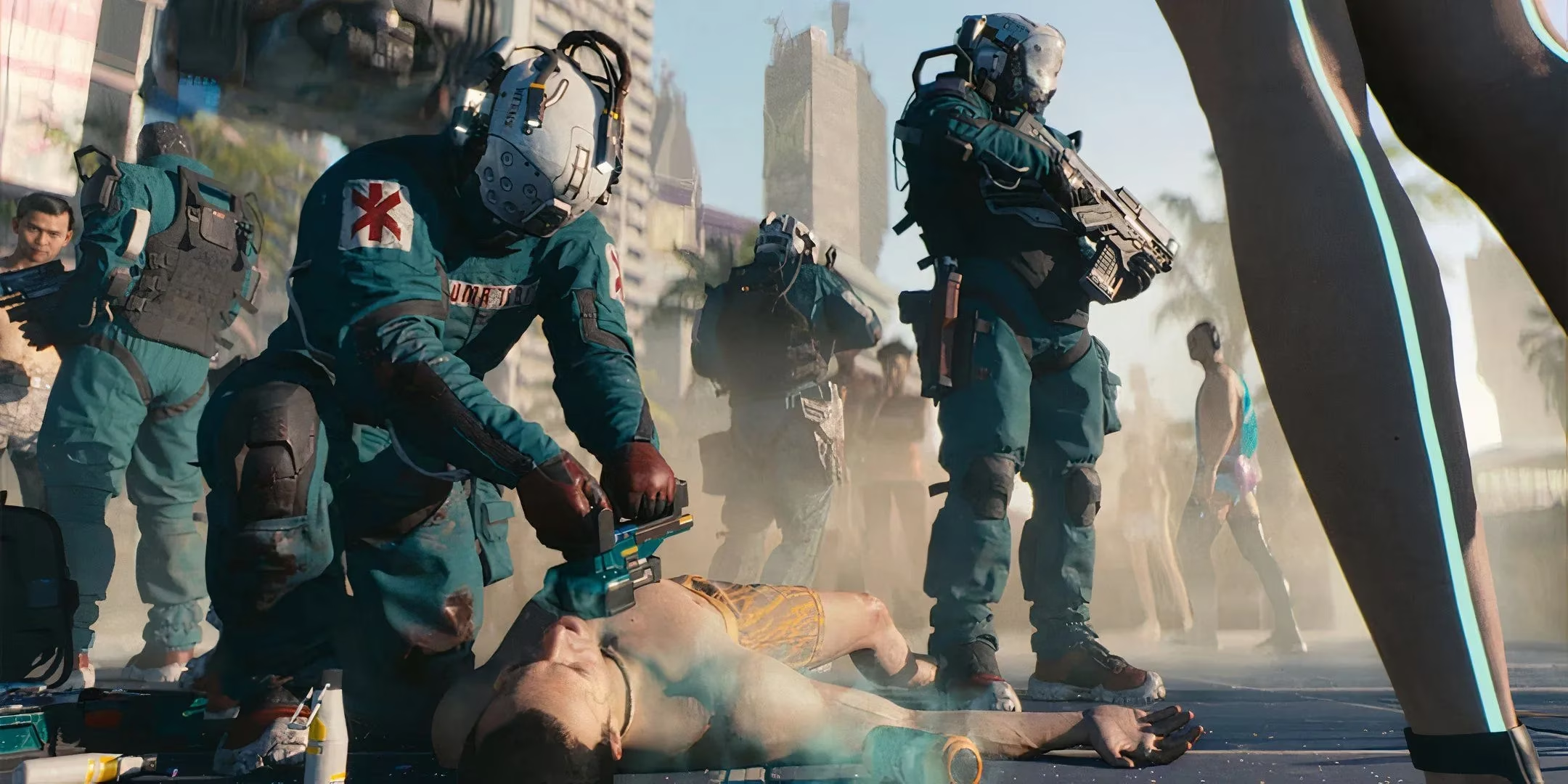
And about that open world... Cyberpunk 2077 didn't have the endless sandbox toys of a Grand Theft Auto. No bowling, no tennis. And honestly? I think the game was stronger for it. It knew its identity. I'd hate to see Orion cram in a bunch of shallow mini-games just to check a box. The street races in Claire's quest or the poker in Dogtown? They were fine as little diversions. But expanding them into major features risks pulling resources and attention from the story and combat—the real heart of the experience.
Has CD Projekt RED Learned The Right Lesson?
Here's the million-eddie question, folks: It's difficult to know if CD Projekt RED has learned the right lesson from Cyberpunk 2077's launch. On one hand, the studio seems to have taken major steps. The post-launch support was committed, Phantom Liberty and the 2.0 update launched smoothly, and they've talked about improving work culture. The optimistic takeaway should be: "Don't over-promise, don't crunch, don't release too early."
But there's a more pessimistic, and frankly scary, possible lesson lurking: That it's somehow okay to release a broken game and fix it later. The industry has a memory, and the spectacular recovery of 2077 might unintentionally teach that lesson. We're years out from Orion trailers, but given the... ambitious... pre-release promises for the first game, I'll be holding my breath until I see real, playable code.
Fortunately, what little we know about Orion suggests that it's at least starting off on the right foot. Key leads from Phantom Liberty—which is peak Cyberpunk in my book—are steering the ship at the new North American studio. That's a huge vote of confidence. The smooth launch of that DLC is a good blueprint for the sequel's eventual release.
My Biggest Fear: Ambition Over Focus
My gut feeling, my biggest fear for Orion, is this: The game will inherit the sky-high ambitions that 2077 seemed to have before launch. The desire to "fix" every critique and add every missing feature could spread the team too thin. What I want is a "vertical" sequel—one that digs deeper into what worked. More combat depth, an even more compelling story, richer characters. But if the focus shifts "horizontally"—just adding more stuff—each element risks feeling watered down.
I'm not saying fans should panic. It's way too early. The early signs are actually promising! But as someone who loves the core of what Cyberpunk 2077 became, I'm pleading with the developers: Don't lose that focus in the sequel.
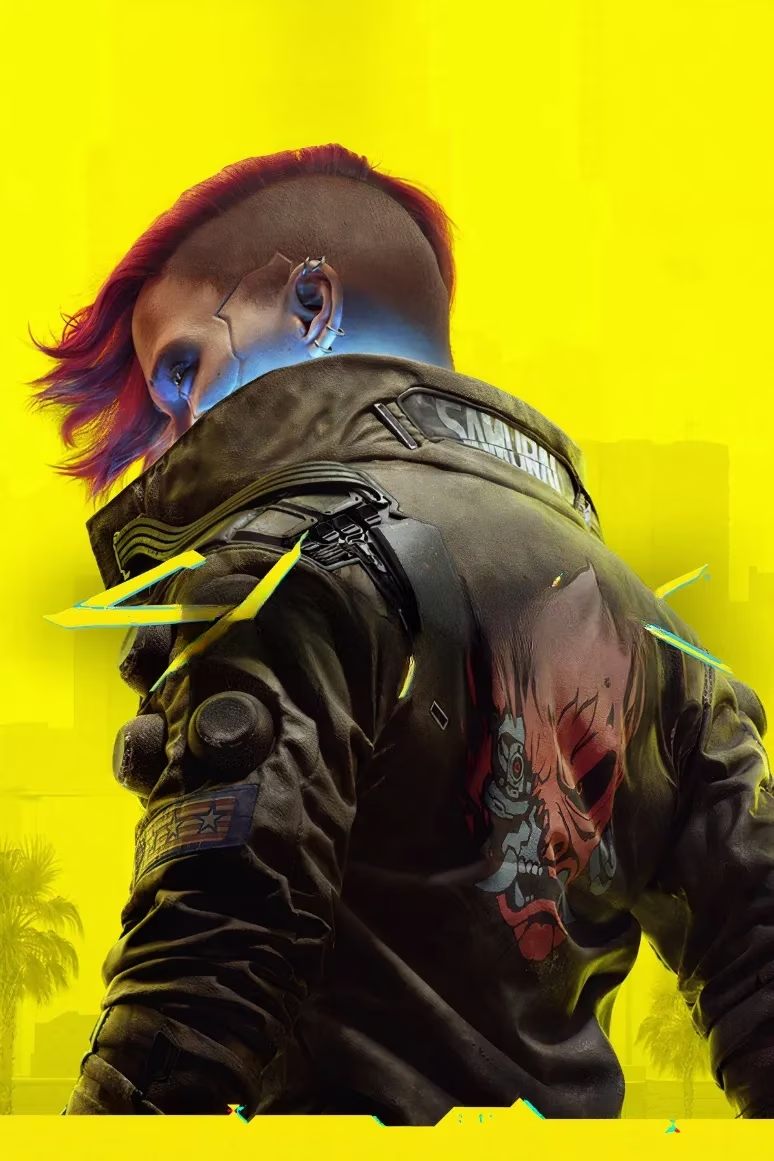
The Road to 2026 and Beyond
So, where does that leave us as we wait? Cyberpunk 2077 stands as a testament to what dedicated post-launch support can achieve. But the sequel can't rely on that same redemption arc. Project Orion needs to launch strong. It needs to build on the solid foundation of combat, story, and character—the trilogy that carried the first game to its redemption.
Will CDPR remember what truly saved their game? Or will the siren call of "more" lead them astray? Only time will tell. But one thing's for sure: all eyes are on Night City once again.
A Quick Look Back at Cyberpunk 2077 (The Redeemed Version)
| Aspect | Details |
|---|---|
| Current State | A polished, narrative-focused RPG redeemed by updates & DLC |
| Key Strengths | Combat, Main Story, Character Writing, Phantom Liberty DLC |
| Biggest Sequel Hope | A "vertical" sequel that deepens core strengths |
| Biggest Sequel Fear | A "horizontal" sequel that dilutes the experience with bloat |
| Development Lead | Key leads from Phantom Liberty |
Ultimately, the hope for Project Orion isn't for a completely different game. It's for a refined, confident, and focused evolution. Here's to hoping the lessons learned were about quality, not just recovery. 🤞