Cyberpunk, as a narrative and aesthetic realm, occupies a peculiar space in the collective imagination of players. It's a subgenre many deeply adore for its intoxicating blend of neon-drenched futurism, gritty societal critiques, and human-machine existential dread. Yet, for all its atmospheric power, it frequently stumbles where it matters most: in the weaving of a truly compelling and cohesive narrative. The canonical greats, such as the seminal film Blade Runner, are often celebrated more for their masterful world-building, moody cinematography, and evocative scores than for airtight, gripping plots. It's a genre of immense strengths and glaring weaknesses, where style can sometimes overwhelm substance, leaving audiences dazzled by the visuals but yearning for a story with equal heft.
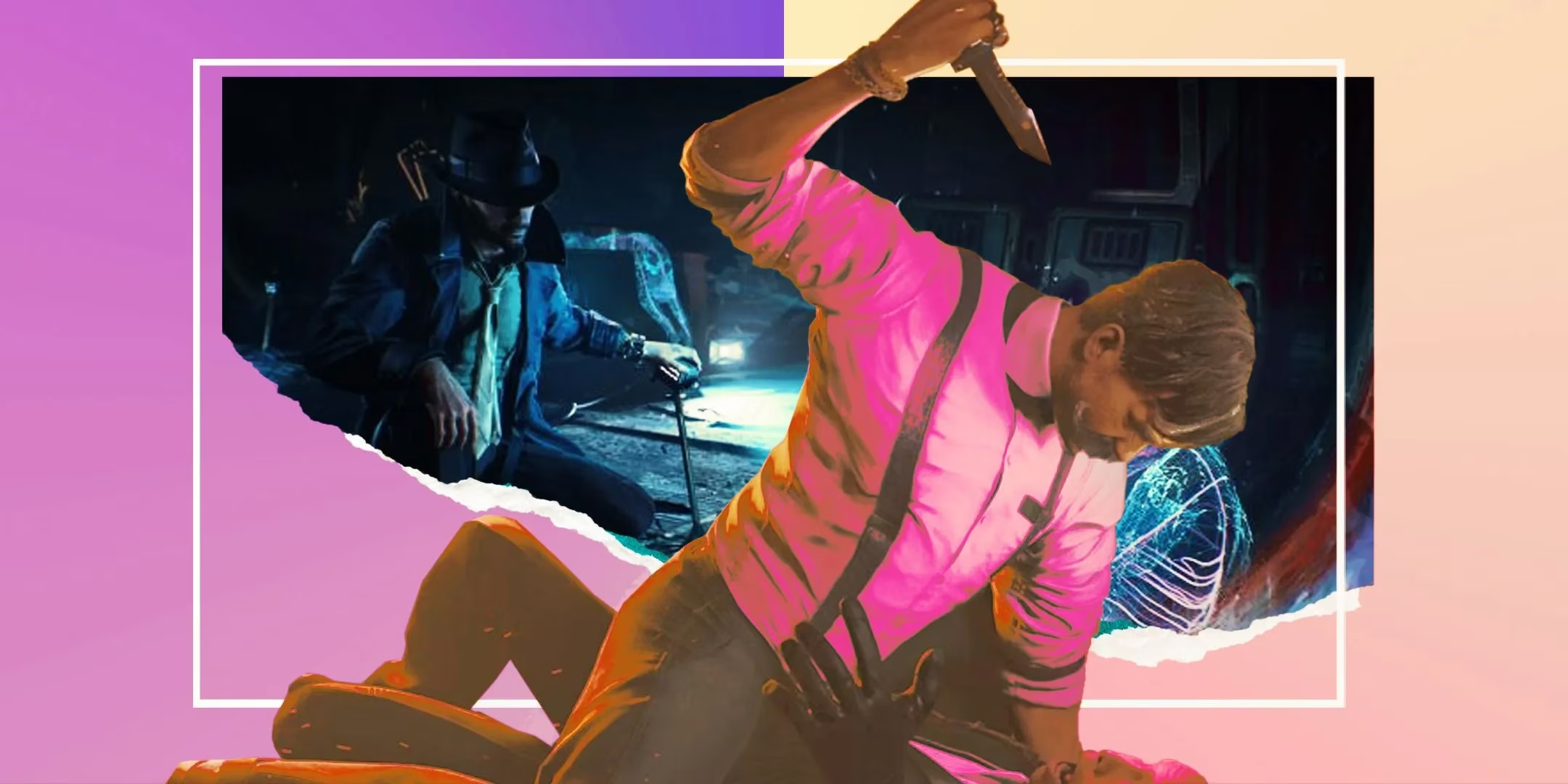
The Cyberpunk Conundrum: Style vs. Substance
This inherent tension defines much of cyberpunk fiction. The genre excels at crafting immersive, oppressive moods—rain-slicked streets, towering megastructures, the constant hum of technology—but many storytellers operating within its neon-lit confines struggle to match that environmental brilliance with equally robust narratives. It's akin to a cybernetically enhanced athlete who focuses all upgrades on sheer power, neglecting balance and agility until they can no longer stand. There are, of course, rare masterpieces that achieve synthesis, works like The Matrix that successfully marry profound philosophical concepts with relentless action and iconic style. However, these are exceptions in a landscape often characterized by ambitious swings that don't quite connect for a holistic experience.
A Neon Unicorn: The Emergence of Nobody Wants To Die
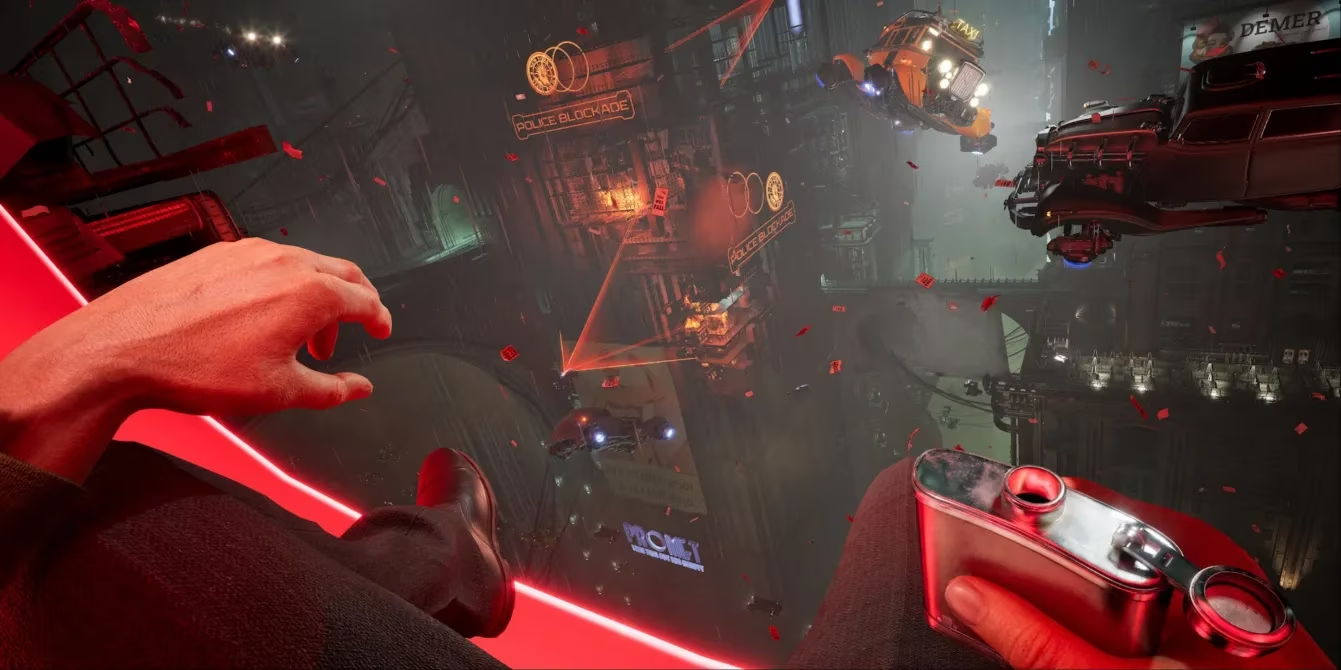
Enter Nobody Wants To Die, a title that has emerged in recent discussions as something of a cyberpunk unicorn. Developed by the independent Polish studio Critical Hit, this first-person narrative adventure appears to challenge the genre's typical pitfalls. Early impressions and analyses suggest it places a paramount emphasis on story and character while simultaneously constructing a world that consistently astonishes with its visual and auditory design. For enthusiasts, it represents a tantalizing prospect: a cyberpunk experience that doesn't force a choice between a compelling plot and a breathtaking aesthetic, but strives to deliver both in tandem.
What's particularly striking about Nobody Wants To Die is its discovery story. In the contemporary, hyper-saturated gaming landscape, even dedicated followers of the industry can miss promising titles. One might skip a single indie showcase during a packed summer schedule and completely overlook a game destined to become their next obsession. This was the case for many, who found this "retrofuturist walking sim" appearing almost miraculously, without the prolonged hype cycle typical of larger productions. It's a testament to both the challenges of marketing independent games and the vibrant, ever-surprising nature of the indie development scene.
The Indie Resurgence: Carrying the Torch for Innovation
The story of Nobody Wants To Die is not an isolated incident but rather a prominent example of a broader, empowering trend. While conversations often swirl around the homogenization and risk-aversion perceived in some segments of the triple-A sector, the independent gaming space is flourishing with audacity and creativity. It has effectively picked up the slack, delivering experiences defined by unique vision rather than corporate mandate.
Consider the landscape of recent years: many players' personal highlights are increasingly dominated by titles from smaller teams. These are games that often appear with little fanfare, only to captivate with their distinct personalities and inventive mechanics. The indie domain has become the primary incubator for the weird, the wonderful, and the narratively daring—precisely the qualities that can elevate the cyberpunk genre beyond its stylistic trappings.
-
Narrative Focus: Indies often prioritize tight, authored stories over sprawling, checklist-driven open worlds.
-
Artistic Risk: Without the pressure of multi-million-dollar returns, developers can pursue bold and distinctive visual styles.
-
Genre Evolution: Smaller teams are adept at deconstructing and reinventing genre conventions, including those of cyberpunk.
Why Nobody Wants To Die Captivates
So, what sets Nobody Wants To Die apart in this crowded field? It embodies the indie ethos of "doing more with less," but with a level of polish that rivals larger productions. Its impressive production values and standout art design create a world that feels both quintessentially cyberpunk and freshly imagined. More importantly, it signals a return to the genre's narrative roots—the hard-boiled detective story, the existential mystery, the personal struggle against an omnipresent system. By focusing on a first-person, investigative experience, it promises to engage the player's intellect and empathy, not just their aesthetic appreciation.
This approach is a powerful reminder of where the true excitement in gaming often resides. While blockbuster releases provide spectacle and scale, it is frequently the independent scene that delivers profound innovation, heartfelt storytelling, and the sheer joy of discovering something unexpected. Nobody Wants To Die stands as a beacon for this philosophy, a cool-as-hell indie project that has captured the imagination of players seeking depth beneath the neon glow. It proves that the future of compelling cyberpunk—and of thrilling game narratives in general—is being written not just in the boardrooms of giant publishers, but in the passionate studios where vision reigns supreme.