When Cyberpunk 2077 finally landed, the initial sparkle of Night City's neon-drenched skyline couldn't hide a hollow core. Players were greeted with a world of stunning visual spectacle that felt frustratingly superficial upon closer inspection. That tantalizing noodle stall? Just another piece of immovable set dressing in a metropolis brimming with untouchable eye candy. The experience left many yearning for substance over style, for a world that lived and breathed beyond its glossy facade. The deeper disappointment, however, lay not just in the lack of interactivity, but in the game's glaring failure to engage with the very societal critiques that define the cyberpunk genre. Here was a world built on hyper-capitalism, corporate oligarchy, and stark class division, yet the narrative largely sidestepped these foundational themes. Being forced to assist the oppressive police force felt antithetical to any notion of 'punk,' and fascinating concepts like the privatized, militarized Trauma Team healthcare service were presented as mere background flavor rather than subjects for critical exploration.
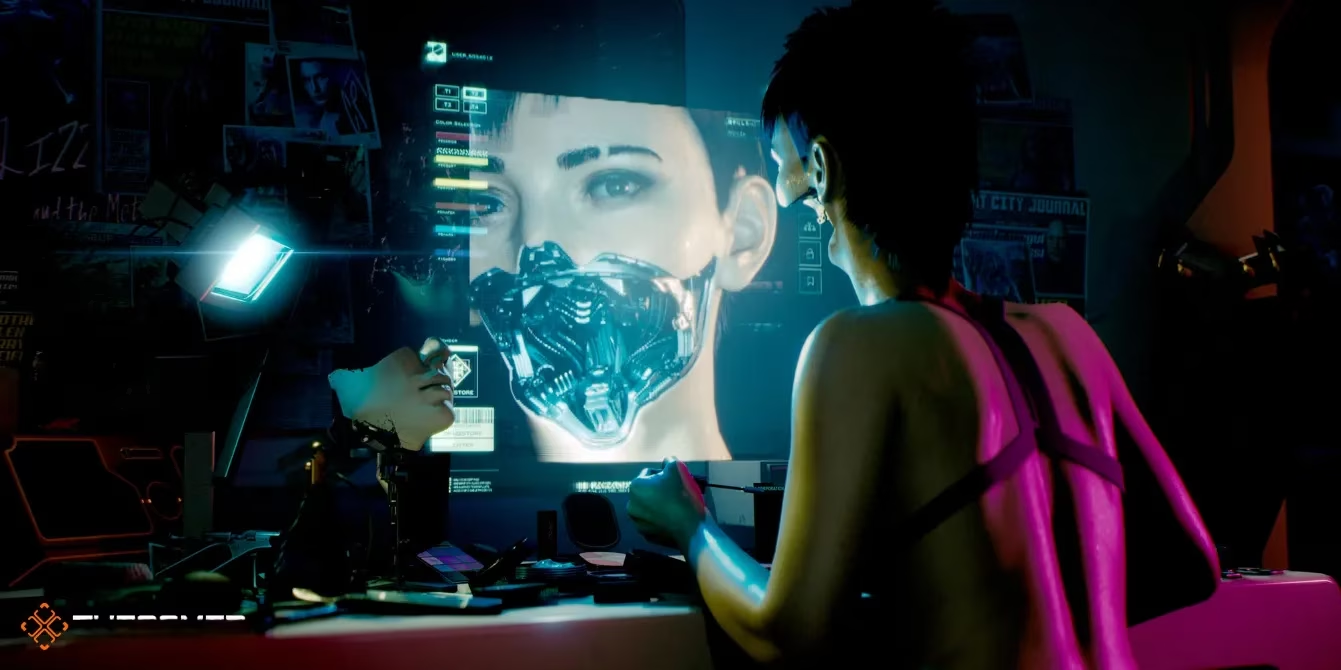
It was, as many critics pointed out, all cyber and no punk. This thematic vacuum sent players searching for their genre fix elsewhere, often in the realm of indie games. Titles like Citizen Sleeper soared in popularity precisely because they centered relatable human stories—struggles for survival, identity, and autonomy—within their sci-fi frameworks. They asked the hard questions about corpo dominance, bodily autonomy, and economic disparity that Cyberpunk 2077 seemed to avoid. The anticipation for Citizen Sleeper's sequel, Starward Vector, alongside other innovative titles, stems from this proven commitment to narrative depth and thematic bravery, a stark contrast to the era of Cyberpunk 2077's problematic marketing blitz.
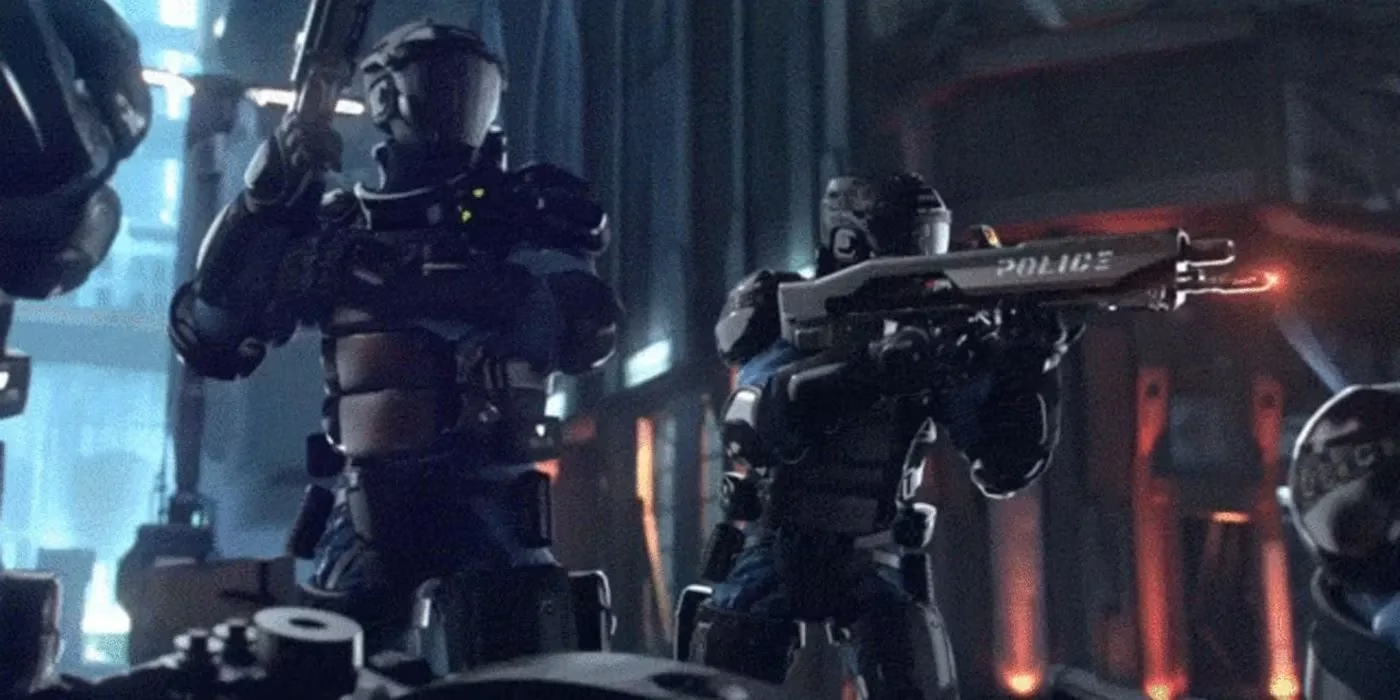
Fast forward to 2026, and CD Projekt Red has been vocal about learning from these critiques. In reflective discussions, developers like associate game director Paweł Sasko have openly acknowledged the game's shortcomings in pushing its dystopian vision far enough. "We thought that we were dystopian, but... we just touched the surface," Sasko admitted, specifically citing elements like the homeless crisis as areas where they could have delved deeper. This introspection is a crucial first step. The community's hope for the sequel isn't merely for a more polished version of the original, but for a fundamental shift in narrative ambition. It's not enough to just populate alleyways with more downtrodden citizens; the story needs to integrate them, give them agency, voice, and make their plight a tangible part of Night City's beating, often cruel, heart.
The core questions a true cyberpunk sequel must grapple with include:
-
🤖 The Human Cost of Progress: How do staggering technological leaps—like full-body cyberization—affect the psyche, society, and soul of the everyday person?
-
💰 The Inequality of Innovation: Why is groundbreaking tech and its astronomical profits hoarded by mega-corporations instead of being leveraged for public welfare and equality?
-
⚔️ The Militarization of the Body: Why is cyberware predominantly channeled into tools of war, espionage, and corporate enforcement rather than healing, augmentation for disability, or community uplift?
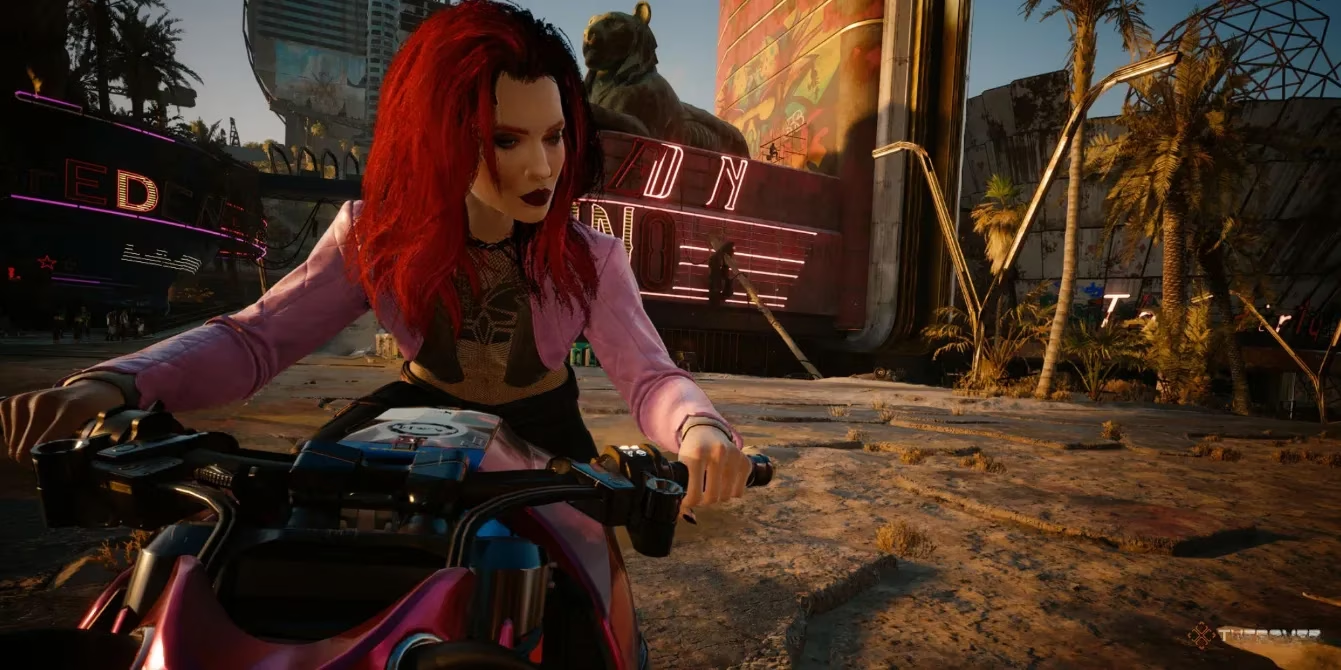
These are the profound, unsettling inquiries that form the bedrock of seminal cyberpunk literature from pioneers like Philip K. Dick and William Gibson. They are the questions indie gems fearlessly tackle within their scope. For a blockbuster sequel with CDPR's vast resources and platform, engaging with these themes isn't just an option—it's an obligation to the genre's legacy. The potential is immense: to use a mainstream juggernaut to critique the very corporate and technological trajectories shaping our own world.
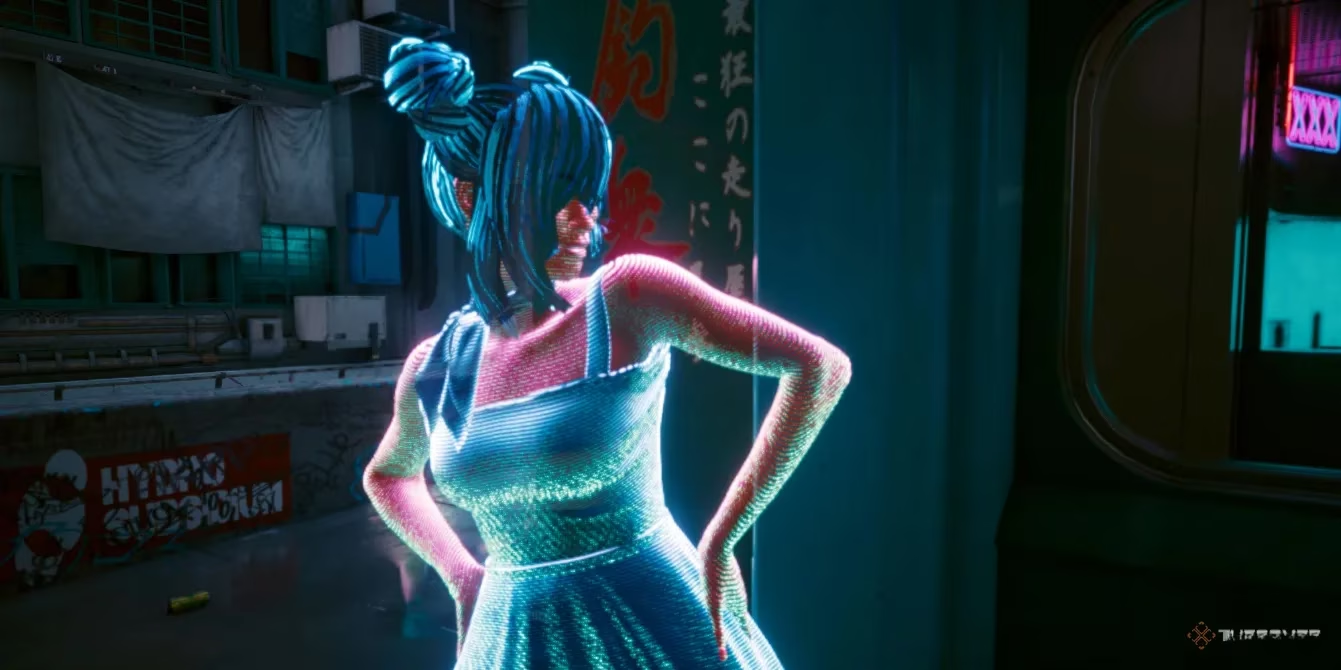
Yet, a heavy dose of skepticism is warranted. The memory of Cyberpunk 2077's years-long marketing campaign, filled with promises of revolutionary gameplay and unparalleled immersion that ultimately delivered a derivative RPG experience, is still fresh. The core loop of side quests, loot, and gun upgrades felt safe and familiar, lacking the innovative or subversive spark the setting demanded. While the game is now functionally competent and visually breathtaking, its narrative and thematic dimensions often felt bland and two-dimensional.
| Aspect | Cyberpunk 2077 (Launch Perception) | Hope for the Sequel (Project Orion) |
|---|---|---|
| World Depth | Beautiful but static set-dressing | A living, reactive city with systemic consequences |
| Thematic Bravery | Skimmed the surface of dystopia | Fearlessly interrogates class, corpo power, & tech ethics |
| Narrative Focus | Focused on legendary heists & chrome | Integrates stories of the marginalized and powerless |
| Player Agency | Limited interaction with world systems | Meaningful choices that reshape Night City's fabric |
| Genre Authenticity | Heavy on the 'Cyber,' light on the 'Punk' | A true synthesis that honors the genre's rebellious roots |
The hope for Cyberpunk 2078 (or whatever title follows) is that it improves upon this foundation in every conceivable way. But more than better graphics or smoother gameplay, the fervent wish is that it finally, truly understands what makes cyberpunk punk. The hope is for a game that draws inspiration from the genre's great philosophical texts, that isn't afraid to be challenging and politically engaged, and that uses its scale to say something meaningful. However, in 2026, the community stance is one of cautious optimism. The lessons seem to have been acknowledged, but players are wisely vowing not to be swept away by hype again. The proof will be in the dystopian pudding—only when we can finally, meaningfully, interact with the world and its stories, perhaps even eat those long-denied noodles, will we know if Night City has finally found its soul.