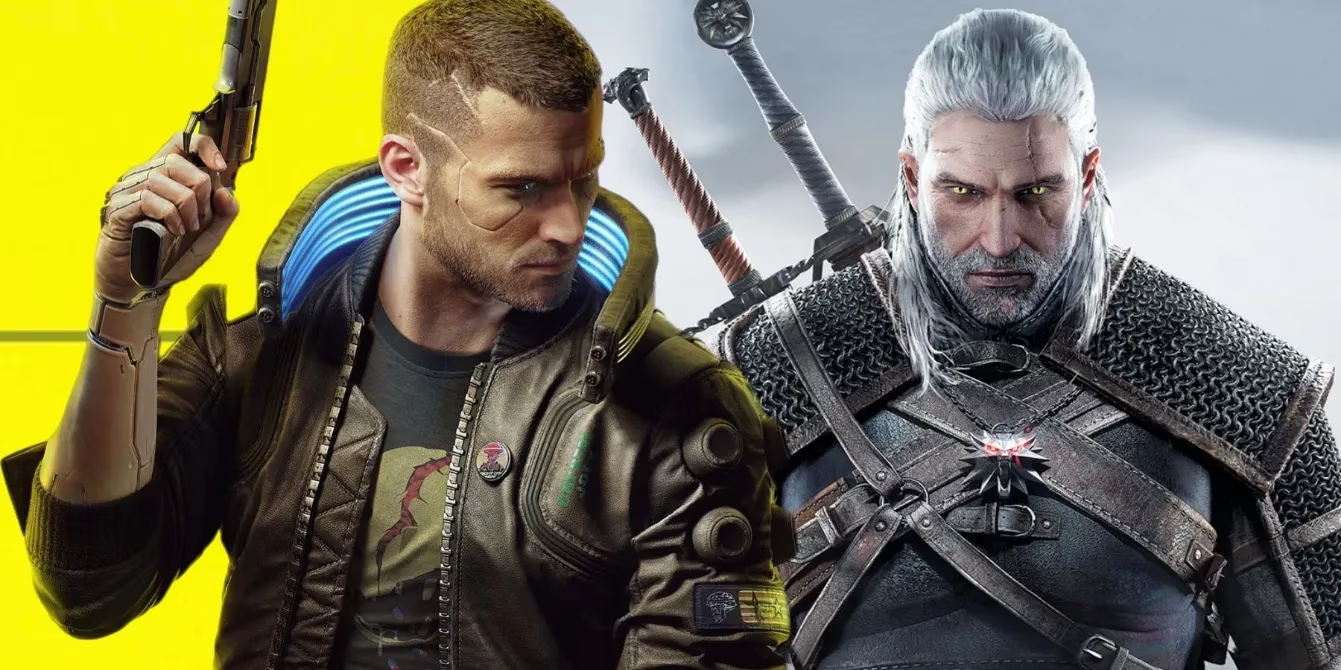
Let's be honest, a few years ago, comparing the neon-soaked, bug-ridden launch of Cyberpunk 2077 to the polished, beloved legacy of The Witcher would have gotten you laughed out of the Afterlife. But as of 2026, the conversation has shifted dramatically. What was once a tale of two very different development journeys has morphed into a story of two colossal franchises standing shoulder-to-shoulder, both shaping the future of CD Projekt Red. The sci-fi upstart, after a legendary (and somewhat painful) redemption arc, now feels like the game it was always meant to be. And while The Witcher series is the venerable elder that put the studio on the map, Cyberpunk 2077 has sprinted to catch up, proving it won't need a trilogy to earn its place in the gaming pantheon.
The Witcher's Decade-Defining Legacy
It all started in a muddy, monster-infested fantasy land. The Witcher franchise, particularly its third installment, The Witcher 3: Wild Hunt, is the stuff of legend. Released nearly a decade ago, Wild Hunt wasn't just a game; it was a cultural turning point. It transformed CD Projekt Red from a respected developer into a household name. Think about it: a live-action Netflix series, constant mentions in 'greatest RPG' debates, and a player base that still roams its vast continents today. That's staying power.
-
The Long Road to Glory: It's crucial to remember that this prestige wasn't instant. CD Projekt Red earned praise for the first two Witcher games, but it took three whole titles for the studio to achieve the stratospheric success of Wild Hunt. They built their reputation brick by brick, contract by monster contract.
-
The Hype Engine: The monumental success of Wild Hunt created an unprecedented level of anticipation for the studio's next project. Ironically, Cyberpunk 2077 was announced before Wild Hunt even launched, but the latter's triumph poured jet fuel on the hype train for Night City. The trust and goodwill earned by Geralt's journey were directly transferred to V's, for better or worse initially.
Cyberpunk 2077: The Phoenix of Night City
Ah, the launch. We don't need to dwell on the details—the memes are etched into internet history. But here's the twist: Cyberpunk 2077's story didn't end there. It became one of gaming's most impressive redemption narratives. Through relentless updates, the massive Phantom Liberty expansion, and a commitment to fixing its core, the game was rebuilt. By 2026, it's a critically acclaimed, fan-adored experience that has fully realized its initial promise.
This redemption is its superpower. Unlike The Witcher, which needed a trilogy to build momentum, Cyberpunk 2077 has achieved franchise-launching status with a single (eventually) stellar title. Its momentum isn't hard-earned over a decade; it's been rocket-fueled by a spectacular comeback.
A Tale of Two Franchise Launches:
| Franchise Starter | Path to Prominence | Key Catalyst |
|---|---|---|
| The Witcher | A slow, three-game build | The Witcher 3: Wild Hunt (2015) |
| Cyberpunk 2077 | A turbulent launch followed by a monumental recovery | Phantom Liberty & 2.0 Update (2023-2024) |
Two Juggernauts, One Studio
So, where do we stand in 2026? CD Projekt Red isn't just the "Witcher studio" anymore. It's now the guardian of two of gaming's most formidable IPs, both firing on all cylinders.
-
Parallel Development Pipelines: Both universes are expanding aggressively. A new Witcher saga is in the works, and Cyberpunk 2077's sequel, codenamed Orion, is already deep in development. The studio is effectively running dual franchise engines.
-
Multimedia Domination: Both have successfully leaped beyond games. The Witcher has its Netflix series, and Cyberpunk scored a massive hit with the anime Edgerunners, which ironically brought a wave of new players back to the game itself. The franchises are becoming cross-platform entertainment giants.
The speed of Cyberpunk's franchise establishment is its "biggest boon." It caught up to The Witcher's cultural footprint in a fraction of the time. This sets up a fascinating dynamic for the future.
The Future: A Friendly Rivalry?
Looking ahead, the potential for both franchises is staggering. CD Projekt Red's ambitions have grown with its success, promising more expansive worlds and deeper narratives for both IPs. The question is no longer if Cyberpunk can equal The Witcher, but whether it might surpass it as the studio's flagship.
Several factors could tip the scales:
-
Genre Appeal: The sci-fi/cyberpunk setting might have a broader, more modern global appeal than dark fantasy in the long run.
-
Technological Showcase: As a graphically intensive futuristic title, Cyberpunk sequels are poised to be stunning technical showpieces for new hardware.
-
Narrative Flexibility: Night City's setting allows for almost infinite story possibilities with different protagonists, eras, and corporeal dramas, perhaps more easily than a world tied to a specific character like Geralt.
Ultimately, this isn't a grim duel to the death. It's the best kind of problem for a studio to have. CD Projekt Red has cultivated two juggernauts. The success of one fuels the ambition and resources for the other. The studio's future isn't tied to a single hero or city; it's built on a foundation of two richly imagined worlds that have captivated millions. Whether you prefer slaying monsters with silver swords or hacking corporate networks with a neural implant, CD Projekt Red has you covered. And as of 2026, both offerings are, finally and triumphantly, top-tier. 🎮✨