Night City, 2026, remains a monument to chrome and shattered dreams. In the shadows of its colossal sky-scraping towers, stories of survival, sacrifice, and profound loss are etched into the very code of its existence. Cyberpunk 2077, a game that has matured into a narrative powerhouse, continues to grip players not just with its stunning vistas and chrome-plated action, but with the raw, emotional humanity of its deeply flawed characters. The journey of V, a mercenary with a death sentence in their head, becomes a conduit for exploring themes of mortality, legacy, and the fragile connections that make life worth living—or dying for. It's a world where the most powerful weapons aren't guns, but the quiet, devastating words exchanged in moments of despair.
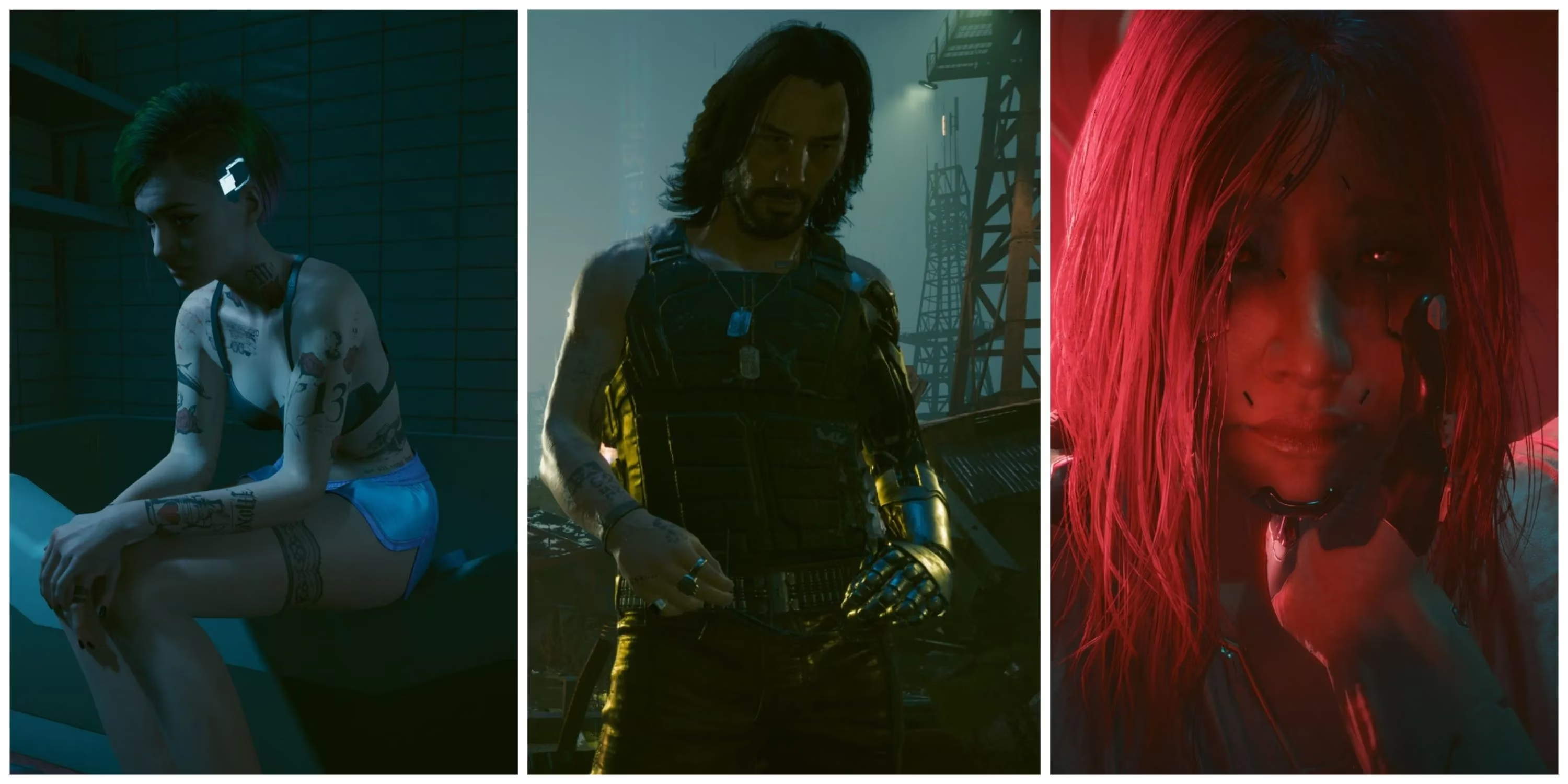
The tragedy often begins with a promise. In the chaotic aftermath of the Konpeki Plaza heist, V is left not with riches, but with a dying best friend in the back of a stolen car. Jackie Welles, the embodiment of Night City's hopeful ambition, slips away as V watches, helpless. The silence that follows is louder than any gunfight. V's final vow to Jackie—to become the legend they both dreamed of—isn't just a goal; it's a haunting anchor, a ghostly reminder of the life and friendship that died in that Delamain cab. The weight of that promise shapes every desperate choice V makes afterward.
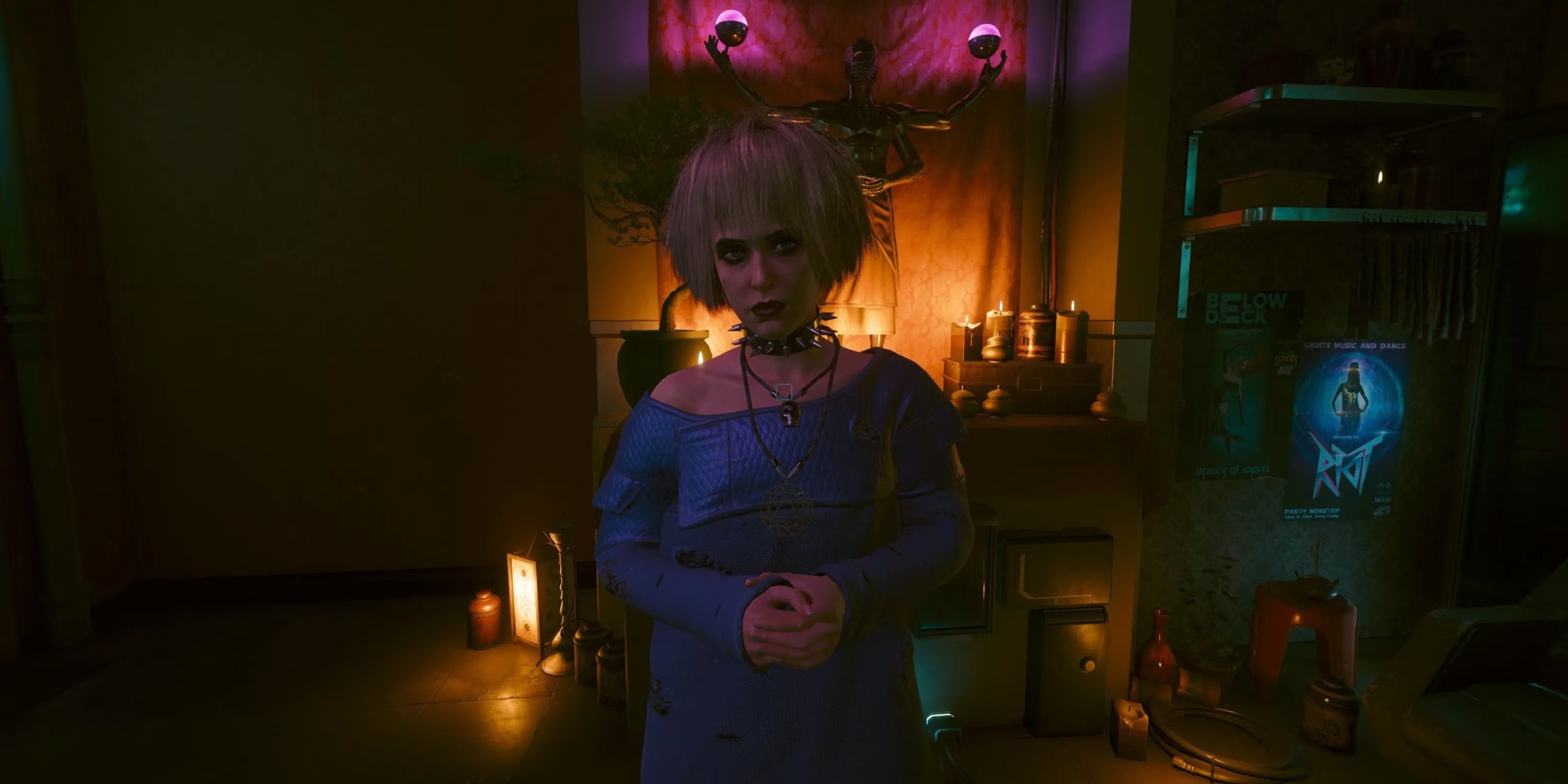
In the bleak wake of Jackie's death, it's often the most unexpected characters who offer a sliver of light. Misty Olszewski, grieving her own profound loss, becomes a spiritual guide for a confused and angry V. While V grapples with the existential horror of sharing their skull with the digital ghost of terrorist rockerboy Johnny Silverhand, Misty reframes the curse. She sees not just a terminal illness, but two intertwined souls sharing a single fate. Her words provide a fragile reason to keep fighting when the easiest choice would be to give up. It's a poignant reminder that in Night City, wisdom often comes from the esoterica shop, not the corporate boardroom.
V's quest for a cure is a mirror held up to other broken souls. Enter Song So Mi, the enigmatic Songbird from the Phantom Liberty expansion. Her story is a dark parallel to V's: a prisoner of the NUSA, her mind being consumed by the predatory AIs of the Blackwall. Both are on borrowed time, desperately seeking an escape from their respective cages. If V is forced to betray her, Songbird's reaction isn't rage, but a weary, heartbreaking acceptance. She mourns the life she was never allowed to have—a person, not just an asset. Her tragedy underscores a central theme: in this world, freedom is the rarest currency of all.
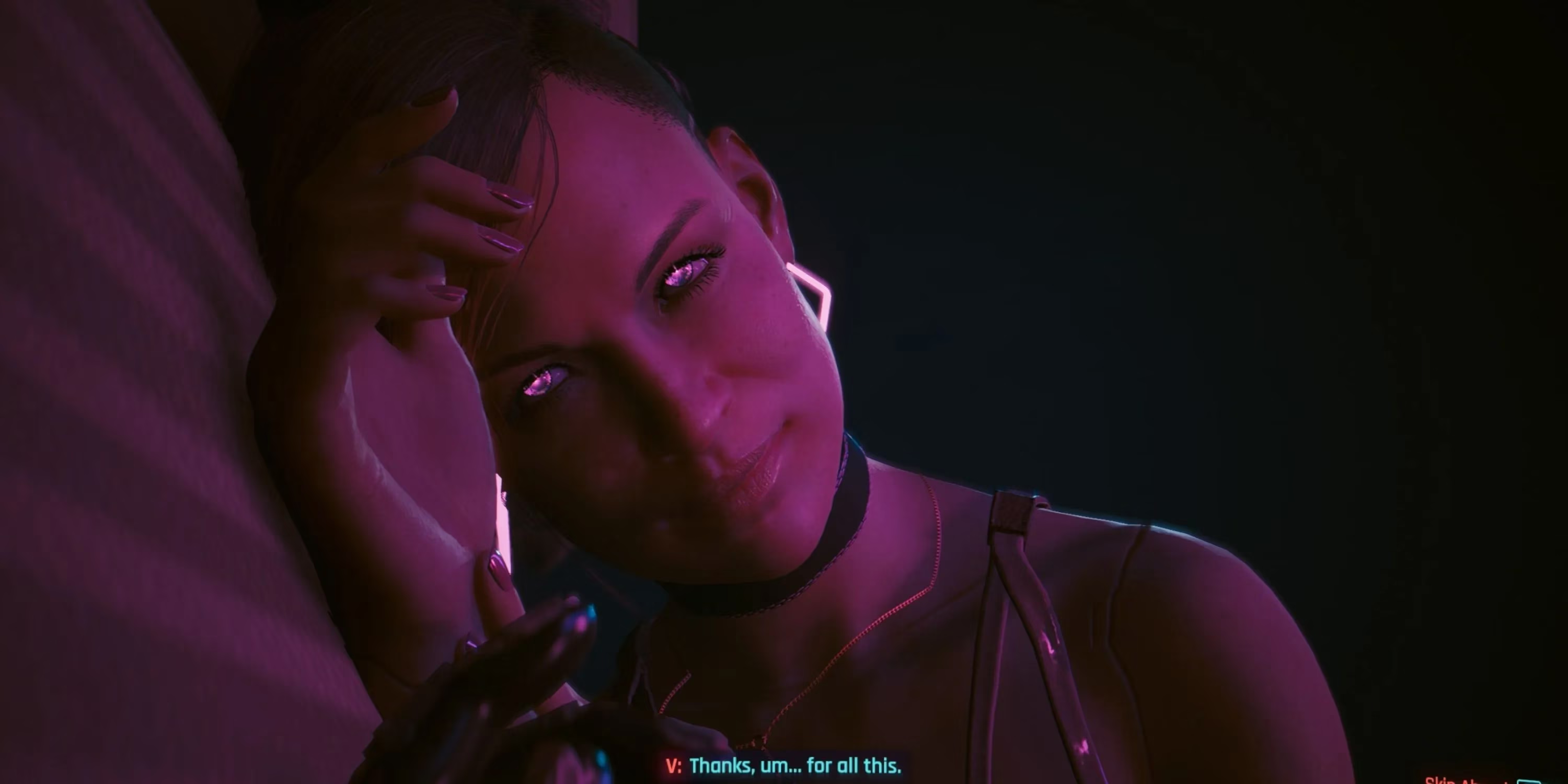
Even in moments meant for escape, the fear finds a way in. Visiting Clouds, the famed dollhouse, V seeks a momentary distraction but finds only a reflection of their deepest dread. In a moment of artificial intimacy, V confesses to a doll their terror of dying without leaving a mark. It's a raw, universal anxiety laid bare: the fear of fading into obscurity, of being just another ghost in the machine of Night City. This vulnerability, expressed in a place designed for fantasy, hits with a stark, uncomfortable truth.
Through it all, the most complex relationship is the one brewing inside V's own mind. Johnny Silverhand, initially a hostile, parasitic presence, evolves into something far more profound. His trademark nihilism is a armor, one that begins to crack. When V naively hopes for a "happier ending for everyone involved," Johnny's response isn't his usual cynical sneer. It's a somber, almost gentle dose of realism, acknowledging that for people like them, fairy-tale endings don't exist. In that moment, the terrorist shows more care than anyone in the city's glittering halls.
This bond is tested in the most devastating ways possible. The various endings of Cyberpunk 2077 are masterclasses in emotional gut-punches. If V chooses the quietest way out, the suicide ending, the game delivers its cruelest blow through the voices of those left behind. A holo-call from a romanced Judy Alvarez is pure, undiluted anguish. Having already lost her friend Evelyn to suicide, Judy is utterly broken by V's choice. Her tear-choked words, "I can't do this," as she hangs up, speak volumes about the collateral damage of one person's despair. It's a reminder that in Night City, no death is an island.

Perhaps the most bittersweet resolution comes from the Phantom Liberty expansion's "Tower" ending. V can survive, but only by surgically removing Johnny Silverhand forever. By this point, they are not just host and engram, but brothers-in-arms. Johnny's acceptance is his final, greatest act of rebellion against his own selfish nature. He doesn't rage or guilt-trip V. Instead, he finds peace, telling V, "Never stop fighting." The fact that he, the ultimate iconoclast, is the only one to ever call V by their real name, makes his departure feel like losing a part of one's own soul.
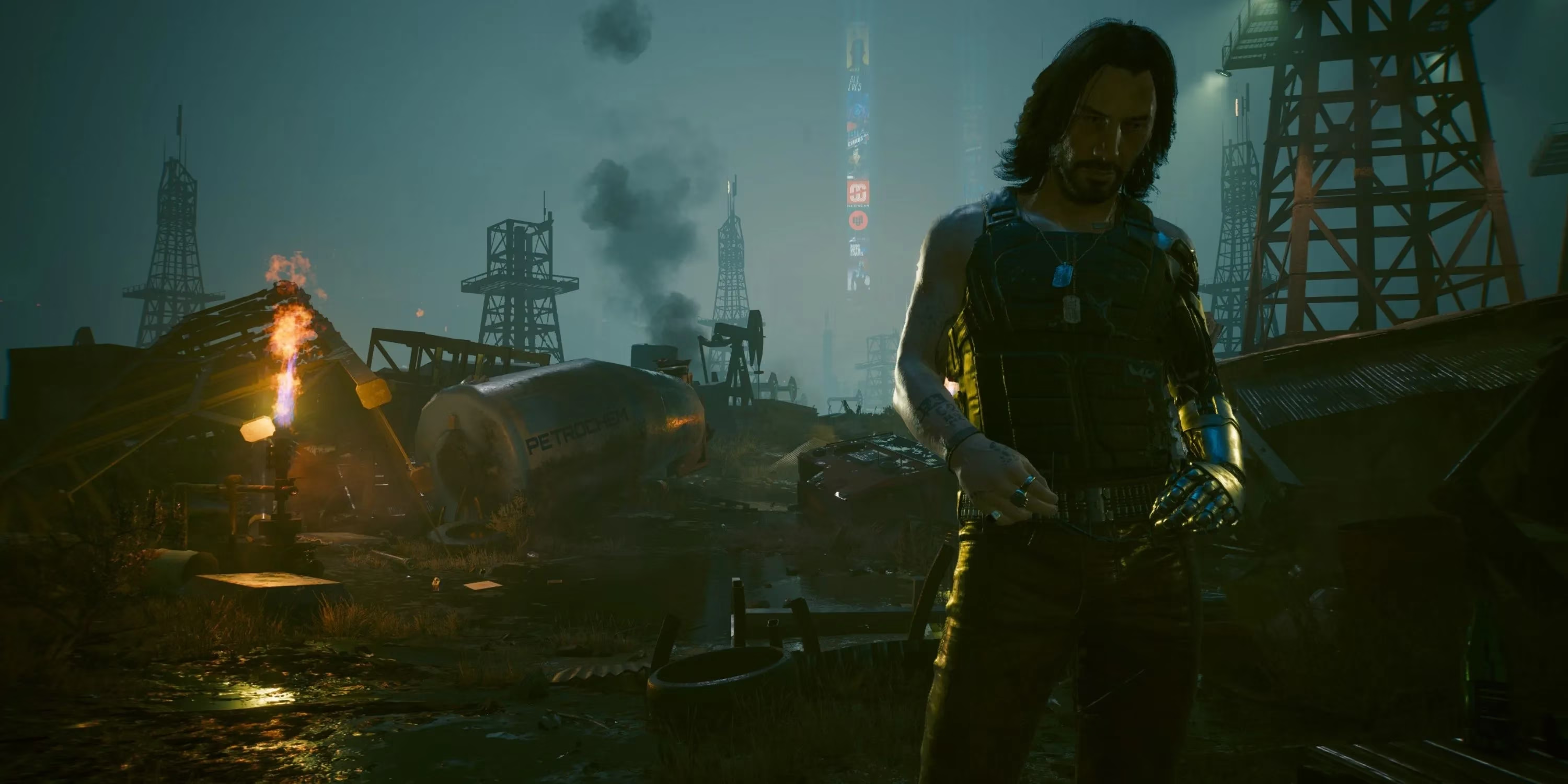
This journey from animosity to inseparable bond is beautifully crystallized in a quieter moment. Searching the Badlands for Johnny's long-lost body, they find nothing but dust and forgotten scrap. The futility of the search hits Johnny hard. Yet, V can choose to engrave Johnny's initials on a rock and, when asked what they'd write on his grave, respond, "The guy who saved my life." For a man defined by his failures and the hatred of others, this simple acknowledgment from his only true friend is a redemption more valuable than any legacy. It proves that in the unfeeling sprawl of Night City, the echoes of a heartfelt word can outlast any monument.
Ultimately, Cyberpunk 2077's enduring power lies in these moments of poignant humanity. It's a game that understands that in a world of chrome and data, the things that truly scar us are not bullets, but the silence after a friend's last breath, the crack in a loved one's voice on a holocall, and the quiet acceptance of a ghost in the machine ready to fade away for your sake. The city always wins, they say. But sometimes, in the losing, we find the most beautiful, heartbreaking proof that we were ever truly alive at all. The game's legacy, much like Johnny's initials etched in stone, isn't about the heists or the chrome, but the emotional scars we willingly carry with us long after the credits roll.